Why Grief Counseling Matters
Grief is a universal human response that touches every culture, age group, and life circumstance—whether the loss is a loved one, a job, health, or a cherished way of life. When loss remains unprocessed, it can spiral into chronic anxiety, depression, insomnia, weakened immune function, and even heightened risk for substance misuse or suicidal thoughts. Early, evidence‑based grief counseling interrupts this trajectory by providing a safe space for emotional expression, psychoeducation, and skill‑building. Techniques such as Cognitive‑Behavioral Therapy, Acceptance‑Commitment Therapy, narrative work, and mindfulness‑based stress reduction help clients reframe unhelpful thoughts, restore emotional regulation, and cultivate meaning. By integrating these validated interventions with compassionate support and social‑network strengthening, counselors foster resilience, promote adaptive coping, and guide individuals toward a renewed sense of purpose while honoring the lasting bond with what was lost.
What Is Grief Counseling?
 Grief counseling is an evidence‑based, short‑term service that helps people process the intense emotions that follow any major loss—death, divorce, job loss, or health change. A counselor creates a safe, non‑judgmental space where clients can explore feelings, learn the common grief frameworks (e.g., Kübler‑Ross stages, Dual Process Model), and develop coping skills such as mindfulness, CBT‑based thought reframing, expressive writing, and ritual work. The goal is to reduce distress, restore emotional balance, and foster a sense of acceptance while honoring the loss.
Unlike grief therapy, which often involves longer‑term, deeper psychotherapeutic work (e.g., Complicated Grief Therapy, ACT) to address maladaptive patterns and traumatic grief, Grief counseling is typically brief, goal‑oriented, and focused on immediate stabilization, education, and practical coping tools.
A typical counseling plan follows a structured sequence: building rapport and safety, assessing the loss and its impact, providing psychoeducation, processing emotions, teaching coping strategies, restoring functioning, and planning for future growth. Sessions usually begin a week or two after the loss and may continue for 6‑12 weeks, depending on the client’s needs and progress.
The Seven‑Step Grieving Process
 The 7‑step grieving process outlines a typical sequence of emotional responses to loss: shock, denial, anger, bargaining, depression, testing, and acceptance. Shock is the initial numbness that buffers the impact of the news; denial follows as the reality of the loss is resisted. Anger emerges as frustration and resentment surface, while bargaining involves attempts to negotiate or “undo” the loss. Depression deepens the sadness, and testing reflects tentative attempts to re‑engage with life and evaluate new possibilities. Acceptance marks a gradual integration of the loss into one’s ongoing story. Clinicians use this framework—not as a rigid timeline but as a flexible map—to anticipate client needs and apply evidence‑based interventions such as CBT for unhelpful thoughts, ACT for values‑guided action, narrative work for meaning‑making, and mindfulness to regulate physiological arousal. By aligning therapeutic tasks (building safety, psychoeducation, skill‑building) with each step, counselors support clients through the non‑linear, oscillating journey of grief.
The 3‑5‑7 Model for Children and Youth
 The 3‑5‑7 Model© is a structured grief‑working framework that blends child‑development, attachment, trauma, and family‑systems theory to help children and youth process loss. It is organized around three core tasks—reconciling the losses they have experienced, rebuilding relationships, and visualizing belonging to a permanent family—guided by five conceptual questions that the child explores. To complete these tasks, caregivers use seven concrete skills or strategies, such as creating a safe space for expression, validating feelings, encouraging expressive writing or art, teaching mindfulness‑based grounding, facilitating symbolic conversations with the deceased, strengthening social support, and planning gradual re‑engagement in meaningful activities. The model emphasizes moving through three phases—acknowledgment, expression, and integration—so the child can develop a resilient sense of self and healthy relationships. By applying this step‑by‑step approach, professionals and parents can support grieving children in achieving lasting healing and a sense of belonging.
Evidence‑Based Grief‑Counseling Techniques
 What are some grief‑counseling techniques? Techniques include CBT, ACT, Traumatic Grief Therapy, CGT, IPT, expressive writing, narrative reconstruction, and guided imagery, often delivered in individual or group formats.
What are evidence‑based interventions for grief and loss? Evidence‑based interventions encompass CBT for grief, ACT, CGT, Meaning‑Centered (narrative) therapy, Traumatic Grief Therapy, and structured group programs such as the Family Bereavement Program, all shown to reduce symptom severity and improve functional outcomes.
When Grief Becomes Complicated
 Complicated Grief Therapy (CGT) is a psychotherapy for people whose grief stays intense beyond six months. It blends Cognitive Behavioral Therapy (CBT), interpersonal and exposure techniques—such as imaginal revisiting of the loss and confronting avoided reminders—to lessen intrusive yearning and rumination. Grounded in attachment theory, CGT also rebuilds personal goals, relationships, and identity. The program usually lasts 12‑16 weekly sessions and includes goal‑oriented work and situational exposure, showing faster recovery than standard bereavement counseling.
Inhibited grief is the suppression or avoidance of natural mourning emotions. Clients may appear numb, put on a face, or stay overly busy, masking sadness, pain, or guilt. Physical signs often include headaches, stomach upset, sleep disturbance, and unexplained aches. Unprocessed grief can later emerge as anxiety, panic attacks, or prolonged grief disorder, making identification essential.
Screening for suicidal ideation is part of grief assessment. Clinicians ask questions about self‑harm thoughts, especially after sudden or traumatic loss, and create safety plans or refer to crisis services when risk is present.
Age‑Specific Challenges in Grief
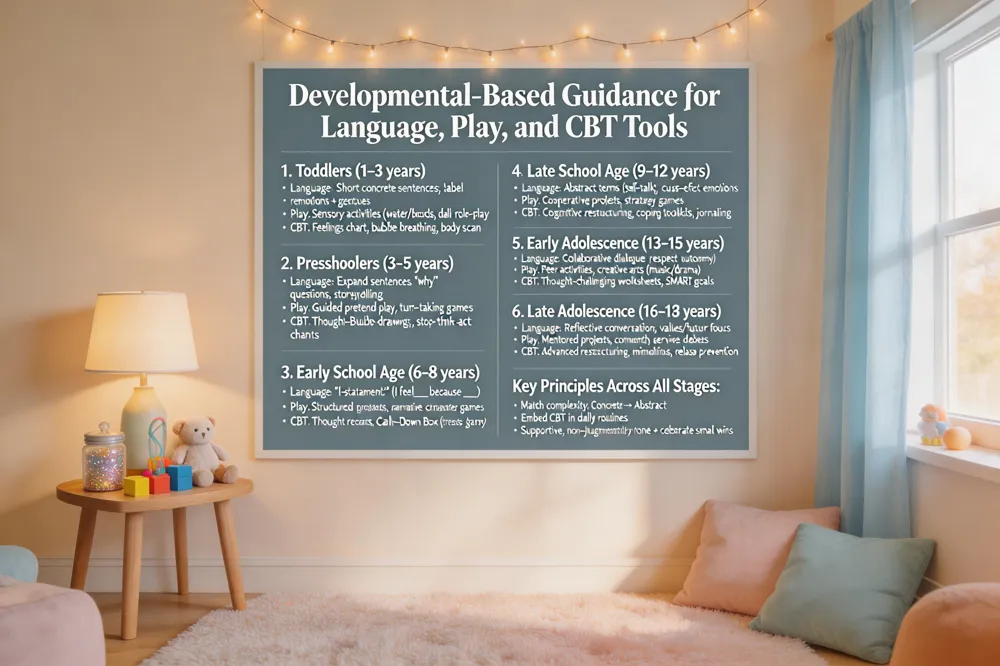 Grief is experienced differently at each stage of development, and the hardest period for children typically falls under the age of five. At this age, children lack a concrete understanding that death is final and may view it as reversible, leading to confusion, clinginess, or regressive behaviors rather than verbal sadness. By middle childhood (approximately six to twelve years), children recognize the permanence of death but often still lack the emotional tools to process complex feelings, resulting in heightened anxiety or anger. Adolescents can articulate grief more clearly but must also navigate peer dynamics, identity formation, and the pressure to appear resilient, which can complicate their mourning. Tailoring interventions to developmental stage is essential: use simple, direct language (e.g., “dead” and “died”) with younger children; incorporate play, art, or story‑telling to externalize emotions; and for older youths, integrate cognitive‑behavioral techniques, values clarification, and supportive peer groups. Consistent, empathetic caregiving and age‑appropriate communication help children of all ages move through grief safely and healthfully.
Classic Models: Five Stages and Six R’s
 Grief counseling often draws on two foundational frameworks. Kübler‑Ross five stages describe five primary responses to loss: Denial, Anger, Bargaining, Depression, and Acceptance. These stages are not linear; clients may move back and forth or skip stages entirely, and the sequence is fluid. Rando’s six‑R model expands the task‑focused view of bereavement: 1) Recognising the loss, 2) Reacting to the separation, 3) Recollecting and re‑experiencing the deceased and the relationship, 4) Relinquishing old attachments and the assumptive world, 5) Reinvesting in new relationships and roles, and 6) Re‑creating a new sense of self. In clinical practice, counselors use these models to structure sessions: they first validate the client’s current stage or R‑task, then introduce evidence‑based interventions (CBT thought, narrative work, mindfulness) that align with the client’s emotional position. This tailored approach helps clients move from shock toward integration, fostering adaptive coping and a renewed sense of purpose.
Practical Steps for Moving Forward
 Creating personal rituals and memory work helps anchor the loss in a meaningful way. Simple actions—lighting a candle on anniversaries, assembling a photo collage, or writing a heartfelt letter to the deceased—transform painful memories into cherished symbols that honor the relationship while allowing the grief to settle into a lasting bond.
Social support and companioning are equally vital. Engaging trusted friends, family members, or a grief support group provides validation, reduces isolation, and offers practical assistance with daily tasks. A companioning approach—where the counselor or loved one simply listens, validates feeling, and helps organize routines—reinforces safety and fosters resilience.
Mindfulness practices, expressive writing, and concrete goal‑setting round out an effective forward‑moving plan. Mindful breathing or brief body‑scan meditations calm physiological arousal, while journaling or art expresses emotions that words may miss. Setting small, achievable goals—such as a daily walk, a weekly phone call, or a short‑term project—restores a sense of agency and gradually re‑engages the individual in a purposeful life beyond loss.
Embracing a New Chapter After Loss
Integrating grief into a renewed sense of self begins with acknowledging that the loss remains a part of your story while allowing space for new identities to emerge. Evidence‑based counselors use narrative therapy, meaning‑making exercises, and mindfulness‑based stress reduction to help clients weave the memory of the loved one into a broader life narrative, fostering continuity rather than rupture.
Continuing support and resources are essential for sustained healing. Structured support groups, peer‑led online memorials, and the Loss Foundation’s Grief Processing Worksheet Bundle (13 worksheets + 7 audio files) provide practical tools for daily coping. Many U.S. agencies—SAMHSA, NIMH, and local hospices—offer free PDFs, such as the “Care Kit for Grieving Employees,” and low‑cost telehealth sessions that keep therapeutic momentum after formal counseling ends.
A hopeful outlook for lasting healing rests on the dual process model: alternating loss‑oriented reflection (rituals, letters, memory work) with restoration‑oriented activities (exercise, volunteering, goal‑setting). When clients practice self‑compassion, maintain social connections, and engage in purposeful actions aligned with personal values, research shows a significant reduction in complicated grief risk and an increase in post‑traumatic growth. Together, these steps transform grief from a static wound into a catalyst for a richer, more resilient sense of self.