Understanding CBT in the Context of Holistic Pain Care
Cognitive‑Behavioral Therapy (CBT) is an evidence‑based psychotherapy that teaches patients to identify and modify unhelpful thoughts, emotions, and behaviors that amplify chronic pain. Core principles include pain education, cognitive restructuring of catastrophizing thoughts, activity pacing, relaxation training, and goal‑setting using SMART objectives. These skills are practiced in‑session and reinforced with homework such as pain diaries.
The biopsychosocial model views chronic pain as the product of interacting biological, psychological, and social factors. Biological inputs (tissue injury, nerve dysfunction) are filtered through the nervous system, while psychological processes (beliefs, mood, coping) and social context (support, work demands) shape the pain experience.
A holistic approach integrates CBT with medical, physical, and lifestyle interventions—physical therapy, sleep hygiene, nutrition, mindfulness, and complementary therapies—creating a coordinated plan that addresses all three model. By treating the whole person rather than isolated symptoms, holistic care amplifies CBT’s impact, reduces reliance on medication, and promotes lasting functional improvement and quality of life.
Professional Training for Clinicians
 CBT for chronic pain training equips clinicians with evidence‑based tools to help patients manage pain‑related thoughts, behaviors, and emotions.
Structured programs, such as the VA CBT for Chronic Pain Therapist Manual, provide an 8‑ to 10‑session curriculum that blends pain education, cognitive restructuring, activity pacing, relaxation techniques, sleep hygiene, and relapse‑prevention planning.
Key competencies for pain psychologists include the ability to identify catastrophizing thoughts, challenge maladaptive beliefs, teach SMART goal‑setting, and adapt interventions to diverse cultural backgrounds and readiness for change.
Training emphasizes collaborative treatment planning, use of pain diaries, and integration with interdisciplinary teams (physical therapy, medication management).
Continuing education and certification pathways offer CE credits, competency assessments, and credentials in pain psychology, ensuring clinicians stay current with telehealth delivery models and emerging mind‑body approaches.
Completing such a program boosts therapist confidence, promotes patient empowerment, and supports sustainable reductions in pain intensity, functional disability, and opioid reliance.
Brief, Structured CBT Programs
 Six‑to‑eight‑week CBT for chronic pain balance education and skill practice. The VA therapist manual outlines an eight‑session series: (1) pain education and SMART goal setting, (2) activity pacing, (3) relaxation training (deep breathing, progressive muscle relaxation), (4) cognitive coping part 1 (identifying automatic negative thoughts), (5) cognitive coping part 2 (challenging catastrophizing and forming balanced statements), and (6‑7) relapse‑prevention planning and progress review. Sessions last 45‑60 minutes, include brief homework such as pain diaries and paced activity logs, and end with a collaborative action plan. Research shows modest reductions in pain intensity (effect size ≈ 0.30‑0.50) and improvements in functional disability and quality of life after the short‑term program. Brief CBT for chronic pain is a structured 6‑8‑week program that combines education, skill‑training, and goal setting to reduce pain‑related interference and improve daily functioning. Each 30‑minute session includes teaching, practice, and homework, fostering confidence, reduced avoidance, and better overall function.
Essential Reading for Clinicians and Clients
 Clinicians and clients need resources that turn CBT concepts into pain‑management tools. Manuals such as the VA’s 8‑session Therapist Manual and the Cognitive Therapy for Chronic Pain guide provide outlines, therapist scripts, and worksheets for pain education, activity pacing, relaxation, and cognitive restructuring. Step‑by‑Step Cognitive Therapy for Chronic Pain by Dr. Beverly Thorn present a 10‑session program with pain diaries and homework to reinforce skills between visits.
CBT chronic pain book
A resource is Cognitive Behavioral Therapy for Chronic Pain: Step‑by‑Step Guide by Johnson & McCracken, which includes worksheets, therapist scripts, and audio‑relaxation recordings. An alternative is Beverly E. Thorn’s revised manual, offering material and 58 handouts.
Cognitive therapy for chronic pain: a step‑by‑step guide PDF
The PDF “Step‑by‑Step Cognitive Therapy for Chronic Pain” offers a 10‑session program with assessment, cognitive restructuring, activity pacing, relaxation, homework. It is available from website or the VA therapist manual page.
Practical Resources: Workbooks and Worksheets
 Clients looking for hands‑on tools can access a range of free PDFs and printable worksheets that reinforce CBT skills for chronic pain. The U.S. Department of Veterans Affairs’ "Brief Cognitive Behavioral Therapy for Chronic Pain" guidebook (2021) offers a complete six‑module program with pain‑diary logs, activity‑pacing charts, relaxation‑training sheets, and cognitive‑coping forms—all downloadable at no cost. The National Health Service and the American Chronic Pain Association also host introductory workbooks that include thought‑record tables, goal‑setting templates, and quality‑of‑life tracking grids. Standard CBT worksheets focus on identifying automatic pain thoughts, challenging catastrophizing, planning graded activity, and practicing deep‑breathing or progressive muscle relaxation. Digital platforms such as tele‑health portals and mobile apps now host these same worksheets in editable formats, allowing patients to complete logs on tablets or smartphones between sessions. By using these resources, adults and teens can build a personalized pain‑action plan, monitor progress, and strengthen the therapeutic alliance with their counselor.
Therapist Guides and Manuals for Clinical Practice
 Standard therapist manuals such as the VA’s CBT‑CP Therapist Manual provide a structured 8‑12 session protocol that covers pain education, activity pacing, cognitive restructuring, relaxation training, sleep hygiene and relapse prevention. A brief version—VA Brief CBT‑CP Manual—condenses core skills into 4‑6 sessions, retaining SMART goal planning, pain‑coping worksheets and functional restoration while fitting tighter schedules. Both manuals emphasize collaborative SMART goal planning, regular homework, and outcome tracking with validated scales (Pain Disability Index, Brief Pain Inventory). Telehealth adaptations preserve session scripts and worksheets, allowing virtual delivery that matches in‑person efficacy and expands access for rural or culturally diverse patients.
Answer:
- CBT for chronic pain manual – The comprehensive VA therapist’s guide offers a step‑by‑step twelve‑session plan with case examples and troubleshooting; the brief manual distills essential interventions into six sessions.
- Cognitive behavioral therapy for chronic pain therapist manual – Provides assessment tools, session‑by‑session scripts, worksheets, and optional modules for comorbid mood disorders, ensuring individualized, measurable care.
- CBT for pain management PDF – Free PDFs are available on the VA website, including the therapist manual and a patient guidebook with printable worksheets and progress trackers.
Holistic Care: Doctors, Clinics, and Support Services
 Holistic physicians treat pain by addressing the whole person—mind, body, and spirit. They blend CBT, activity pacing, and relaxation with modalities such as acupuncture, chiropractic care, nutrition counseling, and mindfulness to reduce inflammation, improve mobility, and reshape pain perception.
In Connecticut, multidisciplinary pain centers combine medical, physical‑therapy, and behavioral services. Examples include the Ayer Neuroscience Institute at Hartford HealthCare, the Pain Management Clinic of Rhode Island, and the Eastern Connecticut Health Network Pain Management Program. These clinics coordinate physicians, therapists, and specialists to create plans.
Can a holistic doctor help with pain?
Yes—a holistic doctor can manage pain by integrating CBT, physical therapy, and natural treatments, offering a plan that reduces reliance on medication.
Holistic pain management nurse hotline
Call 1‑800‑928‑6040 (M‑Fri 8 a.m.–5 p.m.) for nurse guidance on pain relief, medication safety, and drug options.
Holistic pain management near me
Search for pain clinics in Connecticut, verify insurance, read reviews, and schedule a consultation to discuss a plan.
Local Expertise and Access in Connecticut
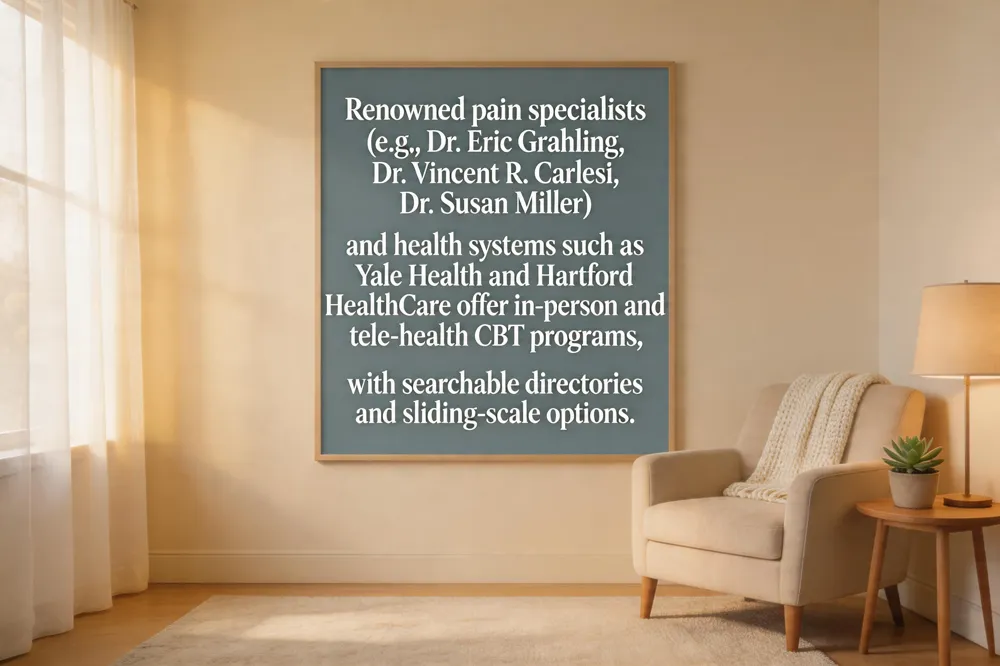 Connecticut offers a robust network of pain‑management specialists and behavioral clinicians.
Pain‑management physicians such as Dr. Eric Grahling (Comprehensive Pain Management, central CT), Dr. Vincent R. Carlesi (Pain Management Associates of Connecticut, Stamford), Dr. Susan Miller (Yale Pain Medicine), and Dr. James Lee (Connecticut Center for Pain Management) are nationally recognized for integrating interventional techniques with evidence‑based therapies like CBT.
To locate CBT providers, search licensed psychologists or pain‑management clinics that list “CBT for chronic pain” in their services; tools like Psychology Today filter by specialty, location, and insurance. Major health systems (e.g., Yale Health, Hartford HealthCare) and private practices such as Julia Flynn Counseling offer in‑person and telehealth CBT programs, often brief (6‑8 sessions) and combined with relaxation, activity pacing, and sleep hygiene.
Telehealth expands access for rural patients, though barriers include limited broadband and insurance coverage; many providers now accept virtual visits and offer sliding‑scale fees to reduce cost obstacles today effectively.
Addressing Common Concerns and Misconceptions
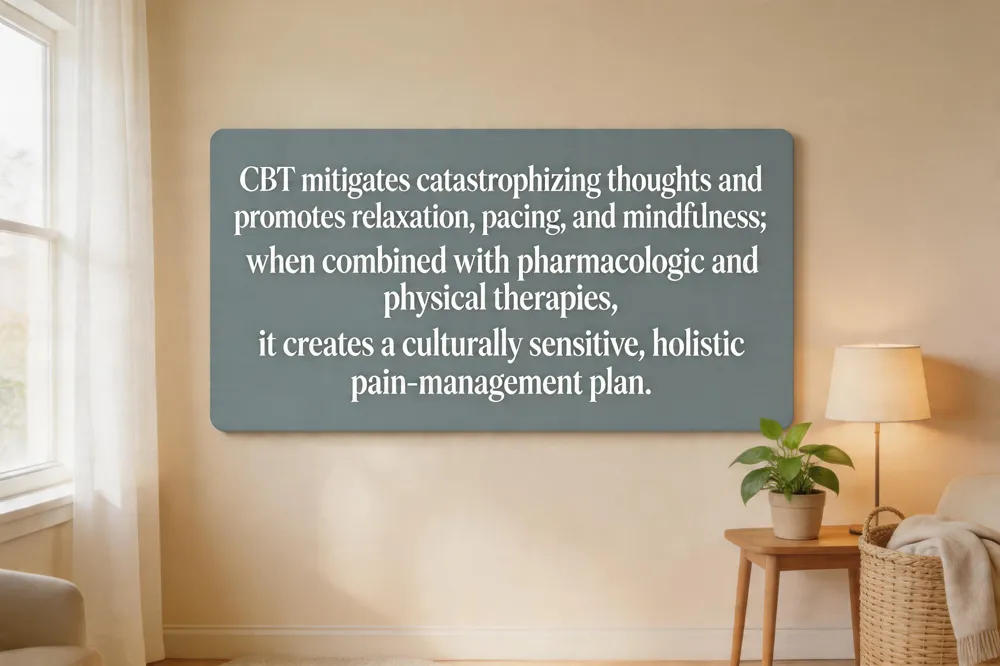 Cognitive‑behavioral therapy (CBT) eases chronic pain by teaching patients to spot and challenge catastrophizing thoughts—such as “I’ll never get better”—and replace them with balanced statements. This cognitive shift reduces emotional distress and dampens the brain’s alarm response, while behavioral tools like progressive muscle relaxation, activity pacing, and mindfulness lower muscle tension and stress, leading to measurable drops in perceived pain intensity and improved daily functioning.
Three primary pain‑management modalities complement each other: (1) pharmacologic treatment (NSAIDs, nerve‑block injections, opioid‑sparing agents); (2) physical/rehabilitative therapy (exercise, PT, acupuncture, TENS, heat/cold); and (3) psychological or behavioral strategies (CBT, mindfulness‑based stress reduction, biofeedback). Integrating these approaches creates a personalized, holistic plan that addresses both bodily and emotional contributors to pain.
Therapeutic empathy and cultural humility are essential. Therapists must first validate the client’s lived experience and acknowledge external factors—such as systemic oppression or cultural beliefs—before collaboratively exploring thought patterns. When delivered with genuine compassion and culturally informed sensitivity, CBT becomes an empowering, not invalidating, tool for chronic‑pain patients.
Putting It All Together for Sustainable Pain Relief
Cognitive‑behavioral therapy (CBT) serves as the psychological anchor in a holistic pain‑management model, linking pain education, activity pacing, relaxation, sleep hygiene, and mindset work to the physical therapies, nutrition counseling, and mindfulness practices that together reshape the brain‑body pain loop. For patients, the next step is to collaborate with a pain specialist or therapist to set SMART goals, track progress with a pain diary, and integrate CBT skills—such as thought‑recording, paced activity scheduling, and progressive muscle relaxation—into daily routines. Clinicians should conduct a biopsychosocial assessment, refer to credentialed CBT providers, and coordinate care with physical therapists, physicians, and complementary‑medicine teams to ensure consistency and monitor outcomes using tools like the Pain Disability Index or Brief Pain Inventory. Continued learning resources include the VA’s CBT‑for‑Chronic‑Pain Therapist Manual, the American Chronic Association’s pain‑management webinars, and reputable online platforms such as the Mayo Clinic’s Pain Management Center, offering worksheets, video demos, and telehealth options for ongoing support.