Introduction
Chronic insomnia affects roughly one‑third of adults and is linked to hypertension, diabetes, mood disorders, and impaired daytime functioning. Because the problem persists for months or years, it threatens both physical health and quality of life. Cognitive‑Behavioral Therapy for Insomnia (CBT‑I) is now the recommended first‑line treatment by the American Academy of Sleep Medicine and other major guidelines. Unlike sleeping pills, CBT‑I addresses the underlying thoughts and habits that keep the brain aroused at night, offering lasting relief without risk of dependence. The therapy blends cognitive techniques—identifying and restructuring unhelpful sleep‑related beliefs—with behavioral strategies such as stimulus control, sleep restriction, sleep‑hygiene education, and relaxation training. Together, these components re‑train the sleep‑wake system and reduce nighttime anxiety, producing durable improvements in sleep onset, maintenance, and overall sleep quality.
Understanding CBT‑I and Its Core Components
 Cognitive‑Behavioral Therapy for Insomnia (CBT‑I) is the gold‑standard, evidence‑based, first‑line treatment for chronic insomnia, endorsed by the American Academy of Sleep Medicine, the American College of Physicians, and NIH guidelines. It combines sleep education, stimulus‑control, sleep‑restriction, cognitive restructuring, and sleep‑hygiene strategies to break the vicious cycle of conditioned arousal and maladaptive sleep habits. Typical programs last 6‑8 weekly 45‑60‑minute sessions, delivered by certified behavioral sleep‑medicine specialists, psychologists, or trained primary‑care clinicians.
Cognitive Behavioral Therapy for insomnia manual
A CBT‑I manual guides clinicians through assessment, sleep‑diary collection, weekly session content (education, stimulus control, restriction, cognitive work, relapse‑prevention), and provides scripts, handouts, and progress‑monitoring tools.
CBT for insomnia training
Training includes multi‑day workshops or courses covering the 3‑P model of insomnia, behavioral techniques, cognitive restructuring, and case‑based practice, often offering CE credits and certification.
CBT for insomnia book
Key texts such as Cognitive Behavioral Treatment of Insomnia: A Session‑by‑Session Guide and End the Insomnia Struggle give clinicians and self‑help seekers step‑by‑step worksheets, therapeutic rationales, and practical sleep‑hygiene tips.
Cognitive restructuring for insomnia
This component helps patients identify catastrophic sleep thoughts, evaluate the evidence, and replace them with balanced statements (e.g., “Most adults function well with seven hours”), reducing pre‑sleep anxiety and physiological arousal.
What is the 3‑3‑3 rule for sleep?
Ask yourself: (1) Have you had poor sleep for ≥ 3 nights? (2) Has this persisted ≥ 3 months? (3) Does it affect ≥ 3 daily functions (fatigue, mood, concentration)? Positive answers suggest a need for formal CBT‑I evaluation.
Cognitive Strategies to Reduce Sleep‑Related Anxiety
 Cognitive‑behavioral therapy for insomnia (CBT‑I) combines thought‑work and behavior change to break the cycle of nighttime arousal. Below are practical tools you can use right away.
CBT for Sleep Worksheet
A CBT‑for‑sleep worksheet guides you through core CBT‑I components: a sleep‑efficiency chart, sleep‑hygiene checklist, and prompts to identify and challenge unhelpful beliefs (e.g., “I must get eight hours”). Tracking bedtime, caffeine, and daily activities helps you see patterns and reduce anxiety that fuels insomnia.
Mental Exercises for Sleep
Controlled breathing (4‑7‑8), guided body‑scan meditations, and progressive muscle relaxation activate the relaxation response. Visualizing a calm scene or using self‑hypnosis shifts focus away from racing thoughts, easing the transition to sleep.
Cognitive Shuffling Sleep Technique
Pick a neutral word (e.g., “cake”) and rapidly list items that start with each letter while visualizing them. This low‑stakes mental task distracts the brain from problem‑solving, lowers cognitive arousal, and promotes somnolence. It is evidence‑based and endorsed by sleep specialists.
Cognitive‑Behavioral Therapy for Insomnia PDF
Printable CBT‑I PDFs (e.g., the VA/Duke manual or Michael Tingram’s handouts) provide session outlines, sleep‑log templates, and worksheets. They can be used alone or with a therapist to reinforce skills.
Sleep Therapy Techniques
Key strategies include stimulus control (bed for sleep/sex only, leave after 15–20 min awake), sleep restriction (match time in bed to actual sleep), consistent wake‑time, and a cool, dark, quiet bedroom. Combining these with relaxation and cognitive restructuring yields lasting improvements without medication.
Behavioral Strategies: Stimulus Control, Sleep Restriction, and Sleep Hygiene
 Stimulus‑control re‑associates the bedroom with sleep: go to bed only when sleepy, keep the bed for sleep and sex, and leave the room after 15‑20 minutes of wakefulness. Sleep‑restriction therapy (SRT) shortens the time‑in‑bed to match average total sleep time (≥5½ h) to boost homeostatic drive; weekly sleep‑efficiency checks (SE = time asleep ÷ time in bed × 100) guide incremental bedtime extensions when SE ≥ 85 %. sleep‑hygiene recommendations include a cool, dark, quiet room; consistent wake‑time; no caffeine after 10 h, alcohol after 3 h, screen use after 1 h; and limiting late‑day naps.
Quick screening criteria: the 30‑30 rule flags insomnia if it takes ≥30 min to fall asleep or if wake‑after‑sleep‑onset lasts ≥30 min on ≥3 nights/week; the 10‑3‑2‑1‑0 rule advises: stop caffeine 10 h before bed, alcohol 3 h before, work 2 h before, screens 1 h before, and begin a calming routine at bedtime; the 3‑3‑3 rule (not detailed here) offers a similar stepwise approach.
Practical tips: keep a sleep diary, maintain a regular schedule, use relaxation (progressive muscle relaxation, deep‑breathing), and if you can’t sleep after ~20 min, get up and do a quiet activity. These evidence‑based steps, central to CBT‑I, can rapidly improve sleep without medication.
Digital Tools and Resources for CBT‑I
 Cognitive‑behavioral therapy for insomnia (CBT‑I) can be reinforced with a growing suite of evidence‑based digital tools. Evidence‑based apps and online programs such as the VA’s CBT‑i Coach, Somryst (FDA‑cleared), and the Sleepio platform deliver structured 6‑8‑week courses that include sleep‑restriction, stimulus‑control, relaxation exercises, and automated reminders. Free resources from reputable health organizations are also available: Mayo Clinic’s interactive CBT‑I Skill‑Building Module, the National Center for PTSD’s CBT‑I Coach app, and downloadable PDFs like the Arizona CBT‑I workbook PDF guide
How to integrate digital tools with therapist support – While self‑guided apps are helpful, pairing them with a licensed therapist (e.g., via telehealth at Julia Flynn Counseling) ensures personalized feedback, adherence monitoring, and relapse‑prevention planning. Therapists can sync sleep‑diary data from the app and adjust the program to address comorbid mood or medical issues.
Privacy and data‑security considerations – Choose platforms that encrypt user data, offer clear privacy policies, and limit data sharing to the user and clinician. Verify that the app complies with HIPAA or equivalent regulations before entering sensitive sleep‑log information.
Integrating trustworthy digital tools with professional guidance maximizes the lasting benefits of CBT‑I while keeping costs low and protecting patient confidentiality.
Practical Tips for Immediate Sleep Improvement
 How to Sleep Instantly
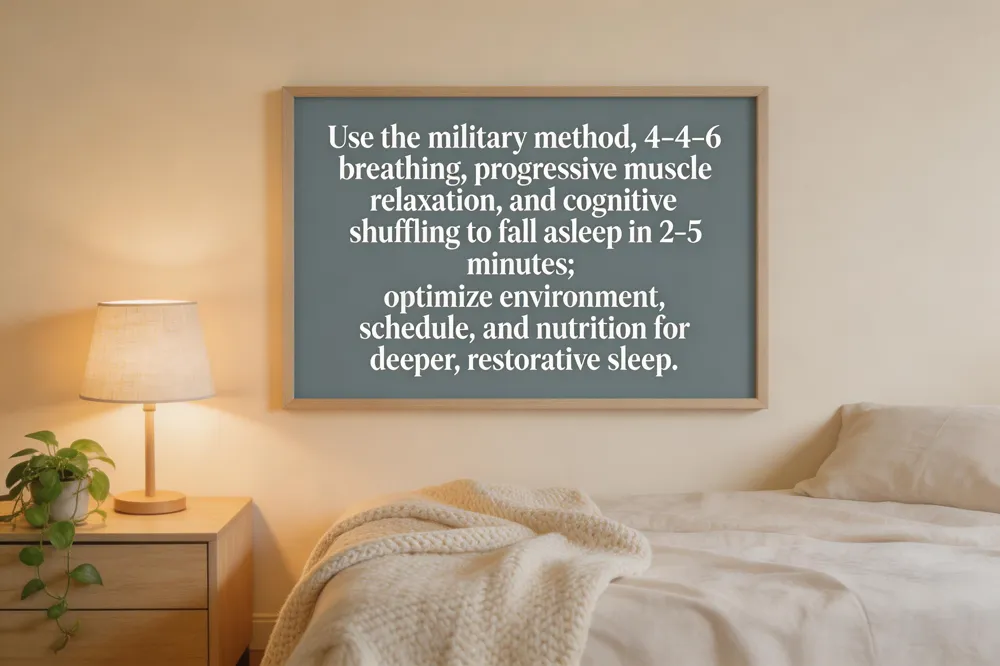
Begin with a calming bedtime routine: dim the lights, keep the bedroom cool (around 68 °F/20 °C), and eliminate screens. Lie down and practice the “military method”—progressively relax each muscle group from toes to head, clear the mind, and picture a simple, repeating image (e.g., a drifting cloud). Pair this with 4‑4‑6 breathing (inhale 4 counts, hold 4, exhale 6) to lower heart rate. If thoughts intrude, silently repeat a calming word such as “peace” while gently dismissing the worry. Consistent practice trains the body to slip into sleep within minutes.
How to Sleep Fast in 2 Minutes
The Military Sleep Method can achieve sleep onset in about two minutes when practiced nightly. Lie flat, breathe slowly, and deliberately release tension in the face, jaw, forehead, and eyes. Drop the shoulders, relax the neck and upper arms, then let the relaxation cascade down through the thighs and lower legs, pausing for ten seconds once the whole body feels limp. Clear the mind by silently repeating a phrase like “don’t think” or visualizing a calm lakeside at sunset. Regular use of this combination of controlled breathing, progressive muscle relaxation, and mental imagery trains the nervous system for rapid transition into sleep.
How to Sleep Fast in 5 Minutes
Create a dark, cool, and quiet environment and stick to a consistent bedtime. Start with diaphragmatic breathing or progressive muscle relaxation—tighten each muscle group for a few seconds, then release. Shift focus to a simple mindfulness practice: observe your breath or picture a peaceful beach. If still awake, apply the “military method”: relax facial muscles, drop shoulders, let arms hang loosely, breathe normally, relax legs, and clear the mind with a soothing image or mantra. If sleep does not arrive within five minutes, get out of bed, engage in a dim‑light activity (e.g., reading a book for a few minutes), then return when drowsy.
Cognitive Shuffling Sleep Technique
Cognitive shuffling quiet racing thoughts by rapidly generating neutral, random mental images linked to the letters of a cue word (e.g., “cake”: C‑car, C‑cottage, A‑apple, etc.). This low‑stakes associative task moves the brain out of problem‑solving mode, reducing mental arousal and encouraging a somnolent state. To try it, pick a word, list as many items that start with each letter while visualizing them, and breathe in as you generate a word and out as you picture it. The technique, developed by Dr. Luc Beaudoin, is evidence‑based and endorsed by sleep specialists as a gentle, non‑pharmacologic aid.
Mental Exercises for Sleep
- Controlled Breathing – 4‑7‑8 or 4‑4‑6 patterns slow heart rate and calm anxiety.
- Visualization – Guided body‑scan meditations or imagining a tranquil scene shift focus away from rumination.
- Progressive muscle relaxation – Tense each muscle group for a few seconds, then release, promoting physical ease.
- Self‑Hypnosis/Guided Imagery – Gentle, calming narratives further quiet the mind, making drift into restful sleep easier.
How to Increase Deep Sleep Naturally
- Consistent Schedule – Go to bed and wake up at the same time daily to stabilize the circadian rhythm.
- Bedroom Environment – Keep the room cool, dark, and quiet; use blackout curtains, earplugs, or a white‑noise machine.
- Relaxing Bedtime Rituals – Deep‑breathing, gentle yoga, or guided meditation lower stress before sleep.
- Limit Stimulants – Avoid caffeine, nicotine, and heavy meals in the evening; consider a warm, non‑caffeinated drink (e.g., chamomile tea).
- Daytime Exercise – Moderate aerobic activity earlier in the day increases the proportion of slow‑wave (deep) sleep.
How to Sleep Better at Night Naturally
- Schedule: Same bedtime/wake time every day, even on weekends.
- Environment: Cool, dark, quiet bedroom; no screens at least an hour before bed.
- Nutrition: Light snack with tryptophan‑rich protein (turkey, Greek yogurt) and complex carbs; avoid heavy, spicy, or sugary foods close to bedtime.
- Hydration: Limit fluids to reduce nighttime awakenings; a small cup of warm milk or tart‑cherry juice can aid melatonin production.
- Pre‑Sleep Routine: Write down worries or to‑do items, engage in relaxation (progressive muscle relaxation, deep breathing), and consider a warm bath to trigger the body’s cooling response.
How to Sleep Better at Night Naturally – Food
Choose a balanced snack that combines tryptophan‑rich protein (e.g., cheese, Greek yogurt) with complex carbs (whole‑grain toast) and magnesium‑rich foods (bananas, almonds). Incorporate natural melatonin sources such as tart‑cherry juice or a handful of pistachios. Avoid high‑fat, spicy, or sugary foods within three hours of bedtime, and stop caffeine at least two to three hours before sleep. A calming herbal tea like chamomile can signal the body it is time to unwind without adding stimulants.
By integrating these rapid‑onset techniques, cognitive shuffling, environmental tweaks, and nutrition strategies, you can transition more quickly into restorative sleep and enjoy lasting improvements in sleep quality.
Getting Started with CBT‑I at Julia Flynn Counseling
 Location and telehealth options: Julia Flynn Counseling serves the Las Vegas and Summerlin areas of Nevada and offers both in‑person and secure telehealth sessions, so you can begin treatment wherever you feel most comfortable.
Personalized assessment and sleep diary: A licensed therapist conducts a thorough sleep assessment, reviews a 1‑2‑week sleep diary, and tailors CBT‑I components (stimulus control, sleep restriction, cognitive restructuring, relaxation) to your unique patterns.
Integration with other mental‑health treatments: CBT‑I can be combined with therapy for anxiety, depression, or chronic pain, ensuring a holistic approach to sleep and overall well‑being.
How to begin a therapy plan: Schedule a free consultation, discuss goals, receive a customized weekly plan (typically 6‑8 sessions), and start tracking progress with the provided workbook.
CBT for insomnia therapy near me – Find local or telehealth CBT‑I at Julia Flynn Counseling.
Can I do CBT for insomnia on my own? – Self‑help tools exist, but professional guidance maximizes success.
CBT for insomnia book – See recommended manuals such as "Cognitive Behavioral Treatment of Insomnia".
CBT‑I workbook pdf – Available from our website for personal use.
CBT for insomnia pdf – Download the free PDF workbook during intake.
Conclusion
CBT‑I works by tackling both the thoughts that keep the mind racing and the habits that keep the body awake. By restructuring negative sleep beliefs, limiting time in bed to actual sleep, and reserving the bedroom for sleep and intimacy, the therapy restores a healthy sleep‑wake rhythm and reduces physiological arousal. The combined cognitive‑behavioral approach produces lasting improvements that medication cannot match, without risk of dependence or daytime sedation. If insomnia persists, a qualified sleep‑medicine professional can tailor CBT‑I to your unique patterns and guide you through each step. Take the first step toward better rest by contacting Julia Flynn Counseling for a compassionate, evidence‑based insomnia program and start your healing journey.