Why Communication Matters for Families
Honest, respectful dialogue is the cornerstone of emotional health in families. When members speak openly and listen without judgment, trust grows, conflict diminishes, and each person feels safe expressing vulnerability. Research consistently shows that active listening—full attention, paraphrasing, and empathetic feedback—improves understanding, reduces misinterpretations, and strengthens relational bonds. Clear expression, especially using “I” statements, lowers blame and promotes collaborative problem‑solving. This article will equip parents with practical tools such as structured listening exercises, non‑verbal cue awareness, and simple conversation rituals that can be integrated into daily life, empowering families to communicate more effectively and nurture lasting well‑being.
Essential Resources for Family Communication
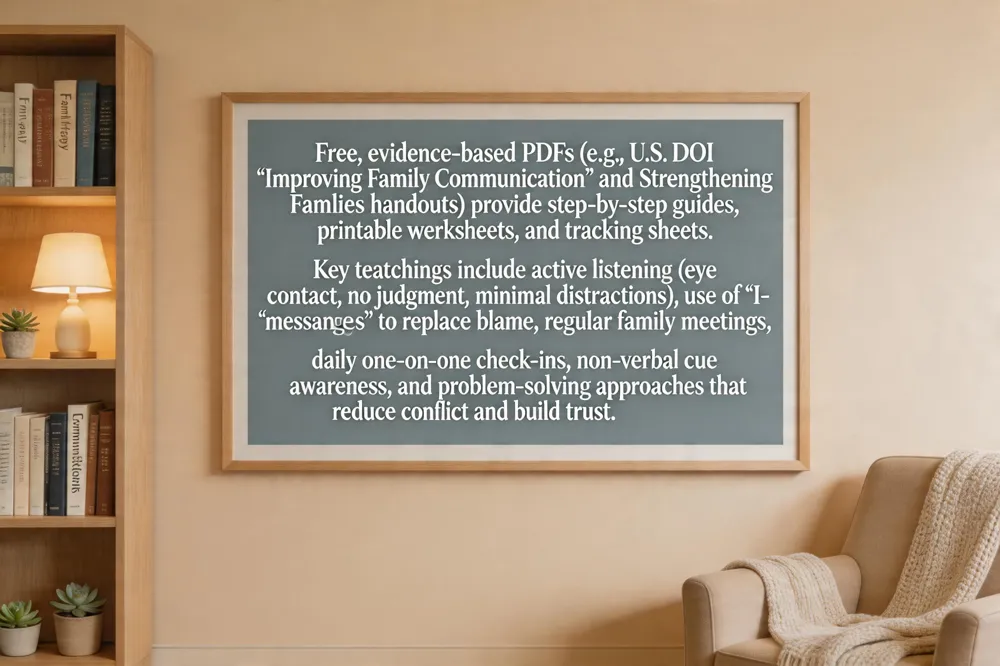 Family communication PDFs give clear, evidence‑based guidance on two‑way dialogue, emphasizing tone, facial expressions, and posture alongside words. They teach active listening—eye contact, no judgment, and minimal distractions—so each member feels heard. Using “I‑messages” (e.g., “I feel upset when the kitchen is messy”) replaces blame‑filled “you‑messages” and promotes constructive conversation.
Free PDFs such as the U.S. Department of the Interior’s “Improving Family Communication” and the Strengthening Families Program’s handouts offer step‑by‑step strategies, printable worksheets, and tracking sheets for parents and children. These resources cover regular family meetings, daily one‑on‑one check‑ins, non‑verbal cues, and problem‑solving approaches that reduce conflict and build trust.
Parent‑child communication guides highlight age‑appropriate starters, affirming language, and ways to discuss sensitive topics without judgment, fostering higher self‑esteem and cooperation.
Downloadable guides are available on reputable counseling, health‑education, and government sites, providing quick reference tools that can be printed and posted at home for ongoing practice.
Core Communication Practices for Parents
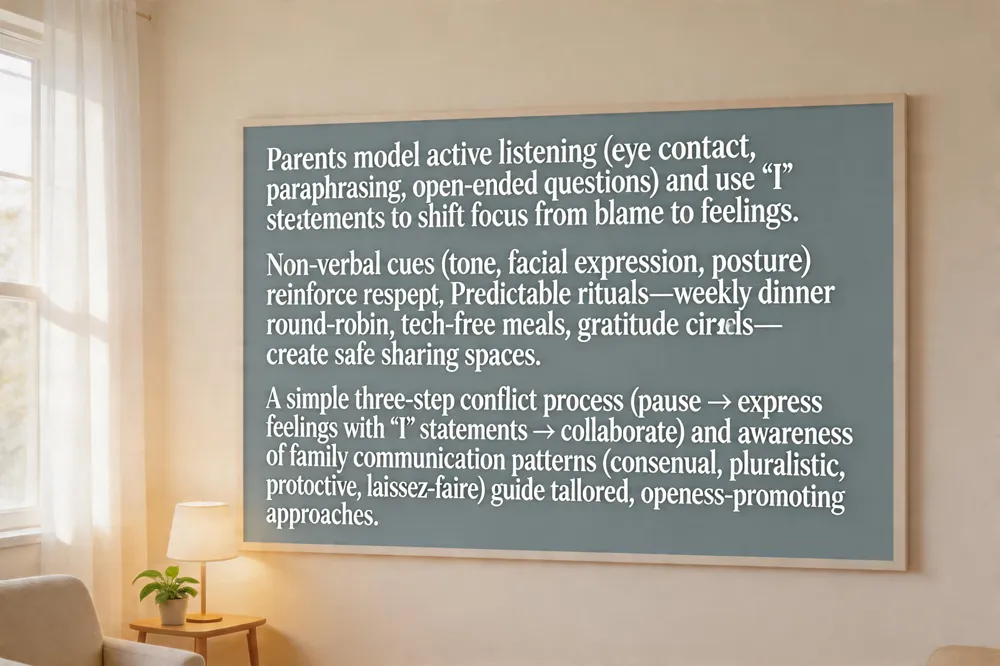 Effective family communication is the foundation of strong, resilient relationships. Parents who model active listening—maintaining eye contact, paraphrasing, and asking open‑ended questions—signal that each voice matters. Using “I” statements (e.g., “I feel worried when…”) shifts focus from blame to personal feeling, reducing defensiveness. Non‑verbal cues such as facial expressions, tone, and relaxed posture reinforce respect and help children interpret emotional tone. Regular rituals like weekly dinner round‑robin, tech‑free meals, or gratitude circles create predictable safe for sharing feelings and solving problems. When conflict arises, families can follow a simple three‑step process: pause, express feelings with “I” statements, and collaborate on solutions. Understanding a family’s communication pattern—whether consensual, pluralistic, protective, or laissez‑faire—guides parents in tailoring their approach to promote openness and healthy boundaries.
Communication skills for parents enhancing family dynamics essay – Parents who consistently practice these habits build trust, encourage emotional expression, and foster a supportive climate where every member feels heard.
Family communication strategies examples – Active listening, “I” statements, tech‑free zones, and shared traditions such as weekly game nights reinforce positive interaction.
Effective communication skills for parents – Clear, age‑appropriate language, empathetic validation, and reflective listening empower children and strengthen bonds.
Engaging Children and Teens in Dialogue
 Communication skills for kids worksheet
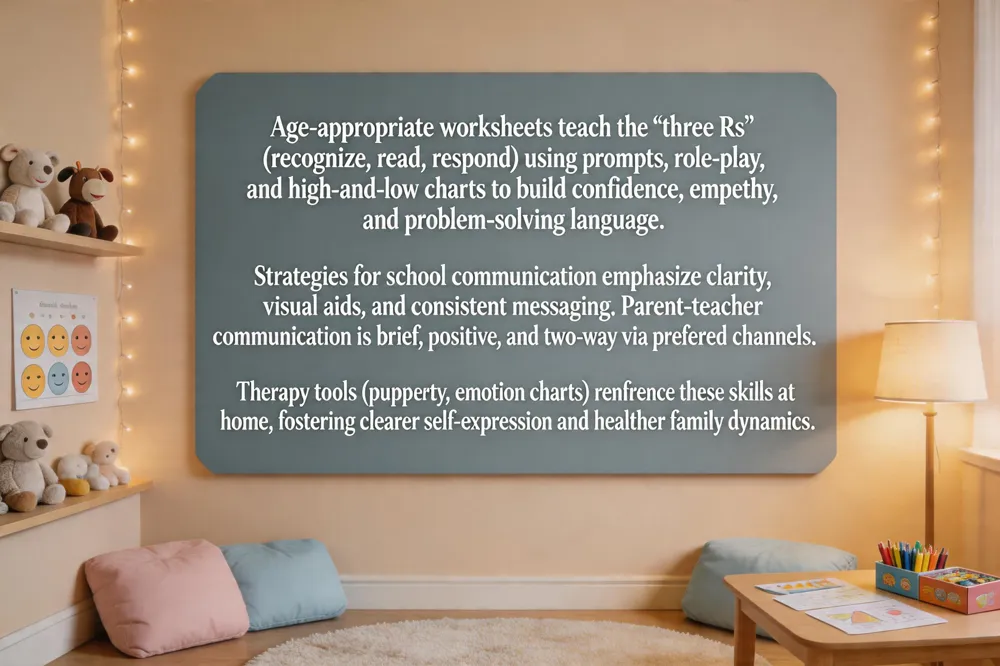
A communication‑skills worksheet is a printable or digital activity that guides children to practice expressing thoughts, active listening, and interpreting non‑verbal cues. It includes prompts like “describe a feeling using three words,” role‑play scenarios, and a “high‑and‑low” chart for self‑reflection. By breaking complex social interactions into bite‑size tasks, the worksheet builds confidence, empathy, and problem‑solving language—key for healthy relationships and for therapeutic work at Julia Flynn Counseling.
Communication skills for kids worksheet
A communication‑skills worksheet is a printable or digital activity that guides children to practice expressing thoughts, active listening, and interpreting non‑verbal cues. It includes prompts like “describe a feeling using three words,” role‑play scenarios, and a “high‑and‑low” chart for self‑reflection. By breaking complex social interactions into bite‑size tasks, the worksheet builds confidence, empathy, and problem‑solving language—key for healthy relationships and for therapeutic work at Julia Flynn Counseling.
Effective communication with child in school Clarity, age‑appropriate language, and mutual respect are essential. Explain the “what, why, and how,” use visual aids, practice active listening, validate feelings, and model respectful dialogue. Collaborate with teachers to align messages so the child hears consistent guidance at home and school, reinforcing self‑monitoring and academic success.
Communication with parents school** Warmth, positivity, and trust set the tone. Keep messages brief, focused, and regular; share strengths and growth areas. Use families’ preferred channels (app, email, phone) and invite input, creating a true two‑way dialogue that supports the student’s emotional and academic well‑being. Communication with parents can be enhanced by linking to this resource.
Communication skills for children Teach the “three Rs”: recognize, read, and respond to signals. Model active listening, use clear language, and emphasize verbal and non‑verbal cues. Role‑play, games, and ‘noticing’ statements reinforce empathy, turn‑taking, and self‑esteem.
Communication skills for kids therapy Therapists use role‑play, puppetry, emotion charts, and worksheets to help children practice the three Rs, develop empathy, and expand emotional vocabulary. Consistent reinforcement at home solidifies these skills, fostering clearer self‑expression and healthier family dynamics.
Transforming Family Dynamics and Relationships
 Family communication examples
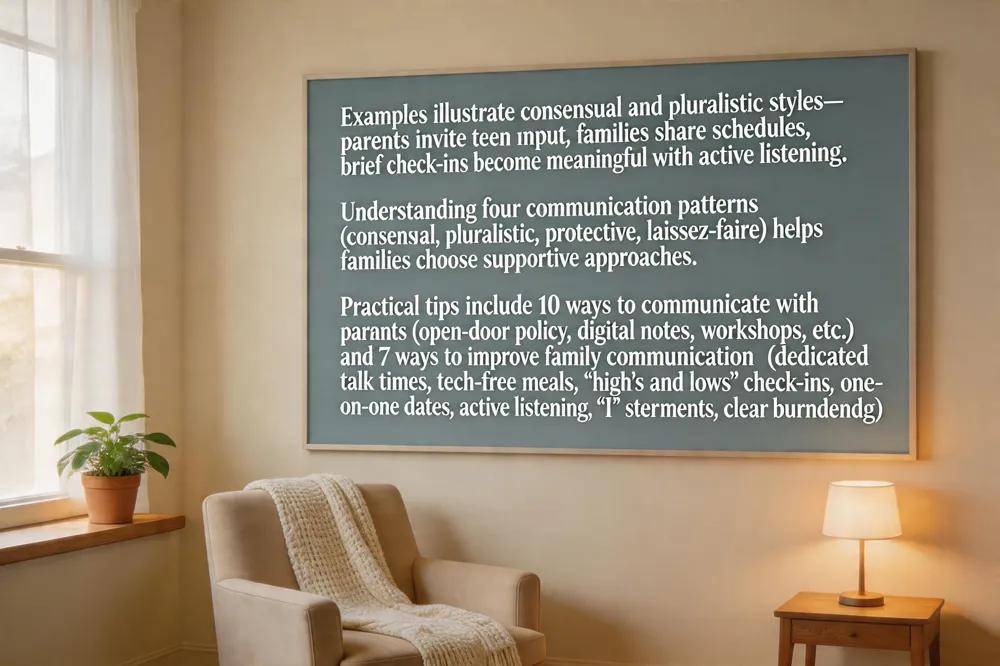
A parent calmly explains a rule while inviting a teen’s thoughts, showcasing a consensual style that blends high conversation with clear expectations. In pluralistic homes, dinner‑table talks let each member share schedules and negotiate weekend plans, fostering open dialogue and shared decision‑making. Even brief check‑ins—"Hey, how was school?"—can become meaningful when paired with active listening (eye contact, paraphrasing, open‑ended questions).
Family communication examples
A parent calmly explains a rule while inviting a teen’s thoughts, showcasing a consensual style that blends high conversation with clear expectations. In pluralistic homes, dinner‑table talks let each member share schedules and negotiate weekend plans, fostering open dialogue and shared decision‑making. Even brief check‑ins—"Hey, how was school?"—can become meaningful when paired with active listening (eye contact, paraphrasing, open‑ended questions).
Family communication patterns Patterns fall into four types: consensual (high talk/high conformity), pluralistic (high talk/low conformity), protective (low talk/high conformity), and laissez‑faire (low talk/low conformity). Open, supportive patterns promote safety and autonomy, while restrictive or avoidance‑based styles can increase anxiety and relational distress.
10 ways to communicate with parents 1 Open‑door policy; 2 Regular brief updates via email or secure apps; 3 Digital tools for quick notes; 4 Scheduled conferences; 5 Workshops on coping skills; 6 Feedback loops; 7 Celebrating milestones; 8 Transparent issue‑raising; 9 Culturally responsive materials; 10 Professional, compassionate boundaries.
7 ways to improve family communication Create dedicated talk times, share distraction‑free meals, practice “highs and lows” check‑ins, schedule one‑on‑one dates, use active‑listening techniques, employ ““I” statements” and clear boundaries, and cultivate a relaxed, tech‑free environment.
Enhancing family dynamics Prioritize empathetic listening, set and revisit shared traditions, engage in regular joint activities, stay connected with extended relatives, and infuse humor. Consistent, honest dialogue builds trust, reduces stress, and supports both mental and physical health, laying the groundwork for lasting, resilient family bonds.
Professional Support and Ongoing Growth
 Effective family communication starts with respect, warmth, and active listening. By reflecting back what parents say, asking clarifying questions, and using "I" statements, families create a safe space for honest dialogue and collaborative problem‑solving.
How to improve communication skills with parents?
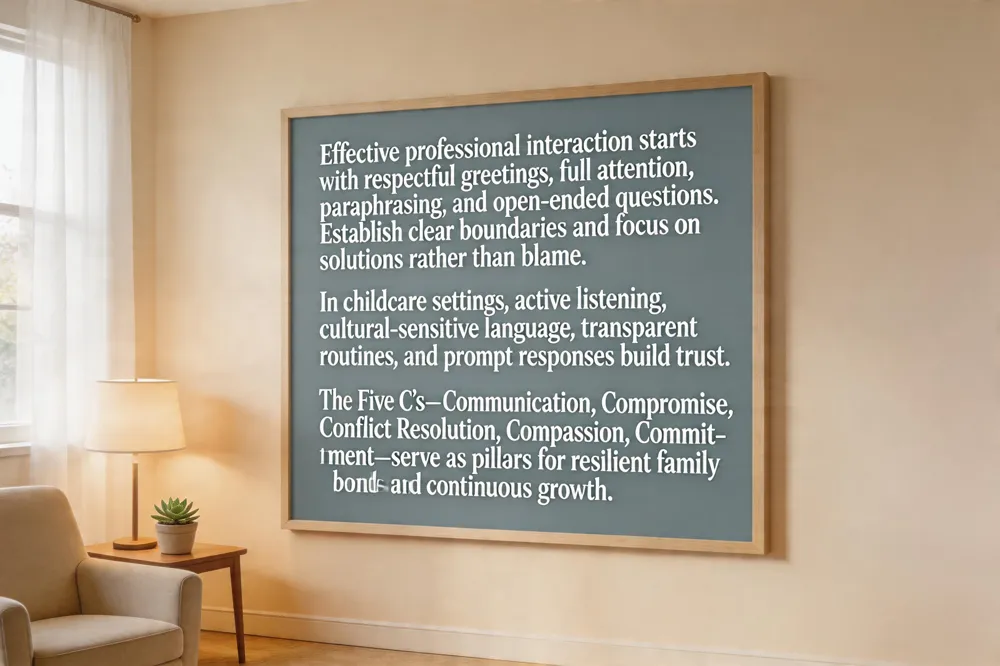
Begin with respectful, warm greetings and give full attention when they speak. Paraphrase their points, check emotions, and use open‑ended questions to deepen understanding. Set clear, mutually agreed boundaries and focus on solutions rather than blame. Reinforce positive efforts and acknowledge the emotional investment each parent makes in the child’s well‑being.
Effective communication in childcare settings
Practice active listening with eye contact, verbal acknowledgments, and summarizing concerns. Adapt language to each family’s cultural and linguistic needs, employing interpreters or translation tools when needed. Keep promises, be transparent about routines, and respond promptly to questions, using both verbal and non‑verbal cues to convey empathy.
What are the 5 C’s of relationships?
The Five C’s—Communication, Compromise, Conflict Resolution, Compassion, and Commitment—serve as pillars for building resilient family bonds, guiding families toward mutual respect, effective problem‑solving, and lasting connection.
Putting It All Together for Healthier Families
Research consistently shows that honest, respectful dialogue built on active listening, “I” statements, and clear non‑verbal cues strengthens trust and reduces misunderstanding. Families benefit from predictable rituals such as device‑free meals, weekly meetings, and brief one‑on‑one check‑ins, while intentional technology use—shared calendars or group chats—keeps information flowing without crowding face‑to‑face time. Problem‑solving steps that identify concerns, brainstorm solutions, and review outcomes, together with validation of feelings, create a collaborative climate. To make these tools a habit, choose a single daily moment—dinner, a car ride, or bedtime—to model listening, paraphrase, and express gratitude. When patterns remain stuck or conflict escalates, professional family counseling offers a neutral space to refine skills and restore connection now together.