Why Communication Matters in Romantic Partnerships
Communication is the successful conveying and sharing of ideas and feelings between partners. When couples speak openly and listen actively, they build trust by reducing assumptions and demonstrating reliability. Consistent, honest dialogue fosters intimacy, as each person feels seen, heard, and validated. Evidence‑based research shows that active‑listening practices, the use of “I” statements, and regular check‑ins lower conflict, increase relationship satisfaction, and protect against external stressors. The Gottman Institute’s stress‑reducing conversations, for instance, improve emotional connection and reduce the likelihood of divorce. Likewise, studies on Emotionally Focused Therapy reveal that clear, compassionate communication can boost relationship resilience by up to 75 %. In short, effective communication is a skill that strengthens the emotional bond, deepens intimacy, and creates a durable foundation for lasting partnership.
Spotting the Red Flags: Signs of Bad Communication
| Red Flag | Description | Impact |
|---|---|---|
| Stonewalling | Partner withdraws, avoids eye contact, gives silent treatment | Leaves other feeling ignored, erodes trust |
| Passive‑aggressive behavior | Sarcasm, subtle digs, “talking around” issues | Masks true feelings, creates confusion |
| Criticism & blame | Attacks person, uses “you always/never” | Fuels defensiveness, damages self‑esteem |
| Poor listening | Interrupting, planning response, dismissing emotions | Breaks connection, prevents understanding |
| Negative body language | Crossed arms, frowning, pacing, hostile gestures | Conveys disrespect, blocks open dialogue |
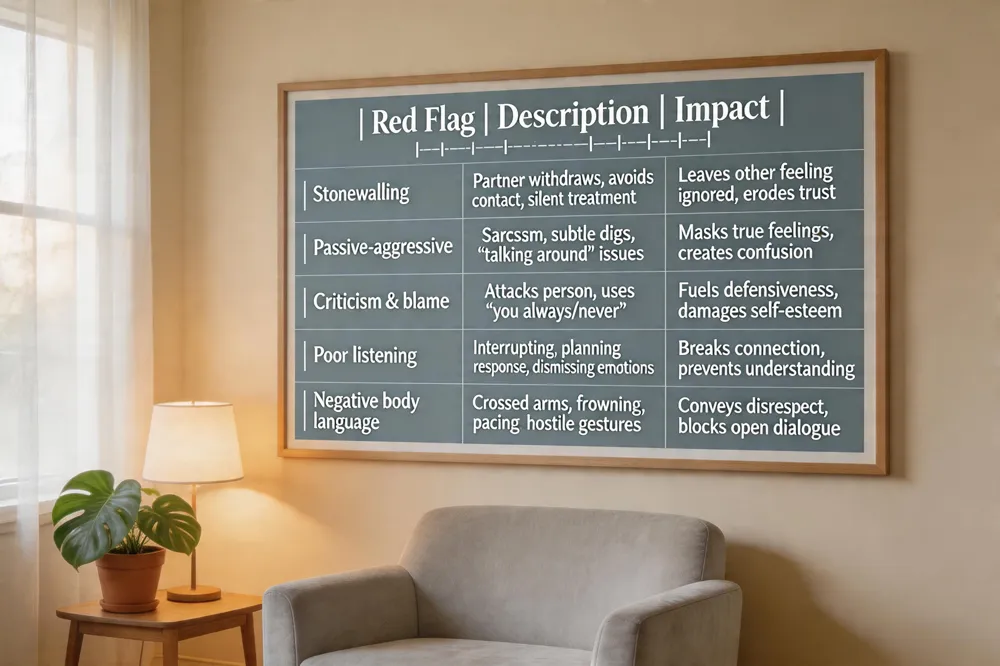 Effective communication is the lifeblood of a healthy partnership, and early recognition of warning signs can prevent deeper wounds. One of the most evident red flag is stonewalling or shut‑downs, where a partner withdraws, avoids eye contact, or resorts to the silent treatment, leaving the other feeling ignored and unheard. Passive‑aggressive behavior—sarcasm, subtle digs, or “talking around” an issue—also signals an unhealthy dynamic, as it masks true feelings behind indirect comments. Criticism that attacks the person rather than the specific behavior, especially when paired with blame language like “you always” or “you never,” fuels defensiveness and erodes trust. Poor listening habits—interrupting, planning a response instead of truly hearing, or dismissing a partner’s emotions—further break the connection. Finally, negative body language such as crossed arms, frowning, pacing, or hostile gestures conveys disrespect and blocks open dialogue. Recognizing these patterns early lets couples address them before they become entrenched, paving the way for more compassionate, honest, and collaborative conversation.
What Healthy Dialogue Looks Like: Examples of Open Communication
| Example | How It Looks | Benefit |
|---|---|---|
| I‑statement | “I felt hurt when you cancelled without notice.” | Reduces blame, clarifies feelings |
| Open‑ended question | “How was your day?” | Invites richer, honest sharing |
| Non‑verbal cue validation | “I sense you’re tense—what’s on your mind?” | Shows empathy, acknowledges unspoken emotion |
| Explicit request | “Can we set aside 30 min each night to talk?” | Clarifies expectations, avoids mind‑reading |
| Gentle honesty | “When you raise your voice, I feel scared; I’d appreciate a calmer tone.” | Balances truth with safety, builds trust |
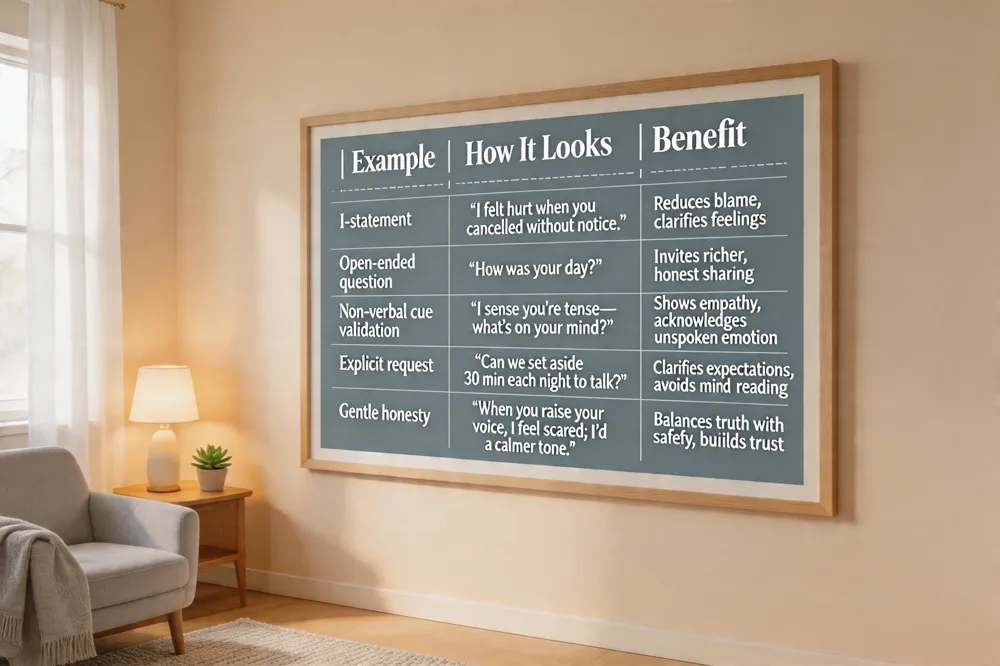 Open communication in a couple’s life means sharing feelings and needs directly, using statements such as, I felt hurt when you cancelled our plans without letting me know. It also involves asking open‑ended questions—"How was your day?"—that invite richer, more honest conversation. Partners pay attention to Non‑verbal cues; for example, noticing a tense posture or a strained tone and responding with, "I sense you’re tense—what’s on your mind?" to validate the unspoken emotion. Explicit requests replace mind‑reading: "I’d like us to set aside 30 minutes each night to talk about our day," clarifies expectations without assumption. Finally, honesty is balanced with gentleness—expressing concerns without blame, such as, "When you raise your voice, I feel scared, and I’d appreciate a calmer tone," which respects both partners’ feelings while fostering safety and trust.
Seven Practical Steps to Strengthen Relationship Communication
| Step | Action | Why It Helps |
|---|---|---|
| 1. Active listening | Full attention, eye contact, paraphrase before responding | Shows respect, ensures accurate understanding |
| 2. Assertive “I” statements | Name feelings/needs without blaming | Reduces defensiveness, promotes clarity |
| 3. Boundary setting | Clearly state what’s acceptable and respect limits | Prevents resentment, protects personal space |
| 4. Self‑regulation | Recognize triggers, pause, breathe before replying | Keeps conversation calm, avoids escalation |
| 5. Non‑verbal awareness | Notice tone, facial expression, posture | Aligns verbal message with body language |
| 6. Appreciation & feedback | Regular gratitude, constructive criticism | Strengthens positive connection, encourages growth |
| 7. Collaborative problem‑solving | Turn disagreements into joint solutions | Builds teamwork, reduces conflict |
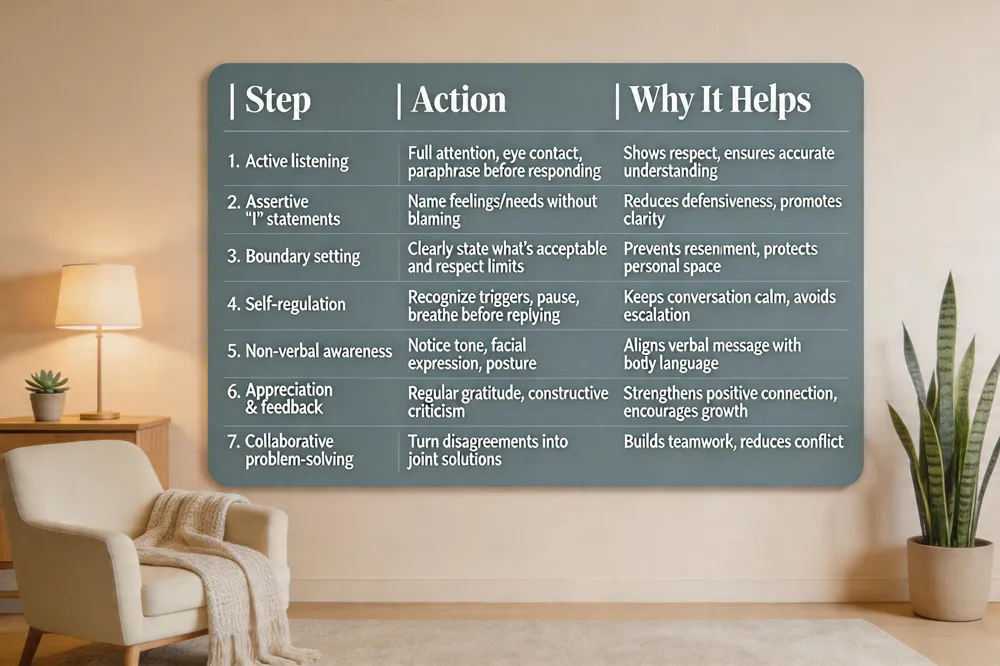 Effective communication in a partnership is built on six interlocking habits that together create a safe, supportive space for both partners. First, practice active listening: give your full attention, maintain eye contact, and paraphrase what your partner says before responding. Second, speak assertively using “[I] statements](https://www.healthline.com/health/lack-of-communication)” that name your feelings and needs without blaming. Third, set clear boundaries by articulating what is acceptable and what isn’t, and respect each other’s limits. Fourth, develop self‑regulation skills—recognize early emotional triggers, pause, breathe, and stay calm before replying. Fifth, heighten non‑verbal awareness; notice tone, facial expressions, and posture, and match them with empathetic responses. Sixth, regularly express appreciation and offer constructive feedback, turning disagreements into collaborative problem‑solving. Answering the question “7 ways to improve communication in relationships,” these six steps—active listening, assertive speaking using “I” statements, boundary setting, self‑regulation, non‑verbal awareness, and appreciation with constructive feedback—provide a practical roadmap for couples seeking deeper connection and reduced conflict.
From PDF to Practice: Effective Communication Guides
| Guideline | Technique | Purpose |
|---|---|---|
| Ground rules | Establish safe speaking environment (no interruptions, respect) | Sets clear expectations |
| Speaker‑listener protocol | Talking object, short turns, paraphrase before switching | Encourages active listening, reduces assumptions |
| Empathy drills | Reflective listening, validate feelings without judgment | Deepens emotional connection, lowers defensiveness |
| Structured time‑out | 15‑30 min mutually agreed pause when emotions surge | Allows self‑regulation, prevents escalation |
| Positive talk | Daily gratitude, affirmations | Builds “emotional bank account”, fosters goodwill |
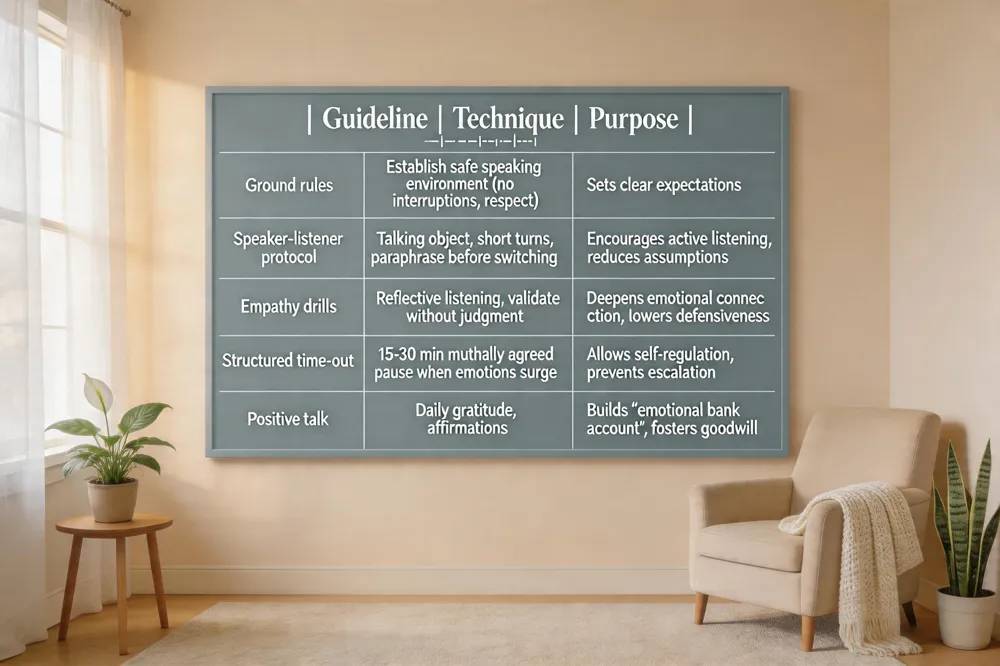 The “Effective Communication in Relationships” PDF highlights several common pitfalls that derail couple dialogue: distractions, vague language, blaming “you” statements, and the silent‑treatment. To counter these, it recommends establishing clear ground rules and employing the speaker‑listener technique—one partner holds a talking object, speaks in short turns using “I” statements, then the listener paraphrases before roles reverse. Empathy exercises, such as reflective listening and validating the partner’s feelings without judgment, deepen emotional connection and reduce defensiveness. When emotions surge, a structured time‑out (mutually agreed pause of 15‑30 minutes) allows both partners to calm, self‑regulate, and return with greater clarity. The guide also stresses increasing positive talk—regular gratitude, appreciation, and affirmations—to build an “emotional bank account” and addressing concerns early before they fester. By integrating these evidence‑based steps—ground rules, speaker‑listener protocol, empathy drills, timed pauses, and proactive positivity—couples can transform PDF advice into daily practice, fostering trust, mutual respect, and lasting relational health.
Hands‑On Exercises to Boost Your Communication Skills
| Exercise | How to Do It | Skill Developed |
|---|---|---|
| Speaker‑listener technique | 15‑30 sec “I” statement, listener paraphrases, then swap | Active listening, clear expression |
| Validation exercise | Acknowledge partner’s feeling (“I hear you felt ignored”) | Emotional safety, empathy |
| Emotionally focused conversation | Name vulnerable emotions (fear, hurt) instead of blame | Deeper connection, reduced criticism |
| Regular check‑ins | Weekly “I” statements, celebrate successes, discuss needs | Ongoing alignment, issue prevention |
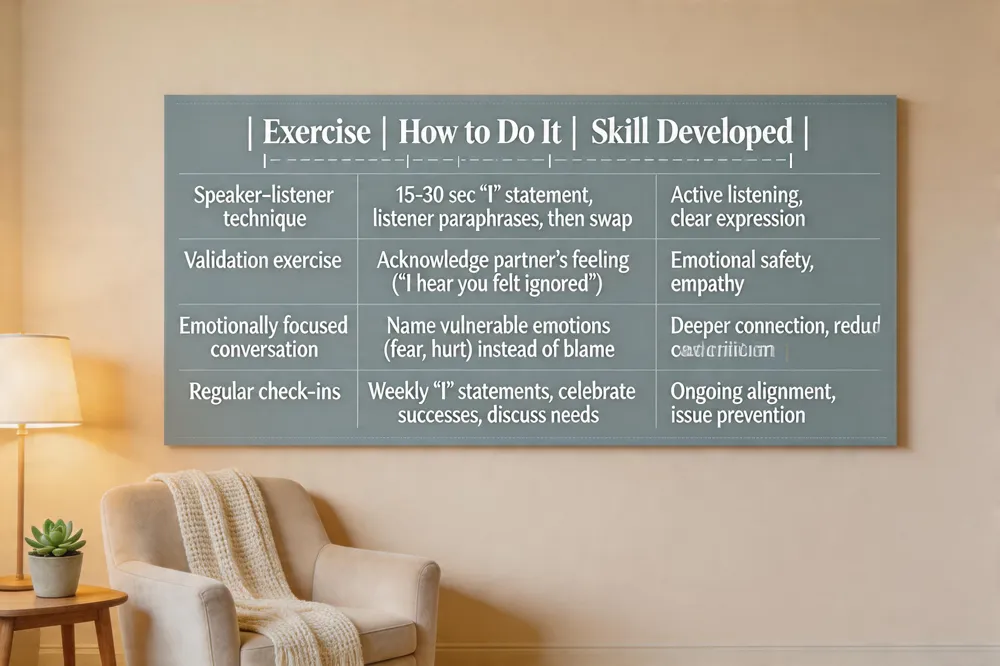 Improving communication in a relationship starts with creating a safe, focused space where each partner feels heard. One proven method is the Speaker‑Listener Technique: one partner speaks for 15‑30 seconds using “I” statements while the other listens without interrupting, then paraphrases to confirm understanding before swapping roles. This builds active‑listening skills and reduces assumptions.
Validation exercises reinforce emotional safety by having each person acknowledge the other's feelings—e.g., “I hear that you felt ignored when I didn’t call,”—without needing to agree on the interpretation.
Emotionally Focused Conversations encourage partners to name vulnerable emotions (fear, loneliness, hurt) rather than blame, fostering empathy and a deeper connection.
Finally, schedule regular check‑ins (weekly or bi‑weekly) where you use “I” statements, celebrate successes, and discuss needs or concerns. Consistent, judgment‑free check‑ins prevent issues from piling up and keep the dialogue open, ensuring both partners stay aligned and emotionally secure.
Everyday Strategies to Communicate Better with Your Partner
| Strategy | Implementation | Outcome |
|---|---|---|
| Open‑ended questions | Ask “How was your day?” instead of yes/no | richer richer sharing |
| Non‑verbal cue awareness | Observe tone, facial expression, body language | Detects hidden feelings |
| Active listening | Reflect back, avoid interrupting, use “I” statements | Improves understanding, reduces misunderstandings |
| Direct clarification | When unclear, ask “What do you mean?” | Prevents assumptions |
| Safe discussion space | Calm environment, compassionate steps (recognize, validate, state needs) | Respectful, connected dialogue |
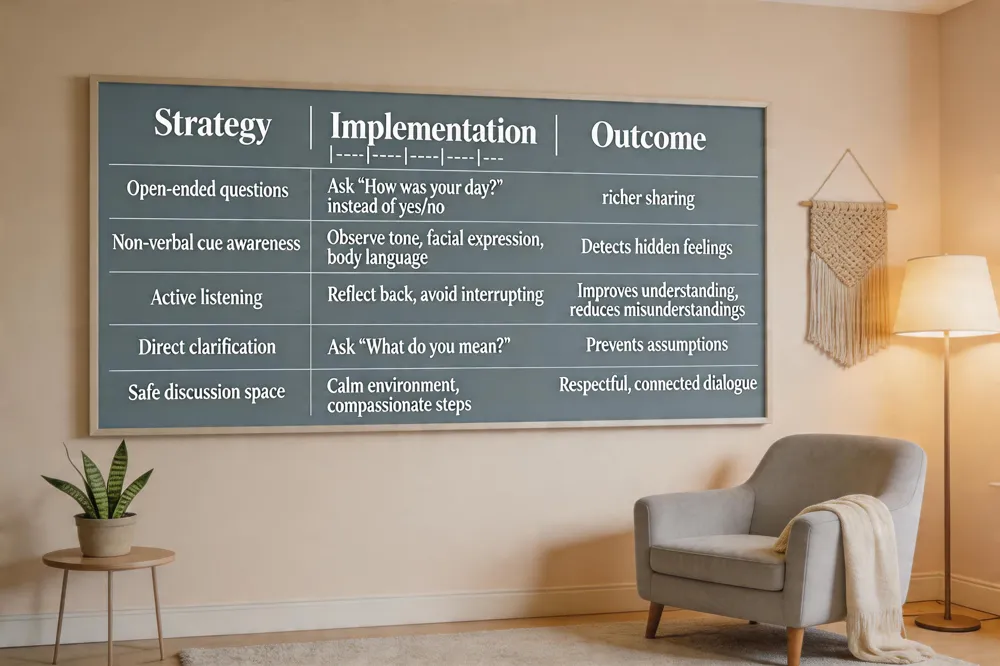 Improving communication starts with asking open‑ended questions that invite your partner to share feelings rather than just yes/no answers. Pay close attention to tone, facial expressions, and body language, because nonverbal cues often reveal what isn’t being said. Use active listening: reflect back what you heard, avoid interrupting, and respond with “I” statements to express your own experience without blame. Don’t assume you know what your partner is thinking; when unclear, ask directly and clarify. Finally, create a safe, calm space before discussing difficult topics, using compassionate communication steps—recognize emotions, validate, and state needs—to keep the conversation respectful and connected. By integrating open‑ended questions, non‑verbal cue awareness, paraphrasing, direct clarification, and a secure discussion environment, couples can build trust, reduce misunderstandings, and strengthen their emotional bond.
Requesting Better Communication: A Compassionate Approach
| Component | Example | Effect |
|---|---|---|
| Open‑ended prompt | “What’s on your mind right now?” | Expands conversation beyond yes/no |
| Non‑verbal observation | “I’m sensing tension; can we explore it?” | Shows empathy, invites deeper sharing |
| Compassionate formula | “I feel ___ when ___, and I need ___.” | Expresses emotions without blame |
| Preferred style inquiry | “Is there a way I could share my thoughts that helps you feel heard?” | Encourages mutual adaptation |
| Collaborative planning | Weekly “Bae Session” check‑in | Sustains ongoing healthy communication |
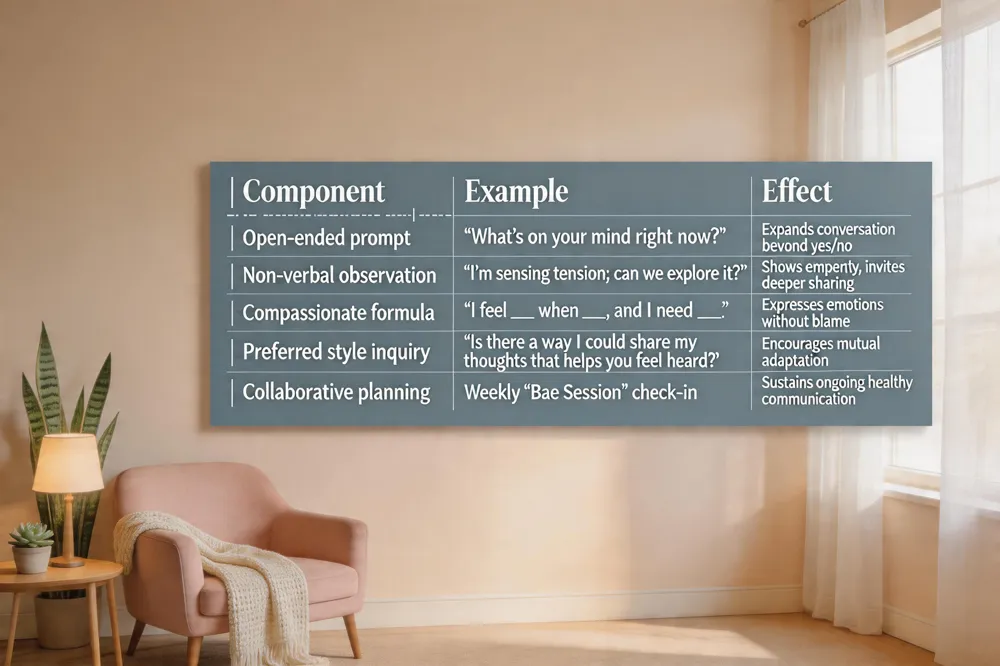 Improving how you and your partner talk starts with inviting openness. Begin with open‑ended prompts such as “How was your day?” or “What’s on your mind right now?” so the conversation can expand beyond simple yes/no answers. While listening, observe non‑verbal cues—tone, facial expression, posture, eye contact—and gently acknowledge them: “I’m sensing some tension; can we explore what’s behind that?”
Next, use a compassionate communication formula: “I feel ___ when ___, and I need ___”. This structure expresses your emotions without blaming and makes your request clear. Follow it with a direct inquiry about preferred style: “Is there a way I could share my thoughts that would help you feel more heard?”
Finally, move to collaborative planning. Propose a regular “check‑in” slot—perhaps a weekly “Bae Session”—where both partners discuss what’s working and what needs adjustment. By combining open‑ended questions, attentive non‑verbal observation, a respectful II‑statement framework, and joint scheduling, you create a safe, ongoing space for healthier communication.
Understanding the 3‑3‑3 Rule and Its Role in Relationship Growth
| Checkpoint | Timing | Focus |
|---|---|---|
| Three‑date checkpoint | After 3 dates | Chemistry authenticity, value alignment |
| Three‑week checkpoint | After 3 weeks | Stress handling, everyday compatibility |
| Three‑month checkpoint | After 3 months | Patterns of behavior, emotional safety, long‑term goals |
| Consistency evaluation | Across all checkpoints | Communication habits, non‑verbal cues, kindness |
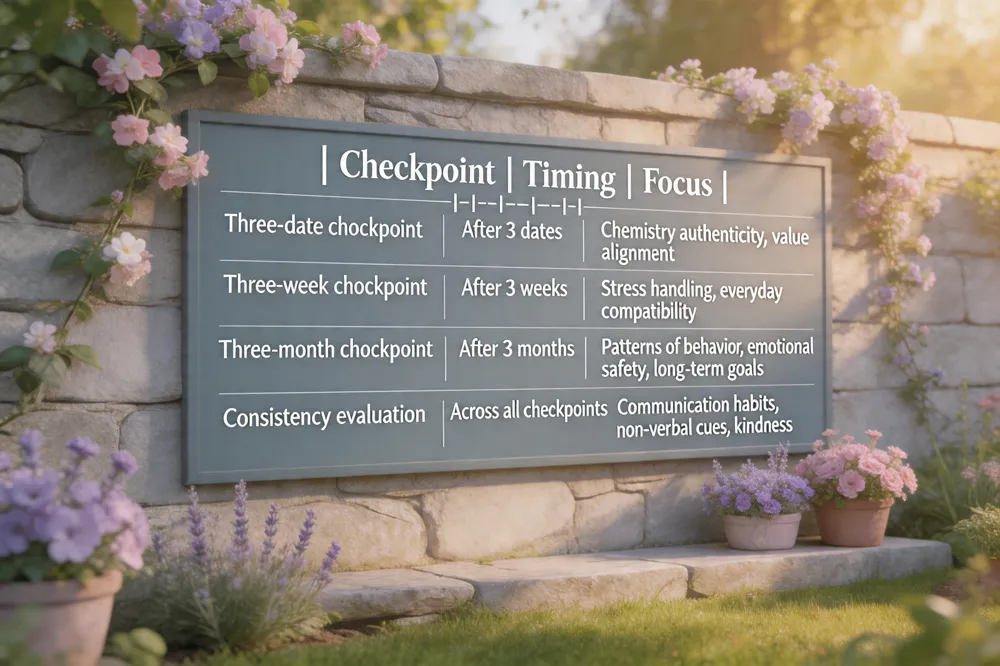 The 3‑3‑3 rule is a simple dating guideline that creates three evaluation checkpoints early in a relationship. The first checkpoint comes after three dates, giving you three separate interactions to see whether impressions are consistent and genuine. The second checkpoint arrives at the three‑week mark, when you’ve had time to observe each other in varied, everyday contexts and can assess deeper compatibility. The third checkpoint is at three months, a point at which patterns of behavior, values, and emotional connection become clearer. Using these milestones helps you decide whether to deepen the relationship or move on, while still allowing flexibility for each couple’s unique timeline.
Three‑date checkpoint – After three dates, ask yourself if the chemistry feels authentic and if the partner’s values align with yours. Notice whether the conversations flow naturally and whether you feel respected.
Three‑week checkpoint – By week three, you’ve likely experienced routine moments—work stress, family interactions, or leisure activities. Evaluate how you both handle stress, support each other, and maintain interest.
Three‑month checkpoint – At three months, recurring patterns emerge. Reflect on emotional safety, conflict‑resolution style, and long‑term goals. Consistency in kindness, reliability, and shared vision signals compatibility.
Evaluating consistency and compatibility – Across all checkpoints, look for alignment in communication habits (active listening, I statements, open‑ended questions) and in non‑verbal cues such as eye contact and tone. When both partners consistently demonstrate honesty, kindness, and thoughtfulness, the relationship is more likely to thrive. If significant gaps appear, the rule encourages a compassionate conversation about next steps, fostering growth whether together or individually.
Why Communication Breakdowns Happen and How to Overcome Them
| Common Issue | Root Cause | Solution |
|---|---|---|
| Unidentified feelings | Lack of emotional labeling, childhood defenses | Practice naming emotions, use “I” statements |
| Mind‑reading expectations | Assuming partner should know needs | Ask open‑ended questions, clarify explicitly |
| Passive‑aggressive signals | Indirect expression of frustration | Shift to direct, empathetic communication |
| Defensive habits (criticism, stonewalling) | Fear of threat, self‑shielding | Active listening, structured time‑outs, empathy drills |
| Persistent patterns | Habitual communication style | Speaker‑listener technique, scheduled check‑ins, therapeutic tools |
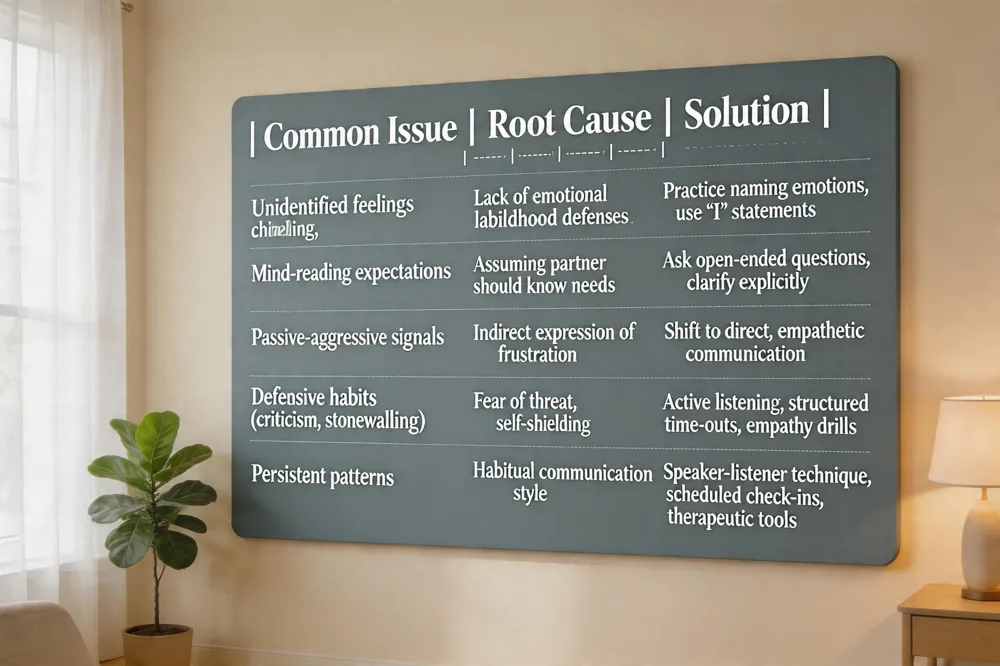 Communication breakdowns often start with unidentified feelings and needs. When a partner can’t label what they’re experiencing, they fall back on protective habits formed in childhood—criticism, defensiveness, or stone‑walling—to keep the perceived threat at bay. These habits act like a mental shield, but they also block honest dialogue and leave both people guessing. A common trap is mind‑reading expectations: assuming the other person should just know what you’re feeling. This leads to indirect or passive‑aggressive signals that are easy to misinterpret. To break the cycle, couples can practice open‑ended questioning (e.g., “How was your day?”) and become aware of tone, facial expressions, and body language, which often convey more than words. Active listening—reflecting back what is heard without jumping to solutions—creates a judgment‑free space. When patterns persist, therapeutic guidance offers structured tools such as the Speaker‑Listener technique, “I” statements, and scheduled check‑ins, helping partners replace old defenses with clear, compassionate communication that rebuilds trust and connection.
Putting It All Together: A Path to Deeper Connection
Key takeaways: active listening, "I" statements, open‑ended questions, and regular, judgment‑free check‑ins build trust and reduce misunderstandings. Next steps for couples: schedule a weekly "Bae Session," practice reflective dialogue, and explicitly state needs (venting, advice, validation). Resources and support: Gottman Method tools (Love Maps, stress‑reducing conversations), non‑violent communication guides, and affordable couples counseling options—both in‑person and online—to sustain growth and intimacy.