Why Supportive Therapy Matters for New Graduates
The jump from college to a career is a profound life transition that often brings a mix of excitement, fear, and uncertainty. Recent graduates frequently grapple with emotional challenges such as anxiety, depression, loneliness, imposter syndrome, and a sense of identity loss, as well as practical stressors like job‑search pressure, mounting student‑loan debt, budgeting, and the abrupt loss of the structured campus community. Evidence‑based approaches—particularly supportive therapy, Cognitive‑Behavioral Therapy (CBT), Acceptance and Commitment Therapy (ACT), and mindfulness‑based interventions—have been shown to reduce depressive and anxiety symptoms, improve resilience, and foster clearer value‑driven goal setting for young adults. Therapists can help graduates normalize these feelings, establish daily routines, build new social networks, and develop coping skills that align with personal values and career aspirations. A brief preview of resources includes insurance‑compatible therapists (e.g., California Zencare providers, Ohio NAMI crisis lines), telehealth platforms, community support groups, and self‑care apps (Headspace, Calm, Goodbudget). Together, these strategies create a supportive framework that eases the transition and promotes long‑term mental‑health stability.
Understanding the Emotional Impact of Graduation
 Why is graduating college so sad?
Graduating ends a structured, supportive environment where routines, friendships, and academic goals are clear. The sudden loss of this safety net triggers anxiety, identity confusion, and grief for the chapter that closed, making the moment feel bittersweet.
Why is graduating college so sad?
Graduating ends a structured, supportive environment where routines, friendships, and academic goals are clear. The sudden loss of this safety net triggers anxiety, identity confusion, and grief for the chapter that closed, making the moment feel bittersweet.
Feeling lost after college The shift from a predictable academic world to an open‑ended adult life can leave you questioning identity, values, and direction. Re‑establish a daily rhythm, explore volunteering or short‑term work, and set small, achievable goals. If anxiety overwhelms, a licensed therapist can help you process feelings and develop coping strategies.
Post‑college loneliness Friends disperse, campus community fades, and new routines can feel isolating. Intentionally build new connections through hobby groups, volunteer work, or community classes. Keep regular contact with trusted friends via video calls. Persistent loneliness warrants talking to a therapist for support and coping tools.
Feeling empty after college Loss of structure and community can create aimlessness and low mood. Re‑create a schedule, set modest goals, and reconnect with mentors. If emptiness persists, evidence‑based therapies like CBT or ACT, guided by a therapist, can clarify values and restore purpose.
Supportive Therapy Approaches for Recent Graduates
 From college to career: supportive therapy for recent graduates?
Graduating from college often brings excitement mixed with anxiety as you enter the workforce. Supportive therapy offers a safe space to explore lingering academic pressures, clarify career goals, and develop coping strategies for job‑search uncertainty. Evidence‑based modalities such as Cognitive‑Behavioral Therapy (CBT) and brief solution‑focused interventions boost confidence, reduce perfectionism, and teach practical skills for managing stress, time, and workplace relationships. Therapy also helps you build a resilient identity beyond the student role, fostering self‑compassion and a balanced view of success and setbacks.
From college to career: supportive therapy for recent graduates?
Graduating from college often brings excitement mixed with anxiety as you enter the workforce. Supportive therapy offers a safe space to explore lingering academic pressures, clarify career goals, and develop coping strategies for job‑search uncertainty. Evidence‑based modalities such as Cognitive‑Behavioral Therapy (CBT) and brief solution‑focused interventions boost confidence, reduce perfectionism, and teach practical skills for managing stress, time, and workplace relationships. Therapy also helps you build a resilient identity beyond the student role, fostering self‑compassion and a balanced view of success and setbacks.
Post college anxiety Post‑college anxiety arises from loss of structure, financial pressure, and identity uncertainty. Normal feelings of sadness, self‑doubt, and fear can be mitigated by setting realistic goals, limiting social‑media comparison, and establishing a daily routine. Connecting with a therapist, career counselor, or trusted friends provides essential emotional support and perspective. Practice self‑compassion and recognize that growth into this new chapter is gradual.
What is the #1 most diagnosed mental disorder? Anxiety disorders are the most frequently diagnosed mental‑health condition in the United States, affecting roughly 40 million adults. They include generalized anxiety, panic, OCD, PTSD, and social anxiety. Persistent fear and excessive worry often lead individuals to seek professional evaluation and treatment.
Therapy for young adults Therapy for recent graduates typically blends CBT, Acceptance and Commitment Therapy (ACT), Dialectical Behavior Therapy (DBT) and mindfulness‑based interventions. These approaches address anxiety, depression, imposter syndrome, and identity shifts. Supportive counseling, strengths‑based techniques, and goal‑setting help build resilience, clarify values, and develop practical coping skills for daily stressors.
Career Counseling and Coaching Resources
 Transitioning from college to the workforce can feel overwhelming, but evidence‑based career counseling and coaching can provide both practical tools and emotional support.
Career counseling for college students near me – Julia Flynn Counseling offers personalized, evidence‑based guidance that helps students explore majors, identify strengths, and develop a job‑search strategy. Licensed therapists conduct career assessments, assist with résumé and cover‑letter writing, practice interview skills, and address anxiety related to career decisions. Services are available in‑person or via telehealth, and the practice collaborates with campus career‑development offices to connect students with local internships, job fairs, and networking events.
Entry‑level career coach – An entry‑level coach works with recent graduates and young adults to clarify goals, build professional résumés, and develop interview and networking skills. By integrating practical job‑search tactics with supportive coaching, the coach reduces stress, fosters a growth mindset, and aligns career planning with mental‑wellness.
Career coach for recent college graduates – This coach translates academic achievements into marketable skills, crafts compelling LinkedIn profiles, and provides structured job‑search plans. Through interview practice and networking strategies, the coach builds confidence and lowers the anxiety that often accompanies the first professional steps.
Career coach young adults – Focused on strengths, interests, and values, a young‑adult coach combines assessments, goal‑setting, and job‑search techniques while explicitly addressing imposter syndrome and self‑doubt. Regular sessions offer accountability, feedback, and emotional resilience.
Student career coach – A student coach uses evidence‑based assessments to help adolescents and young adults make informed decisions about education, internships, and employment. Integrating therapeutic counseling, the coach reduces anxiety and equips students with résumé‑writing, interview, and networking skills.
College & Career Coach jobs – These positions exist in university career centers, community colleges, nonprofits, and remote platforms. Responsibilities include one‑on‑one counseling, workshops on résumé and interview skills, and partnership with faculty and employers. Salaries range from $24 k to $72 k, and roles often require a background in counseling, education, or human resources.
Best career advice for college graduates – Clarify interests and strengths, set realistic short‑term goals, and build a professional network early. Pursue contract, temporary, or freelance work to gain experience if internships are scarce, and consider tuition‑reimbursement programs before committing to graduate school. Prioritize mental health by regularly checking in, seeking support when needed, and viewing your career as a marathon rather than a sprint.
Transitioning from college to the workforce can feel overwhelming, but evidence‑based career counseling and coaching can provide both practical tools and emotional support.
Career counseling for college students near me – Julia Flynn Counseling offers personalized, evidence‑based guidance that helps students explore majors, identify strengths, and develop a job‑search strategy. Licensed therapists conduct career assessments, assist with résumé and cover‑letter writing, practice interview skills, and address anxiety related to career decisions. Services are available in‑person or via telehealth, and the practice collaborates with campus career‑development offices to connect students with local internships, job fairs, and networking events.
Entry‑level career coach – An entry‑level coach works with recent graduates and young adults to clarify goals, build professional résumés, and develop interview and networking skills. By integrating practical job‑search tactics with supportive coaching, the coach reduces stress, fosters a growth mindset, and aligns career planning with mental‑wellness.
Career coach for recent college graduates – This coach translates academic achievements into marketable skills, crafts compelling LinkedIn profiles, and provides structured job‑search plans. Through interview practice and networking strategies, the coach builds confidence and lowers the anxiety that often accompanies the first professional steps.
Career coach young adults – Focused on strengths, interests, and values, a young‑adult coach combines assessments, goal‑setting, and job‑search techniques while explicitly addressing imposter syndrome and self‑doubt. Regular sessions offer accountability, feedback, and emotional resilience.
Student career coach – A student coach uses evidence‑based assessments to help adolescents and young adults make informed decisions about education, internships, and employment. Integrating therapeutic counseling, the coach reduces anxiety and equips students with résumé‑writing, interview, and networking skills.
College & Career Coach jobs – These positions exist in university career centers, community colleges, nonprofits, and remote platforms. Responsibilities include one‑on‑one counseling, workshops on résumé and interview skills, and partnership with faculty and employers. Salaries range from $24 k to $72 k, and roles often require a background in counseling, education, or human resources.
Best career advice for college graduates – Clarify interests and strengths, set realistic short‑term goals, and build a professional network early. Pursue contract, temporary, or freelance work to gain experience if internships are scarce, and consider tuition‑reimbursement programs before committing to graduate school. Prioritize mental health by regularly checking in, seeking support when needed, and viewing your career as a marathon rather than a sprint.
Practical Resources for Health, Finance, and Well‑Being
 Graduates should quickly secure health insurance—either through an employer, a parent’s plan, or the state marketplace (e.g., Covered California). When choosing a primary‑care physician, weigh location, communication style, specialty expertise, insurance acceptance, and patient reviews; Fresno area providers such as Valley Health Team and Community Health Partners accept Covered California, Sliding Fee, and Medi‑Cal plans.
Mental‑health support is essential. Crisis lines are available 24/7: the national 988 Suicide and Crisis Lifeline, CalHOPE Warm Line (1.833.317.HOPE), and local resources like Fresno County DBH Mobile Crisis Unit (559.600.6000). In Akron, a broad network of outpatient and inpatient services exists, including Cleveland Clinic Akron General Psychiatry, Portage Path’s Mobile Therapy Center, and Summa Health Behavioral Health Institute (phone 234‑475‑4357). Red Oak Behavioral Health offers trauma‑informed individual and group counseling, mentoring, and telehealth services throughout the Greater Akron area.
Self‑care tools are readily available. Free printable worksheets in PDF format—covering daily inventories, gratitude practices, coping‑skill strategies, and trauma‑focused plans—can be downloaded from sites like ChoosingTherapy.com without registration. Apps such as Headspace, Calm, Reflectly Journal, and Daylio support mindfulness, mood tracking, and stress management.
Financial planning resources include budgeting guides (e.g., the 50/20/30 rule), Covered California’s plan comparison tools, and local financial‑counseling services.
Therapists specializing in recent graduate transitions employ evidence‑based modalities: CBT, DBT, psychodynamic therapy, mindfulness‑based interventions, ACT, and supportive therapy—all aimed at reducing anxiety, depression, imposter syndrome, and adjustment challenges.
Navigating Post‑Graduation Challenges and Future Planning
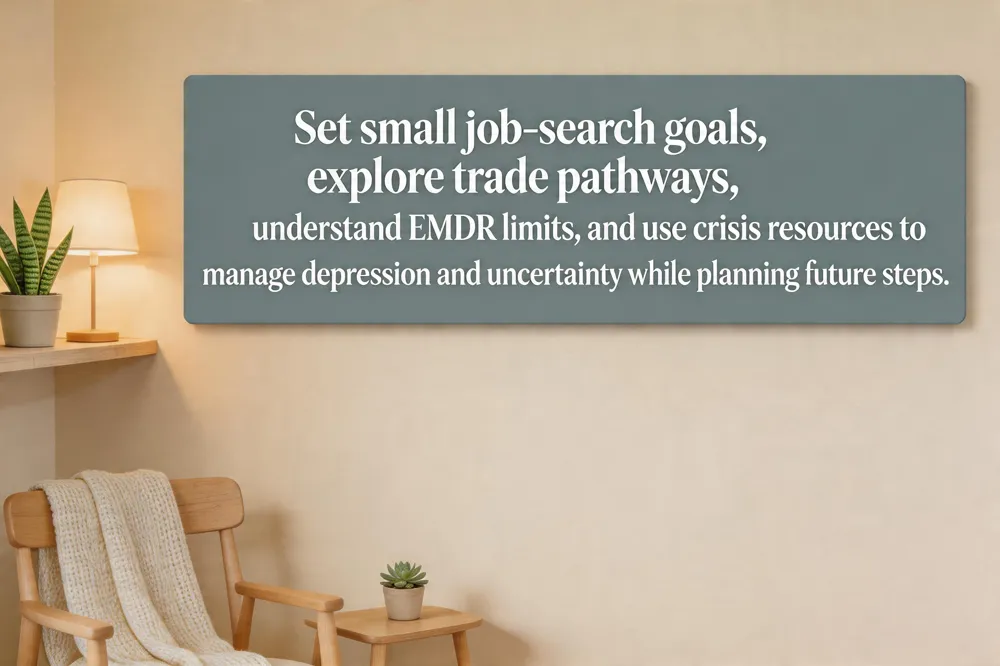 Graduating can feel like stepping into a fog of uncertainty, especially when a job doesn’t materialize quickly. Job‑search depression and coping often begins with feelings of being stuck, loss of motivation, and anxiety about the future. Setting small, realistic goals—such as dedicating 3‑5 hours a day to résumé tailoring or networking—while preserving time for activities that bring joy can break the cycle of hopelessness. Staying connected with supportive friends, family, or a therapist helps counter isolation, and professional counseling can re‑frame self‑worth beyond employment status.
Gen Z trends in education and employment show a growing skepticism toward a four‑year degree due to rising tuition, student‑loan debt, and a shrinking entry‑level white‑collar market. Many young adults are opting for skilled‑trade pathways that offer on‑the‑job training, solid wages, and clearer return on investment, emphasizing flexibility and long‑term demand.
Pathways to become a therapist or career counselor involve earning a bachelor’s in a related field, completing a master’s in counseling with career‑development coursework, securing supervised clinical hours (≈600 hours), obtaining licensure, and pursuing certifications such as the NCDA Certified Career Counselor. Continuous professional development and familiarity with emerging career‑readiness competencies are essential.
EMDR suitability and crisis resources: EMDR is not recommended for individuals experiencing psychosis, severe dissociation, uncontrolled bipolar swings, active substance abuse, or ongoing crisis. In these cases, CBT, ACT, or trauma‑focused psychodynamic therapy are safer alternatives. Immediate crisis support is available via the 988 Suicide & Crisis Lifeline, SAMHSA Helpline (1‑800‑662‑HELP), or local emergency services.
Building a Resilient Future After Graduation
Graduates often feel loneliness, anxiety, financial strain, and loss of routine as they leave college. These emotional and practical challenges can intensify without support. Combining evidence‑based therapy—such as CBT, ACT, or supportive counseling—with career guidance helps clarify values, set realistic goals, and build coping skills for job searching and life transitions. Professional counselors can also problem‑solve financial worries and navigate relationships, reducing isolation. If you recognize these stressors, reach out promptly. Julia Flynn Counseling offers personalized, client‑centered services both in‑person and via telehealth. Call today to schedule a confidential consultation and begin building a resilient future for your well‑being.