Why Sibling Grief Deserves Special Attention
Sibling relationships are often the longest and most intimate bonds in a person’s life, providing a shared history of memories, jokes, and family roles. When a sibling dies, survivors lose not only a loved one but also a part of their own identity, which can trigger feelings of guilt, anger, and fear of forgetting shared experiences. The unique dynamic of sibling grief—marked by mutual knowledge of family rituals, inside jokes, and collective milestones—means that mourning is tightly intertwined with the family’s narrative. Early, evidence‑based intervention is critical; research shows that counseling within the first six months reduces the risk of complicated grief and supports healthy emotional processing. Therapies such as CBT, Narrative Therapy, and Family Systems Therapy can be tailored to a sibling’s developmental stage, while peer‑support groups normalize emotions and reinforce the sense of belonging. Prompt, targeted care helps siblings preserve their shared legacy while rebuilding a resilient sense of self.
Understanding Shared Grief and the Sibling Experience
Table: Common Emotions & Coping Strategies for Siblings
| Emotion | Typical Triggers | Suggested Coping Strategy |
|---|---|---|
| Guilt | Feeling responsible for the death or surviving | Write a letter to the deceased expressing feelings; share in a trusted group |
| Anger | Perceived unfairness of loss | Physical activity (e.g., running, punching a pillow); therapist‑guided CBT to reframe thoughts |
| Fear of Forgetting | Loss of shared memories | Create a memory box or digital scrapbook; engage in storytelling rituals |
| Anxiety about Role Changes | New family responsibilities | Family systems therapy sessions to clarify expectations; schedule regular check‑ins with parents |
| Loneliness | Lack of shared experiences with the deceased | Peer‑support groups (e.g., GriefShare, Sibling Grief Club); online forums for sibling stories |
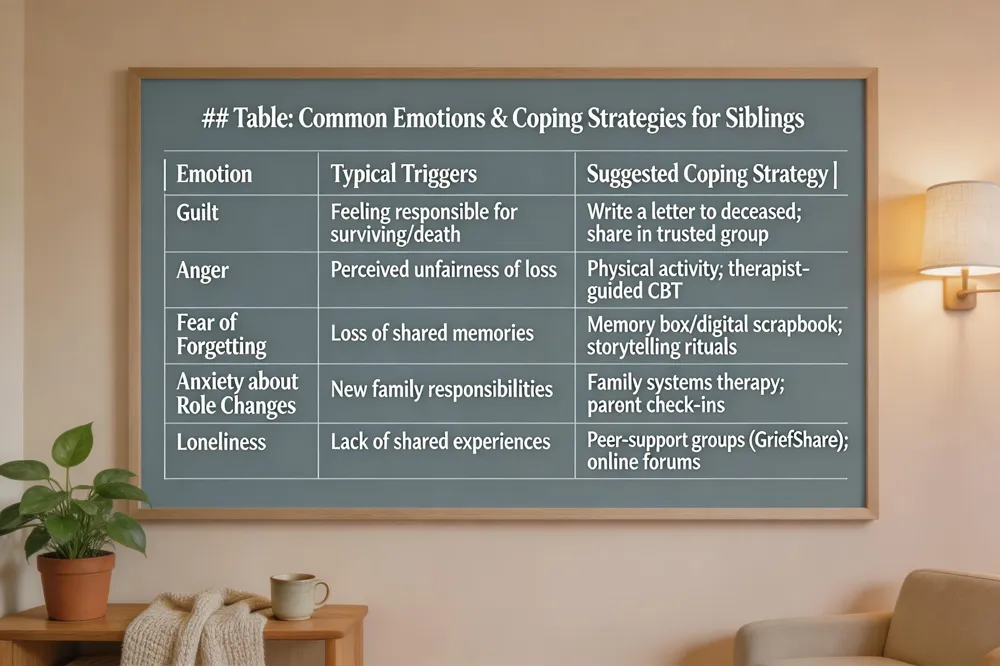 Shared grief is the collective experience of loss that links siblings through a common family history and memories. It reminds us that sorrow is not solitary; when we talk about it—whether in therapy, a peer‑support group, or a trusted circle—we create a safe space for validation, empathy, and healing. Siblings often react with guilt, anger, fear of forgetting the deceased, and concerns about shifting family roles. These emotions can be intensified by the loss of shared memories, a phenomenon researchers call “shared memory grief.” This form of mourning emphasizes the need to preserve the bond through rituals, storytelling, and memory‑keeping activities, which help siblings re‑author their shared narrative and find meaning. As the Honduran proverb says, “Grief shared is half grief; joy shared is double joy.” A therapist might say, “I share your grief,” to convey genuine empathy and solidarity, turning isolation into a supportive community. By acknowledging and expressing these feelings together, siblings reduce isolation, build resilience, and foster a hopeful path forward.
Evidence‑Based Therapies for Siblings
Table: Therapy Modalities, Target Age, and Core Elements
| Therapy | Target Age Range | Core Elements | How It Helps Siblings |
|---|---|---|---|
| Cognitive‑Behavioral Therapy (CBT) | 8‑18 years | Thought‑recording, behavioral activation, skill‑building | Reduces intrusive guilt thoughts, teaches coping skills |
| EMDR (Eye‑Movement Desensitization and Reprocessing) | 12‑25 years | Bilateral stimulation, memory processing | Alleviates trauma‑related distress and lingering images |
| Narrative Therapy | 10‑30 years | Re‑authoring stories, externalizing problems | Allows siblings to reshape shared narrative and find meaning |
| Family Systems Therapy | All ages | Mapping family roles, communication drills | Addresses shifting dynamics and promotes collective healing |
| Complicated Grief Therapy (CGT) | Adolescents (13‑18) | Structured grief tasks, meaning reconstruction | Targets prolonged yearning and functional impairment |
| Trauma‑Focused CBT (TF‑CBT) | Teens (13‑17) | Exposure, cognitive restructuring, coping skills | Directly tackles trauma‑linked grief symptoms |
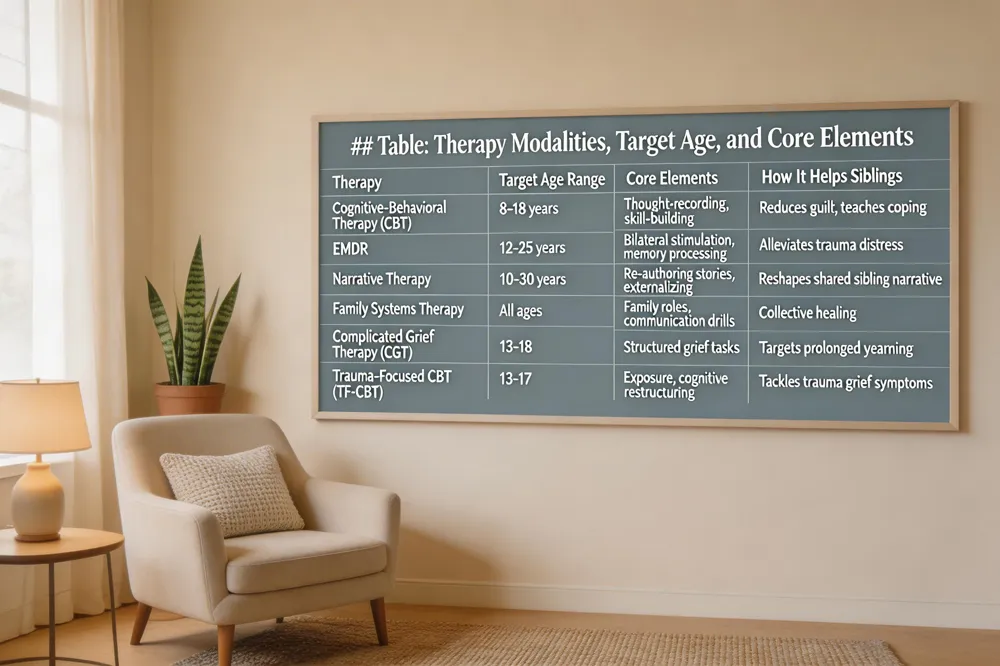 Sibling grief requires interventions that honor shared history while meeting each sibling’s developmental needs. Cognitive‑Behavioral Therapy (CBT) and EMDR help individuals process intrusive thoughts, guilt, and anxiety; they can be blended with Narrative Therapy to re‑author the family story and with Family Systems Therapy to address shifting roles and dynamics. For adolescents, Complicated Grief Therapy (CGT) and Trauma‑Focused CBT (TF‑CBT) provide structured skills for managing intense yearning and trauma‑related symptoms.
Best grief counseling for siblings addressing shared loss experiences – The most effective approach combines individual CBT or EMDR with sibling‑focused group support (e.g., GriefShare, Compassionate Friends). Licensed clinicians tailor sessions to developmental stage, integrate rituals, and encourage peer sharing to normalize emotions.
Free grief counseling for siblings – Community‑based groups such as GriefShare, Compassionate Friends, and local church circles offer no‑cost meetings; online private Facebook groups, the “Surviving Our Siblings” Instagram, and podcasts like Last Day provide free peer support.
How to help a 14‑year‑old grieving – Validate mixed emotions, clarify facts, encourage expressive activities (writing, art), set safe limits, and seek professional teen‑grief groups if symptoms persist.
How long do siblings mourn for each other? – Grief has no set timeline; sadness may lessen over time, but occasional waves of loneliness or sadness are normal.
Peer Support, Groups and Online Resources
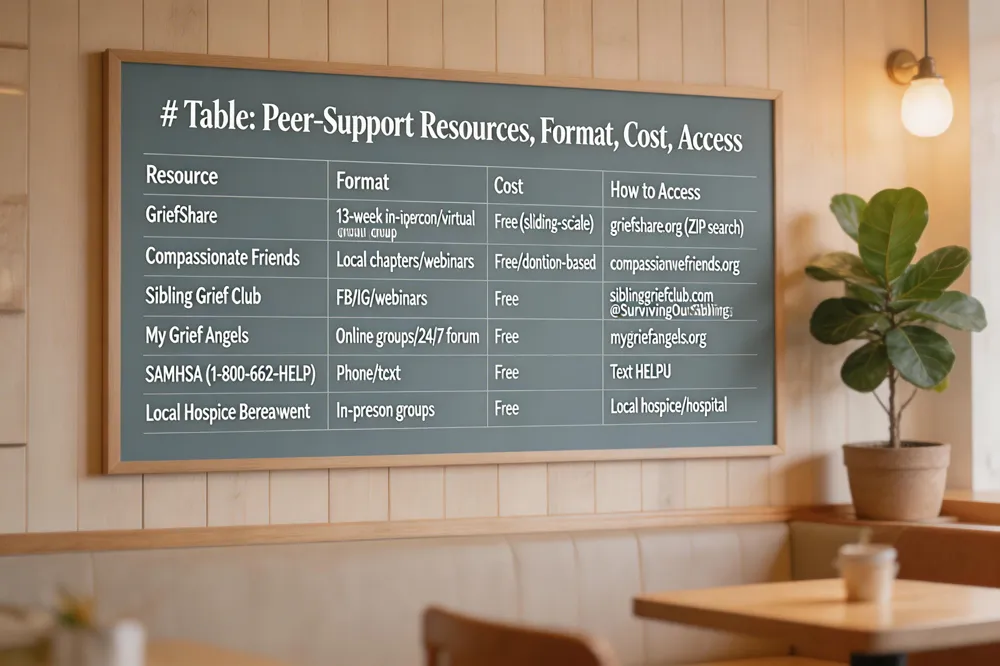
Table: Peer‑Support Resources, Format, Cost, Access
| Resource | Format | Cost | How to Access |
|---|---|---|---|
| GriefShare | 13‑week in‑person or virtual group | Free (sliding‑scale options) | Search by ZIP code on griefshare.org |
| Compassionate Friends | Local chapters, meetings, webinars | Free / donation‑based | Chapter locator on compassionatefriends.org |
| Sibling Grief Club | Private Facebook, webinars, Instagram | Free | Join via siblinggriefclub.com or Instagram @SurvivingOurSiblings |
| My Grief Angels | Peer‑led online groups, 24/7 forum | Free | Register at mygriefangels.org |
| SAMHSA Helpline (1‑800‑662‑HELP) | Phone/text referrals | Free | Call or text HELP4U with ZIP code |
| Local Hospice Bereavement Programs | In‑person support groups | Free | Contact nearby hospice or hospital grief services |
 Free grief support groups near me
Start with local hospices, hospitals, or community health centers that often offer complimentary or sliding‑scale groups. The national GriefShare program provides free 13‑week in‑person or online groups—search by zip code on their site. NAMI affiliates and Psychology Today’s “Grief Help” directory list additional free virtual groups.
Free grief support groups near me
Start with local hospices, hospitals, or community health centers that often offer complimentary or sliding‑scale groups. The national GriefShare program provides free 13‑week in‑person or online groups—search by zip code on their site. NAMI affiliates and Psychology Today’s “Grief Help” directory list additional free virtual groups.
Sibling grief support near me Use the Compassionate Friends chapter locator to find a local sibling‑focused meeting. The Sibling Grief Club offers free online webinars (Grief Journey & Grief Retreat) and a private community for bereaved brothers and sisters everywhere. Hospice bereavement programs also welcome siblings.
Free sibling grief support Join the Sibling Grief Club’s complimentary webinars, private Facebook groups (e.g., “Sibling Grief Support”), or free GriefShare sessions. Podcasts and Instagram accounts like @SurvivingOurSiblings provide stories and coping tips at no cost.
Sibling loss support groups near me Julia Flynn Counseling can refer you to Atlanta‑north Georgia groups (e.g., Northeast Georgia Medical Center, GriefShare at local churches) and offers virtual sessions.
GriefShare A 13‑week program combining a 30‑minute video seminar, personal workbook, and peer‑discussion group. Available in‑person and online, it normalizes grief and builds coping tools.
SAMHSA helpline and virtual options Call 1‑800‑662‑HELP (24/7, English/Spanish) for confidential referrals to local or online grief counseling, including sibling‑specific services. Use the HELP4U text service (text ZIP code) for nearby resources.
Rituals, Legacy Projects and Cultural Sensitivity
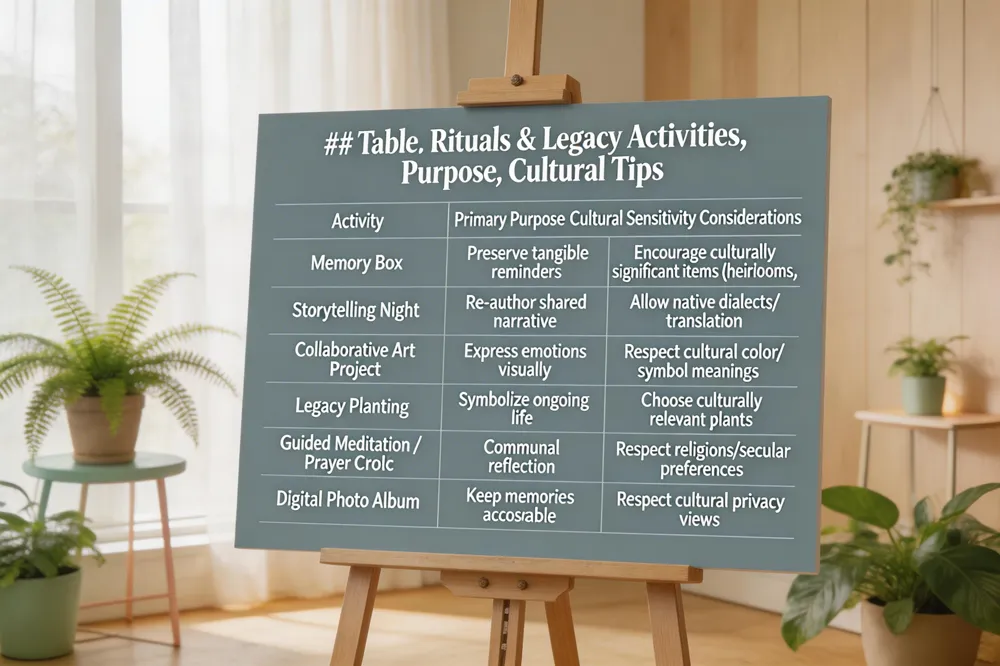
Table: Rituals & Legacy Activities, Purpose, Cultural Tips
| Activity | Primary Purpose | Cultural Sensitivity Considerations |
|---|---|---|
| Memory Box | Preserve tangible reminders | Encourage inclusion of culturally significant items (e.g., heirlooms, prayer beads) |
| Storytelling Night | Re‑author shared narrative | Allow language translation or storytelling in native dialects |
| Collaborative Art Project | Express emotions visually | Use symbols that respect cultural meanings of color and imagery |
| Legacy Planting (tree or garden) | Symbolize ongoing life | Choose plants with cultural relevance or traditional significance |
| Guided Meditation / Prayer Circle | Provide communal space for reflection | Offer optional religious elements; respect secular preferences |
| Digital Photo Album | Keep shared memories accessible | Ensure privacy settings respect family’s cultural views on sharing images |
 Grief support loss of parent
Losing a parent can feel overwhelming, and it’s normal to experience a mix of sadness, anger, loneliness, and even physical symptoms. Therapy can provide a safe space to process these emotions, develop coping skills, and honor your parent’s legacy—especially through evidence‑based approaches such as grief‑focused CBT or narrative therapy. Joining a support group like GriefShare offers peer connection, guided discussions, and a personal workbook to help you navigate the unpredictable grief journey. If you need immediate assistance, the SAMHSA National Helpline (1‑800‑662‑HELP) connects you to local resources and confidential counseling 24/7. At Julia Flynn Counseling, we tailor our sessions to adults coping with the loss of a parent, helping you rebuild a sense of identity and find hope for the future.
Grief support loss of parent
Losing a parent can feel overwhelming, and it’s normal to experience a mix of sadness, anger, loneliness, and even physical symptoms. Therapy can provide a safe space to process these emotions, develop coping skills, and honor your parent’s legacy—especially through evidence‑based approaches such as grief‑focused CBT or narrative therapy. Joining a support group like GriefShare offers peer connection, guided discussions, and a personal workbook to help you navigate the unpredictable grief journey. If you need immediate assistance, the SAMHSA National Helpline (1‑800‑662‑HELP) connects you to local resources and confidential counseling 24/7. At Julia Flynn Counseling, we tailor our sessions to adults coping with the loss of a parent, helping you rebuild a sense of identity and find hope for the future.
Free online grief support groups for loss of parent If you’ve lost a parent, there are several free, virtual support options that can help you feel less alone. GriefShare offers online 13‑week groups that include video teachings, a personal workbook, and guided discussions, and you can locate a virtual session through their website. My Grief Angels runs peer‑led grief support groups specifically organized by type of loss—including “parent loss”—and provides a 24/7 online community where you can share and receive empathy at any hour. The SAMHSA National Helpline (1‑800‑662‑HELP) can also connect you to local free online groups and additional resources. These services are confidential, non‑religious, and available at no cost, offering a safe space to process your grief while you consider professional counseling if needed.
Shared grief Shared grief is the experience of loss that connects people across ages, cultures, and backgrounds, reminding us that we are never truly alone in our sorrow. When we openly talk about our pain—whether in a therapy session, a support group, or a trusted circle—we create a safe space where emotions can be processed and healing can begin. This mutual acknowledgment reduces feelings of isolation, validates each person’s experience, and fosters empathy that can inspire caring actions toward others. By sharing stories of loss and resilience, we learn coping strategies, gain perspective, and discover that moving forward is possible even after profound loss. Embracing shared grief ultimately strengthens our emotional resilience and nurtures a sense of community and hope.
Practical Guidance for Parents, Caregivers and Teens
Table: Practical Tips, Who Should Implement, Recommended Actions
| Tip | Who Should Implement | Action Steps |
|---|---|---|
| Monitor for Signs of Complicated Grief (sleep changes, withdrawal) | Parents / Caregivers | Keep a grief diary; schedule a teen check‑in every two weeks |
| Provide Creative Outlets (journaling, art) | Teens & Parents | Supply notebooks, art supplies; set aside 15‑minute daily “expressive time” |
| Establish a Memory Ritual (e.g., lighting a candle) | Whole Family | Choose a regular day (birthday, anniversary) for a shared remembrance ceremony |
| Communicate Role Adjustments Clearly | Parents | Hold a family meeting; write a list of new responsibilities with age‑appropriate tasks |
| Offer Professional Support Early (within 6 months) | Caregivers | Contact a therapist trained in grief‑focused CBT or family systems; use SAMHSA helpline for referrals |
| Limit Risky Behaviors (substance use, isolation) | Parents & School Counselors | Set boundaries, monitor social media, provide alternative coping strategies |
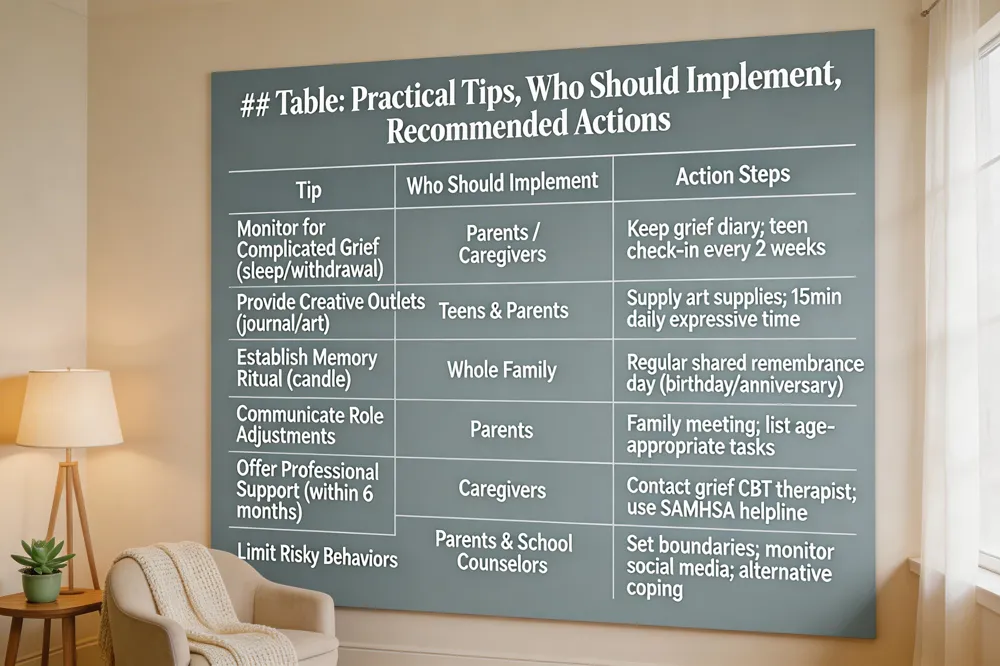 Early intervention—within six months of a sibling’s death—helps prevent complicated grief. Notice sadness, sleep changes, or withdrawal and connect the child with a therapist using CBT, family‑systems or narrative methods appropriate to their age.
In school, teens need an explanation and a trusted adult who can monitor academics and provide a space for emotions. Tools like journaling, art, or brief mindfulness breaks keep them engaged.
Balancing family roles after loss requires communication. Surviving siblings may take on new responsibilities, but parents should avoid over‑loading them. Rituals such as a memory box or shared storytelling honor the deceased.
How to help a 14‑year‑old grieving? Normalize emotions, listen without judgment, offer creative outlets, and limit risky behavior. Seek counseling if distress persists.
Best grief counseling for siblings addressing shared loss experiences combines CBT or EMDR with sibling‑focused groups like GriefShare or Compassionate Friends.
Sibling grief support for adults uses CBT or EMDR with a therapist and encourages peer groups like the Sibling Grief Club webinars. For help, call SAMHSA’s 24/7 helpline (1‑800‑662‑HELP).
Moving Forward Together
Integrating professional therapy, peer‑support groups, and meaningful rituals creates a balanced healing pathway for grieving siblings. Evidence‑based approaches such as CBT, Narrative Therapy, and Family Systems Therapy can be tailored to each sibling’s developmental stage, while structured group programs—like GriefShare’s 13‑week seminars or the Sibling Grief Club’s webinars—provide peer validation and reduce isolation. Rituals such as shared storytelling, memory‑boxes, or joint commemorative projects preserve the sibling bond and give tangible ways to honor the loss. The lasting value of shared grief lies in its ability to transform personal pain into collective meaning, fostering resilience and a sense of belonging. Julia Flynn Counseling blends these elements: clinicians design individualized treatment plans, connect families to local and virtual peer groups, and guide families in culturally sensitive rituals. This holistic, client‑centered model supports siblings in navigating grief, rebuilding identity, and moving forward together with hope.