Understanding Grief Counseling Groups
Grief counseling groups are structured, peer‑focused gatherings where individuals who have experienced loss share their stories, receive emotional validation, and learn coping skills together. Research consistently shows that such peer support reduces symptoms of complicated grief by up to 30 % and improves sleep, resilience, and emotional regulation compared with solo therapy. Groups can meet in‑person at churches, community centers, or clinics; virtually via secure video platforms; or in a hybrid model that blends both formats to maximize accessibility. Licensed facilitators—often LCSWs, LMFTs, or other credentialed clinicians—guide discussions, ensure psychological safety, introduce evidence‑based interventions like the Dual Process Model or Meaning Reconstruction Therapy, and help members apply workbook exercises or expressive‑art activities. This professional oversight, combined with the shared experience of peers, creates a supportive environment that normalizes grief, diminishes isolation, and fosters hope.
Free Grief Support Options Across the U.S.
 Grief support is widely available at no cost, thanks to national programs, faith‑based groups, and virtual communities.
National programs that charge no fee
GriefShare runs a 13‑week curriculum in churches and community centers across the country; participants only pay a small donation for the workbook, and many locations waive that fee entirely. The Compassionate Friends operates more than 500 chapters that provide free meetings for families who have lost a child. My Grief Angels offers peer‑led virtual groups and a 24/7 online forum at no charge.
Church‑hosted and community‑based meetings
Local churches often host GriefShare or independent grief circles at no cost. Hospitals, hospice agencies, and community centers also sponsor complimentary groups, especially after a death. Contact your clergy, hospice social worker, or hospital bereavement department for schedules.
Online platforms and virtual communities
Free virtual meetings are available through GriefShare’s online portal, My Grief Angels, and VITAS Healthcare’s Zoom groups for parents, LGBTQ+ members, and Spanish‑language participants. Public forums such as Reddit’s r/GriefSupport provide moderated, anonymous spaces to share.
How to locate local free groups
Start by visiting the GriefShare website to use its “Find a Group” tool. Call the Compassionate Friends hotline (877‑969‑0010) for chapter referrals. Search your county’s 211 directory or contact local hospice programs for calendars. Many groups require only a brief registration or a phone call to confirm attendance.
Free grief support groups near me
Check GriefShare for nearby in‑person or online sessions, look up Good Grief of Kansas in Wichita, or call Compassionate Friends for a child‑loss chapter.
Free grief support groups USA
National options include GriefShare, Compassionate Friends, and My Grief Angels—each offering free, easy‑to‑access meetings across all states.
Age and Grief: When It Feels Most Overwhelming
 Grief is experienced differently across the lifespan. Young children under five are often the most vulnerable because they lack a concrete understanding of death’s permanence and rely on concrete thinking. Their limited emotional vocabulary leads them to express loss through play, regression, or physical symptoms rather than words. Adolescents, meanwhile, grapple with identity formation, autonomy, and heightened emotional sensitivity, which can amplify feelings of isolation and confusion after a loss.
Support for children and teens should be age‑appropriate. For early childhood, clear, simple explanations, routine, and expressive play help translate abstract feelings into tangible actions. Adolescents benefit from peer‑support groups that normalize their experience, encourage storytelling, and provide skills such as journaling or mindfulness. Programs like GriefShare, Our House, and VITAS offer both in‑person and virtual groups tailored to youth, often incorporating expressive arts and structured curricula.
At what age is grief the hardest?
Grief tends to be most challenging for children under five years old, because they have not yet developed a clear understanding of death’s permanence and often believe the lost person can return. Their limited emotional vocabulary and reliance on concrete thinking make it hard to process loss, so they may express grief through play, regression, or physical symptoms rather than verbalizing feelings. Adolescents also experience intense grief, but the developmental vulnerability of early childhood generally makes it the hardest period to navigate loss.
Online Grief Communities for Specific Losses
 Grief support has moved online, allowing people coping lost loved ones to connect regardless of geography. Below are key points on virtual groups for specific losses, free platforms, safety tips, and the advantages of moderated, non‑religious forums.
Virtual groups for parent loss
If you have lost a parent, you can join GriefShare's free online sessions that follow a 13‑week curriculum with expert videos, a personal workbook, and peer discussion. My Grief Angels also runs entirely volunteer‑led, virtual peer groups organized by loss type—“simulated parent loss” groups bring together adults who share that specific experience. Both programs are confidential, non‑religious, and accessible through Zoom or a secure web portal.
Free platforms for spouse loss
Spouse/partner loss is addressed by the same free resources: GriefShare’s online meetings and My Grief Angels “spouse loss” circles. Additionally, the SAMHSA National Helpline (1‑800‑662‑HELP) can refer you to state‑specific free online grief groups, and the 988 Suicide & Crisis Lifeline offers immediate, cost‑free support.
How to join and stay safe online
- Choose a reputable organization (GriefShare, My Grief Angels, SAMHSA).
- Register with a valid email; most groups require only a name and loss type.
- Use a private, quiet space and a reliable internet connection.
- Follow confidentiality rules—what is shared stays in the group.
- Verify that the facilitator holds clinical training (e.g., LCSW, LMFT) or that the platform is moderated by volunteers with background checks.
Benefits of moderated, non‑religious forums
Moderated groups ensure psychological safety, allowing participants to express grief without fear of judgment. Non‑religious settings respect diverse beliefs, making them inclusive for all members. Research highlighted by SAMHSA shows that peer‑led groups can cut complicated‑grief symptoms by up to 30 % compared with solo coping, and that expressive arts and shared storytelling foster meaning‑making and reduce isolation.
Key take‑aways
- Free, evidence‑based online grief groups exist for parent, spouse, and other loss types.
- Safety is maintained through trained facilitators, confidentiality agreements, and secure platforms.
- Moderated, secular environments promote inclusivity and have proven mental‑health benefits.
By joining one of these virtual communities, you gain peer support, structured coping tools, and a sense of belonging—critical components for navigating grief in a compassionate, client‑centered way.
Faith‑Based and Community‑Hosted Groups
 Grief support can be found in many faith‑affiliated settings. Churches often host groups that blend spiritual reflection with evidence‑based coping. For example, in New York City GriefShare runs weekly online meetings through Bethel Gospel Assembly (Mondays 6:30 p.m. ET) and The Father’s Heart Church (Wednesdays 7:00 p.m. ET). In‑person sessions are offered at Redeemer East Harlem Church (109 E 116th St, Floor 2) – call 917‑818‑4697 for details – and Catholic Charities Brooklyn and Queens provides parish bereavement groups, including Spanish‑language meetings; contact Deacon Mauclair Simon at (718) 722‑6214 or mauclair.simon@ccbq.org.
Hospice‑run circles are free and open to the public. Providers such as Northern Illinois Hospice and Rock River Hospice & Home hold regular support groups (e.g., “The Healing Cup” and “Growing Through Grief”) and can be reached via their listed phone numbers for scheduling.
For those seeking in‑person groups, the national GriefShare network lists 13‑week programs at churches and community centers nationwide. In NYC, the OUR HOUSE Grief Support Center offers age‑specific groups for children, teens, and adults; a brief intake call matches participants to appropriate sessions. Local practices like Julia Flynn Counseling also run weekly evidence‑based grief groups; contact the office for current times and locations.
Professional Guidance and Integrated Care
 Grief counseling near me
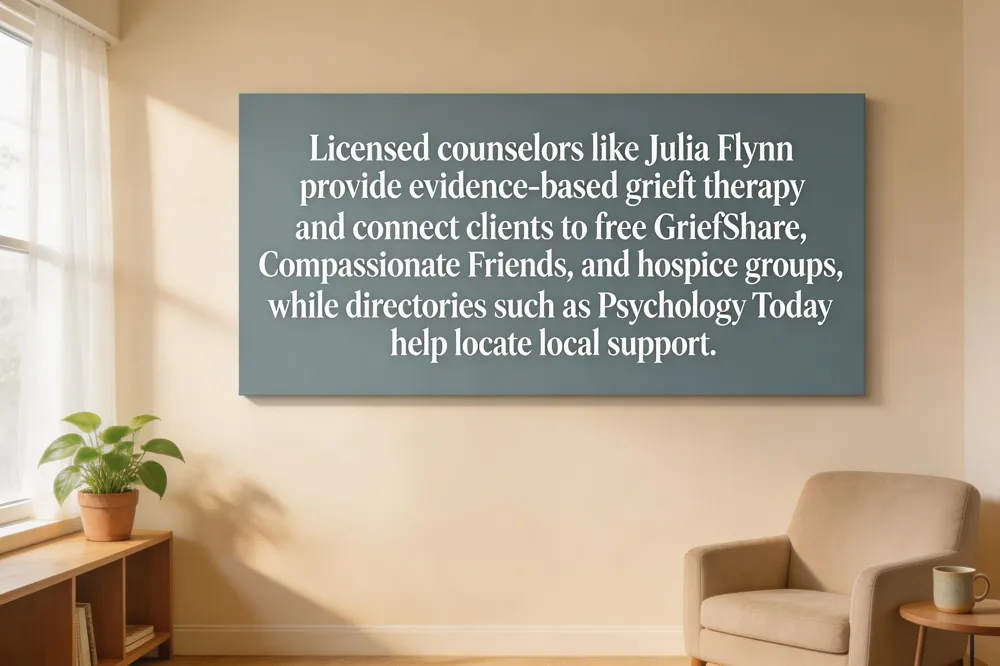
Julia Flynn Counseling offers compassionate, evidence‑based grief counseling for adults and teens. Licensed clinicians provide personalized treatment plans that address common grief symptoms—sadness, guilt, anger, and physical stress—via secure tele‑therapy or in‑person sessions when possible. The practice also connects clients to complementary resources such as GriefShare support groups and community networks for additional peer support.
Grief counseling near me
Julia Flynn Counseling offers compassionate, evidence‑based grief counseling for adults and teens. Licensed clinicians provide personalized treatment plans that address common grief symptoms—sadness, guilt, anger, and physical stress—via secure tele‑therapy or in‑person sessions when possible. The practice also connects clients to complementary resources such as GriefShare support groups and community networks for additional peer support.
How to find a grief support group? Start with national directories like GriefShare.org, the American Cancer Society, and CancerCare, which list both in‑person and virtual groups. Ask your primary‑care provider or local hospital social worker for referrals to community‑based groups meeting at churches, senior centers, or counseling clinics. Search city public library or community‑center websites for free “grief support” listings. Discuss options with a therapist at Julia Flynn Counseling to match groups to your specific needs.
Grief counseling groups USA for adults Adult groups are widely available through GriefShare’s 13‑week program, New Hope Grief Support Community’s 8‑week series, and The Compassionate Friends’ over 500 chapters. These programs combine short video seminars, workbooks, and facilitated discussions, typically meeting weekly with 8‑12 participants.
Grief support groups USA near me Use the GriefShare website zip code search, the Compassionate Friends chapter‑locator, or Psychology Today’s therapist finder to locate nearby meetings—both in‑person at churches or community centers and virtual sessions for added convenience.
Grief support groups near me free for adults Free options include GriefShare’s no‑cost 13‑week cycle, hospice‑based groups, and NAMI‑affiliated meetings. Check local libraries, hospitals, and community bulletin boards for additional no‑fee listings.
Moving Forward Together
Grief becomes more manageable when it is shared. Group settings normalize emotions, reduce isolation, and provide practical coping tools that complement individual therapy. The combination of peer support and professional guidance creates a balanced healing environment where members can validate each other's experiences while also receiving evidence‑based interventions from trained clinicians. If you are navigating loss, consider joining a local grief group—often hosted by churches, community centers, or nonprofits such as GriefShare, Compassionate Friends, or Our House—or explore virtual options that connect you with others across the country. At the same time, a licensed therapist can offer personalized strategies, trauma‑focused work, or expressive therapies that address your unique needs. Take the first step today: search for a nearby in‑person meeting, sign up for a free online community, and schedule a professional consultation to build a comprehensive support network that moves you forward together.