Why Tailoring Therapy Matters
Tailored therapy—also called personalized or client‑centered therapy—customizes interventions, pacing, and homework to each individual’s history, values, skill level, and life circumstances. Research consistently shows that when therapists adapt techniques to a client’s cultural background, preferences, and goals, the therapeutic alliance strengthens; meta‑analyses report alliance scores improving by 0.6–15 % and dropout rates falling by up to 30 % when treatment feels "made for them." This stronger alliance translates into higher client engagement: attendance rates rise 15–20 %, homework completion improves, and symptom reduction accelerates. Clients who perceive their therapist as understanding and responsive are more likely to set collaborative SMART goals, sustain motivation, and achieve lasting outcomes such as reduced depression and anxiety symptoms. In short, personalization does not merely enhance satisfaction—it is a proven driver of deeper alliance, greater engagement, and better mental‑health results.
Building a Strong Therapeutic Alliance
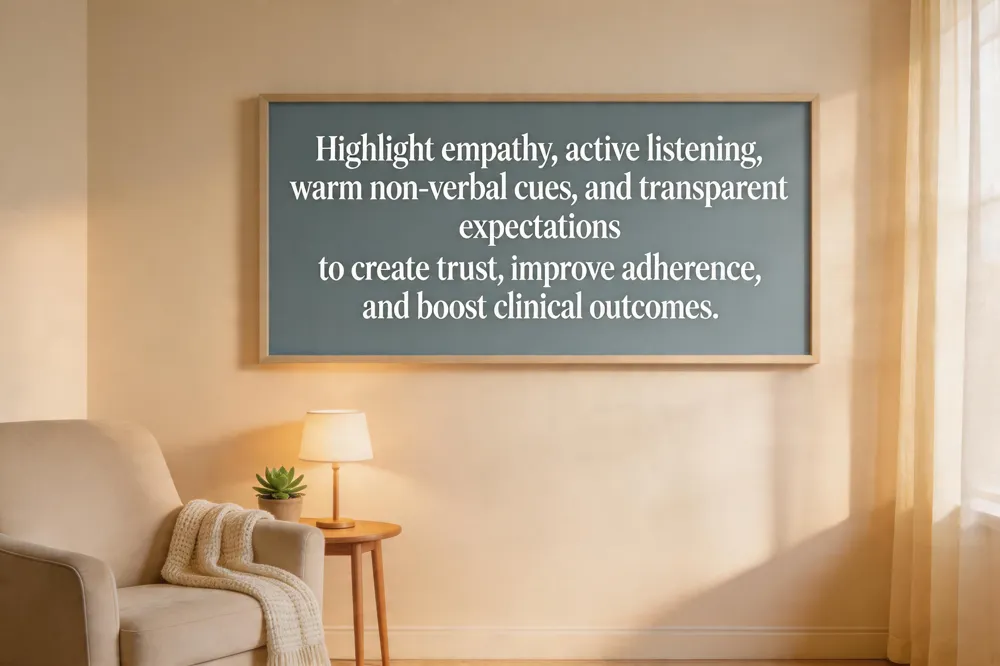 Rapport building in therapy begins with genuine empathy, active listening, and respectful curiosity about a client’s everyday life. Therapists use warm non‑verbal cues—eye contact, open posture, calm tone—to signal safety, while asking about work, school, or hobbies grounds the conversation in familiar territory. This collaborative rhythm, combined with transparent expectations, helps the client view therapy as a partnership rather than a hierarchy.
The importance of building rapport with mental‑health patients lies in its power to create a trusting environment where vulnerable thoughts can be shared without fear of judgment. A strong therapeutic alliance consistently predicts higher treatment adherence, greater satisfaction, and improved clinical outcomes across modalities and populations. Empathy, cultural competence, and shared goal‑setting reduce anxiety and enhance accurate assessment, especially in brief or telehealth sessions.
Research shows that better relationships with patients lead to better outcomes; factors such as collaborative goal‑setting, regular client feedback, and timely repair of alliance ruptures are linked to larger effect sizes than the specific therapeutic technique used. By prioritizing a respectful, evidence‑based partnership, therapists foster engagement, motivation, and lasting mental‑health improvement.
Personalized Treatment Planning and Goal‑Setting
 Effective therapy begins with a clear, collaborative roadmap. Using the SMART framework—Specific, Measurable, Achievable, Relevant, Time‑bound—clients and therapists co‑create goals that are concrete enough to track yet flexible enough to adapt as life changes. Collaborative planning deepens the therapeutic alliance: clinicians listen actively, validate the client’s experience, and invite the client to shape the treatment agenda, which fosters ownership and motivation.
When goals are linked to personal values and preferences, interventions become more meaningful. Therapists may substitute a walking exposure with a dance session if movement feels safer, or replace a worksheet with a short video for visual learners. This values‑based tailoring reduces shame and anxiety, encouraging clients to practice skills between sessions.
Increasing client engagement therefore relies on empathy, shared decision‑making, and ongoing feedback. Regular check‑ins celebrate small wins, adjust difficulty, and reinforce the client’s sense of agency.
Julia Flynn Counseling provides personalized mental‑health services in Greater New Orleans and Baton Rouge, LA, offering evidence‑based modalities such as CBT, ACT, and DBT customized to each individual’s cultural background, goals, and life circumstances.
In short, tailored therapy means delivering the right treatment for the right person at the right time, strengthening alliance and improving outcomes.
Adaptive Homework and Real‑Time Contextual Tailoring
 Between‑session assignments are a cornerstone of modern mental‑health care. By giving clients concrete, skills‑building activities to practice at home, therapists extend the therapeutic window beyond the office and reduce symptoms of depression and anxiety. When these assignments are matched to a client’s current skill level, values, and life context, engagement rises dramatically and therapeutic gains become more durable.
Therapy prompts for quiet clients – Gentle, open‑ended prompts that honor silence work best. Examples include: "What small change would you like to notice in the next week?" or "When you think about a recent uncomfortable situation, what physical sensations arise?" Invite reflective storytelling with: "If you could give your younger self advice about handling stress, what would it be?" Such queries respect pacing while encouraging insight.
Evidence‑based interventions examples – Proven modalities such as Cognitive‑Behavioral Therapy (CBT) for anxiety/depression, Dialectical Behavior Therapy (DBT) for emotion‑regulation, Acceptance and Commitment Therapy (ACT) for values‑driven change, Mindfulness‑Based Cognitive Therapy (MBCT) for recurrent depression, and Eye‑Movement Desensitization and Reprocessing (EMDR) for trauma are routinely adapted to individual needs.
Online mental‑health services that can prescribe medication – Platforms like Talkspace, Doctor On Demand, and Cerebral connect users with licensed psychiatrists who can evaluate, diagnose, and prescribe SSRIs, SNRIs, mood stabilizers, and atypical antipsychotics via telehealth, often with same‑day appointments and low copays.
Online mental‑health services that take Medicaid – Providers such as Charlie Health, Brave Health, and Ohio’s Mindfully accept Medicaid, offering virtual intensive outpatient programs, individual therapy, and medication management with minimal out‑of‑pocket costs.
Online mental‑health services that take Medicare – Many tele‑therapy platforms, including Talkspace and Medicare‑enrolled clinicians at Julia Flynn Counseling, accept Medicare Part B, covering video, audio, or secure‑messaging sessions with the usual 20 % coinsurance after the deductible.
Adjusting difficulty and barriers – Therapists modify homework by reducing duration, frequency, or magnitude; providing clearer instructions; and suggesting alternative activities (e.g., dancing instead of walking) that fit a client’s time constraints, childcare duties, or financial limits. Backup plans and recovery prompts help manage shame or anxiety that may arise during practice.
Digital tools for just‑in‑time adaptation – Adaptive apps use real‑time context detection (location, time of day, social environment) and client‑reported skill levels to deliver Just‑In‑Time Adaptive Interventions (JITAIs). These tools present micro‑tasks, value‑based motivational messages, and privacy‑preserving modes, ensuring homework feels relevant, safe, and achievable in the client’s current setting.
Motivational Techniques and Values‑Based Interventions
 Tailoring therapy to a client’s values and motivations strengthens the therapeutic alliance, a well‑established predictor of engagement and outcome. Motivational interviewing (MI) provides a collaborative, client‑centered framework: therapists ask open‑ended questions, reflect back the client’s own language, and affirm strengths, thereby surfacing intrinsic “why” and reducing resistance. Values‑based messaging builds on this by explicitly linking therapeutic tasks to the client’s personal life goals—whether improving relationships, career success, or wellness—making even uncomfortable homework feel purposeful.
When clients experience anxiety or shame around assignments, a safe, private environment and brief recovery prompts help them process emotions before moving forward. Grounding techniques such as the 3‑3‑3 rule (naming three things you see, hear, and feel) are simple, evidence‑based tools that can be delivered via digital platforms or in‑session to lower physiological arousal and restore focus.
Motivating clients therefore involves (1) establishing a strong alliance, (2) using Motivational interviewing to elicit change talk, (3) framing tasks around personal values, and (4) providing concrete coping strategies like the 3‑3‑3 rule to manage discomfort. These integrated strategies have been shown to increase session attendance by up to 30 % and reduce dropout rates across diverse populations.
Technology‑Enabled Personalization and Measurement‑Based Care
 Digital assessment tools are the foundation of modern, personalized therapy. By collecting symptom ratings, skill‑level data, and contextual cues (time of day, location, social environment) through secure apps or wearables, clinicians can create a real‑time profile of each client. This profile fuels Just‑In‑Time Adaptive Interventions (JITAIs) that deliver tailored prompts, alternative activity suggestions, or motivational messages exactly when a client reports low motivation or encounters a barrier. Real‑time context detection—recognizing whether a client is at home, work, or in a public space—allows the system to suggest feasible homework (e.g., a brief breathing exercise in a quiet office versus a walking meditation in a park).
Online mental health services free: The SAMHSA National Helpline (1‑800‑662‑HELP) offers 24/7 confidential referrals; 7 Cups and Crisis Text Line provide free, anonymous chat and texting support. These resources bridge gaps while you arrange professional care.
Best online mental health services: BetterHelp excels in convenience and therapist matching; Talkspace offers extensive insurance coverage and psychiatry; Online‑Therapy.com blends live sessions with structured skill tools; Brightside Health focuses on evidence‑based treatment for anxiety and depression; Teladoc Health provides 7‑day therapist access and high patient‑reported improvement.
Online mental health medication with insurance: Platforms such as Talkiatry, Doctor On Demand, and Talkspace partner with major insurers to deliver tele‑psychiatry, prescription evaluations, and refills, often at low‑cost or $0‑copay. Julia Flynn Counseling offers a similar virtual psychiatry option that integrates with your insurance.
Online mental health services that take Medicaid: Charlie Health, Brave Health, and Ohio’s Mindfully accept Medicaid, providing virtual therapy and medication management with minimal out‑of‑pocket costs. Ask your therapist for a referral to a Medicaid‑approved telehealth provider.
Evidence‑Based Modalities and Their Tailoring
 APA list of evidence‑based treatments
The American Psychological Association (APA) endorses several empirically supported modalities: Cognitive‑Behavioral Therapy (CBT), Interpersonal Psychotherapy (IPT), Acceptance and Commitment Therapy (ACT), Dialectical Behavior Therapy (DBT), Trauma‑Focused CBT (TF‑CBT), and Eye Movement Desensitization and Reprocessing (EMDR). Each is matched to client preferences, cultural context, and presenting problems to maximize relevance and engagement.
APA list of evidence‑based treatments
The American Psychological Association (APA) endorses several empirically supported modalities: Cognitive‑Behavioral Therapy (CBT), Interpersonal Psychotherapy (IPT), Acceptance and Commitment Therapy (ACT), Dialectical Behavior Therapy (DBT), Trauma‑Focused CBT (TF‑CBT), and Eye Movement Desensitization and Reprocessing (EMDR). Each is matched to client preferences, cultural context, and presenting problems to maximize relevance and engagement.
Evidence‑based therapy for depression Depression is most effectively treated with CBT or behavioral activation, both of which show large effect sizes across adult and teen samples. IPT, TF‑CBT, and ACT also receive strong support, especially when combined with collaborative goal‑setting and regular outcome monitoring. Pharmacologic options (SSRIs, SNRIs) are added when clinically indicated, but the core of treatment remains a personalized, client‑centered psychotherapy plan.
What is evidence‑based practice in counseling? Evidence‑based practice integrates the best available research, therapist expertise, and the client’s unique values, preferences, and cultural background. It requires continuous measurement (e.g., PHQ‑9, GAD‑7) and real‑time adjustments, ensuring that interventions remain aligned with what matters most to the individual.
List of evidence‑based therapy practices Key practices include CBT, DBT, EMDR, TF‑CBT, Motivational Interviewing (MI), Parent Management Training (PMTO), and Integrated Dual Disorder Treatment (IDDT). For youth, Applied Behavior Analysis (ABA) and Child‑Parent Psychotherapy (CPP) are also evidence‑based.
List of evidence‑based practices in mental health Beyond psychotherapy, proven models such as Assertive Community Treatment (ACT), Peer Support Services, and Supported Employment improve functional outcomes for serious mental illness. Tailoring these interventions to a client’s life situation—through cultural competence, value alignment, and flexible delivery—significantly boosts therapeutic alliance and long‑term success.
Addressing Specific Client Populations and Concerns
 Is there a group like AA for depression? Yes. Emotions Anonymous (EA) and Neurotics Anonymous are 12‑step fellowships offering free, anonymous meetings for depression, anxiety, anger and grief. Peer support, shared recovery goals, and in‑person or virtual options help participants feel understood.
Does therapy help CPTSD? Absolutely. Trauma‑focused CBT, EMDR, and DBT are evidence‑based treatments that provide a safe space to process memories, regulate emotions, and rebuild trust. Combined with medication when needed, they improve daily functioning and quality of life.
What is the #1 most diagnosed mental disorder? Anxiety disorders are the most common in the U.S., affecting about one‑in‑three adults. They include generalized anxiety, panic, social anxiety, OCD and PTSD, and are often treated with CBT and medication.
What is the 2‑year rule for therapists? The APA guideline bars any sexual or romantic relationship between a therapist and a former client for at least two years after therapy ends, safeguarding client welfare and preserving professional boundaries.
What are the 5 C’s of therapy: Competence, Confidence, Connection, Character, and Caring? Competence, Confidence, Connection, Character, and Caring—therapist attributes that foster effective, ethical, and empathetic treatment.
Methods to engage involuntary clients? Offer choices, use motivational interviewing to elicit change talk, provide clear information, maintain flexible boundaries, collaborate on problem‑solving, and seek supervision while practicing patience.
These tailored approaches together foster empowerment, reduce dropout, and support lasting mental‑health recovery.
Putting It All Together: A Blueprint for Personalized Engagement
 Therapy engagement strategies
Effective engagement starts with clear role induction, outlining what both therapist and client can expect. Incorporating client preferences into treatment planning and setting realistic timelines for termination foster ownership. Regular progress monitoring, motivational interviewing, and early hope‑building sustain motivation. A strong therapeutic alliance—cultivated through warmth, empathy, and rapid repair of ruptures—provides the relational foundation for continued participation. Flexible scheduling, telehealth options, and culturally responsive care remove practical barriers and promote consistent attendance.
Therapist Aid
Therapist Aid is a free online library of evidence‑based worksheets, handouts, and interactive tools. Resources cover emotions, relationships, self‑esteem, mindfulness, and more, allowing clinicians to customize materials to each client’s needs. Printable PDFs can be integrated into session plans or assigned as homework, reinforcing coping skills outside appointments and streamlining therapist preparation.
List of evidence‑based therapy practices
Key evidence‑based modalities include CBT, DBT, EMDR, Trauma‑Focused CBT, Motivational Interviewing, and family‑oriented approaches such as Parent Management Training and Wraparound. For adolescents, proven models add ABA, Child‑Parent Psychotherapy, and DBT‑A. Integrated Dual Disorder Treatment and Assertive Community Treatment support co‑occurring conditions, while peer‑support services enhance engagement.
What is evidence‑based treatment in Psychology
Evidence‑based treatment integrates the best scientific research with clinician expertise, tailored to each client’s unique characteristics, culture, and preferences. It relies on rigorously tested methods—meta‑analyses, RCTs, effectiveness studies—to select interventions with demonstrated efficacy, ensuring reliable, cost‑effective outcomes.
What is the 3‑3‑3 rule in therapy
The 3‑3‑3 grounding technique redirects focus to the present: name three things you see, three sounds you hear, and three sensations you feel. This simple exercise reduces anxiety, can be practiced anywhere, and helps clients maintain control during stressful moments.
Conclusion: The Power of Personalization
Tailored therapy delivers measurable advantages: higher engagement, stronger therapeutic alliance, and faster symptom relief. By aligning interventions with a client’s values, skill level, cultural background, and life circumstances, therapists can reduce dropout rates, increase session attendance, and boost overall satisfaction. Personalized homework, collaborative goal‑setting, and real‑time adjustments keep clients motivated and empower them to apply coping skills in daily life.
If you’re ready to experience a treatment plan that feels "made for you," take the next step toward lasting well‑being.
Contact Julia Flynn Counseling today to schedule a complimentary intake, explore evidence‑based modalities such as CBT, DBT, ACT, and begin a collaborative, client‑centered journey toward mental health resilience.