Setting the Stage: Why Communication Matters
Effective team communication is the clear, consistent exchange of information, ideas, and feedback through verbal, non‑verbal, written, and visual channels that aligns every member toward shared goals. When messages are articulated precisely and listened to attentively, teams can make better decisions, maintain high engagement, and deliver successful project outcomes. In contrast, poor communication creates duplicate work, scope creep, low morale, and even turnover; research shows it is the leading root cause of costly errors in high‑stakes environments such as health care.
Therapeutic foundations provide a proven toolkit for strengthening workplace dialogue. Active listening—using paraphrasing, reflective statements, and non‑verbal cues—helps individuals feel heard and reduces misunderstandings. Conflict‑resolution skills drawn from therapy, such as “I” statements and focusing on underlying needs, enable respectful issue address before escalation. Bottom‑up communication, transparency, and regular one‑on‑one check‑ins echo therapeutic practices that empower voice, build trust, and foster psychological safety. Integrating these therapeutic communication styles into daily interactions not only mitigates stress but also cultivates a collaborative, resilient team culture.
Foundations: Therapeutic Communication Basics
 Core therapeutic communication skills
Active listening, empathy (acceptance), clarification, focusing, and effective questioning form the five core skills. Active listening uses verbal cues (e.g., “I see”) and non‑verbal signals (nodding) to make speakers feel heard. Empathy validates emotions, while clarification asks for detail to prevent misunderstandings. Focusing directs attention to the most salient concerns, and open‑ended questions invite deeper exploration.
Core therapeutic communication skills
Active listening, empathy (acceptance), clarification, focusing, and effective questioning form the five core skills. Active listening uses verbal cues (e.g., “I see”) and non‑verbal signals (nodding) to make speakers feel heard. Empathy validates emotions, while clarification asks for detail to prevent misunderstandings. Focusing directs attention to the most salient concerns, and open‑ended questions invite deeper exploration.
Common barriers in workplace settings Barriers include cultural and language differences, hierarchical power gaps, time pressure, and high‑stress environments that diminish attentiveness. When staff fear judgment or lack psychological safety, they may with or speak in judgment, leading to duplicated work, scope creep, and low morale.
Application of therapeutic techniques in nursing and broader teams In nursing, therapeutic communication builds trust through active listening, empathy, and clear non‑verbal cues, improving patient satisfaction and health outcomes. The same techniques—summarizing, reflective statements, strategic silence, and constructive confrontation—translate to any team, enhancing transparency, reducing conflict, and fostering psychological safety.
Therapeutic communication techniques Therapeutic communication techniques, originally developed for nursing and mental‑health settings, are evidence‑based methods that improve trust, empathy, and problem‑solving in any interpersonal context. Active listening—using verbal cues like “I see” and non‑verbal cues such as nodding—has been shown in meta‑analyses to increase perceived support and reduce conflict in workplace teams. Open‑ended questions (e.g., “What’s on your mind today?”) encourage team members to share concerns and ideas, leading to more comprehensive problem identification. Strategic silence gives speakers time to reflect and can prevent premature conclusions; research indicates that brief pauses increase the depth of subsequent disclosures. Summarizing a colleague’s statements (“So you’re saying…”) improves mutual understanding and reduces miscommunication, as demonstrated in organizational psychology studies. Reflective statements that mirror emotions (“It sounds like you’re feeling overwhelmed”) validate feelings and foster psychological safety, a key predictor of team performance. Providing recognition of specific behaviors (e.g., “I noticed you completed the report early”) reinforces positive actions without creating a hierarchy, supporting intrinsic motivation according to Self‑Determination Theory. Clarifying questions (“Can you elaborate on that timeline?”) reduce ambiguity and help align expectations, which is linked to higher project success rates. Offering hope and appropriate humor can lower stress hormones (cortisol) and improve morale, as shown in workplace wellness research. Confrontation, when delivered with empathy and after trust is established, can correct harmful assumptions and promote accountability, improving decision‑making quality. Focusing on key issues by gently redirecting conversation (“Let’s return to the budget concern”) helps teams stay on task and prevents drift, enhancing efficiency. Encouraging comparisons (“How does this situation differ from the last quarter?”) leverages past experience to generate creative solutions, a technique supported by cognitive‑learning theory. Voicing doubt in a non‑judgmental way (“I’m not sure I follow—could you explain that part again?”) prompts critical thinking and reduces groupthink, according to research on dissent in teams. Therapeutic communication aligns with the principles of Emotional Intelligence, which correlates with higher leadership effectiveness and employee satisfaction. Training programs that incorporate therapeutic communication role‑plays have reported up to a 30% increase in team cohesion scores after six months of implementation.
What are the five core therapeutic communication skills? The five core therapeutic communication skills are active listening, empathy (or acceptance), clarification, focusing, and effective questioning, especially open‑ended questions that invite deeper exploration.
Therapeutic communication in nursing Therapeutic communication in nursing is a purposeful, interpersonal approach that helps patients understand their condition, express emotions, and feel supported. It relies on active listening, empathy, clear clarification, and non‑verbal cues such as eye contact and open posture to build trust and rapport. By using techniques like reflection, summarizing, and encouragement, nurses can assess mental health, provide education, and reduce anxiety. Effective therapeutic communication also involves recognizing barriers—such as cultural differences or language gaps—and adapting strategies to overcome them. Ultimately, this skill enhances patient satisfaction, promotes healing, and improves overall health outcomes.
Therapeutic communication nursing scenarios examples A nurse gently mirrors a patient’s words about chronic pain, saying, “It sounds like the pain feels overwhelming and makes you feel isolated,” which validates emotions and encourages deeper sharing. In another scenario, the nurse observes a client’s body language—noticeably tense when discussing a recent hospitalization—and comments, “I see you’re tightening your shoulders as you talk about the surgery,” helping the client become aware of their stress response. When a teenager expresses fear about an upcoming psychiatric evaluation, the nurse uses open‑ended questions such as, “What worries you most about the appointment?” to explore concerns and foster trust. For a family dealing with a loved one’s dementia, the nurse employs encouragement by highlighting strengths: “You’ve been very consistent with the medication schedule, which really supports his stability.” Finally, the nurse and a collaborative care plan by summarizing the patient’s goals—“You’d like to increase your walking distance while managing fatigue”—and asking, “Shall we set a realistic step target together?” to promote shared decision‑making.
Team Dynamics and Communication Styles
 Types of team dynamics
Team dynamics describe the recurring patterns of interaction that shape how a group works together. Common types include collaborative dynamics (shared ideas and responsibilities), competitive dynamics (individuals strive to out‑perform), hierarchical dynamics (clear authority lines), autonomous dynamics (independent work with minimal oversight), and supportive dynamics (mutual encouragement, empathy, and psychological safety). Recognizing these types helps teams adjust communication styles and conflict‑resolution approaches for healthier collaboration.
Types of team dynamics
Team dynamics describe the recurring patterns of interaction that shape how a group works together. Common types include collaborative dynamics (shared ideas and responsibilities), competitive dynamics (individuals strive to out‑perform), hierarchical dynamics (clear authority lines), autonomous dynamics (independent work with minimal oversight), and supportive dynamics (mutual encouragement, empathy, and psychological safety). Recognizing these types helps teams adjust communication styles and conflict‑resolution approaches for healthier collaboration.
Positive team dynamics Positive dynamics are built on mutual respect and open dialogue, allowing every member to feel heard and valued. Clear, shared goals reduce ambiguity and stress, while constructive feedback is delivered supportively, fostering growth rather than defensiveness. Psychological safety encourages creativity, risk‑taking, and inclusive participation, creating a resilient environment that promotes individual well‑being and collective success.
Negative team dynamics Negative dynamics arise when interactions become strained, leading to mistrust, poor communication, and frequent conflict. Signs include unclear roles, dominance by a single person, resistance to feedback, and disengagement, which erode morale and can trigger anxiety or depressive feelings. Root causes often involve misaligned goals or insufficient resources. Open dialogue, clear expectations, and collaborative conflict‑resolution are essential to restore a healthier team climate.
Team dynamics examples A collaborative team co‑creates solutions and builds trust; a hierarchical team streamlines decision‑making while still encouraging input; a competitive team boosts motivation when balanced with supportive feedback; an autonomous team promotes accountability and creativity; hybrid teams blend virtual and in‑person interactions, relying on consistent information distribution and transparent expectations.
What are the 5 P’s of a team? The 5 P’s of high‑performing teams are: Purpose – a shared mission and clear goals; People Dynamics – trust, honest communication, and constructive conflict; Process – defined workflows and decision‑making procedures; Perspective – a forward‑looking vision that anticipates challenges; and Persona – the collective identity and culture that give the team its unique character and sense of belonging.
Practical Therapeutic Techniques for Teams
 Therapeutic techniques boost team communication. Active listening—full attention, paraphrasing, reflecting feelings—makes members feel heard. Empathy through open‑ended questions and validation builds trust. I‑messages shift blame and encourage responsibility.
Exercises embed these skills. Short games like back‑to‑back drawing or Minefield require precise verbal instructions and listening. Regular one‑on‑one meetings and feedback circles create safe spaces for emotional check‑ins. Mindfulness drills teach pausing and tone awareness.
20 ways to improve communication skills
Active listening; open‑ended questions; concise language; eye contact; body language awareness; summarizing; giving and seeking feedback; mindful tone; clarifying assumptions; empathy; storytelling; managing distractions; adapting to audience; confidence; reflection; role‑play; celebrating successes.
10 ways to improve communication skills
Practice Active listening, ask open‑ended questions, summarize key points, maintain eye contact, watch body language, use I‑messages, keep messages concise, prepare ahead, choose channels, seek feedback, reflect.
Team communication therapy techniques examples
Role‑play difficult conversations, feedback circles (“the elephant in the room”), back‑to‑back drawing, human knot, mindfulness drills, and ice‑breakers like two truths and a lie.
Team communication therapy techniques for adults
Guided group discussions with reflective journaling, role‑play of feedback or conflict, back‑to‑back drawing, two truths and a lie, “elephant in the room” feedback round, mindfulness.
Activities to improve communication skills in the workplace
Role‑play scenarios, communication games (Broken Telephone, Minefield), mindfulness drills, problem‑solving workshops, and feedback circles for goal setting.
Integrating Therapeutic Practices into Workplace Routines
 Integrating therapeutic practices into everyday work routines can turn ordinary interactions into opportunities for connection, safety, and growth.
One‑on‑one meetings and feedback – Regular, private check‑ins give managers a safe space to practice active listening, summarize concerns, and provide specific recognition of behaviors (e.g., “I noticed you completed the report early”). Using the therapeutic “I‑statement” format reduces defensiveness and invites honest dialogue, while brief reflective silences allow the employee to process thoughts before responding.
Mindfulness and emotional regulation – Brief mindfulness pauses or DBT‑style “TIP” skills before heated discussions lower cortisol, improve present‑moment awareness, and prevent impulsive reactions. Encouraging team members to name their feelings (“I’m feeling overwhelmed”) validates emotions and promotes psychological safety, a predictor of higher performance.
Structured debriefs and check‑ins – After projects or critical incidents, a guided debrief that includes paraphrasing, clarifying questions, and summarizing (“So you’re saying…”) aligns expectations and uncovers hidden stressors. Closed‑loop communication (call‑out, confirm, verify) ensures messages are heard and reduces the 93 % of meaning conveyed non‑verbally.
10 tips to achieve effective team communication – 1) Set clear objectives and role definitions. 2) Practice active listening with verbal and non‑verbal cues. 3) Schedule regular one‑on‑ones and briefings. 4) Use collaborative technology consistently. 5) Provide ongoing training in EI, conflict resolution, and therapeutic techniques.
Effective team communication blends concise messaging with empathy, creating a psychologically safe space where ideas flow freely and feedback is welcomed.
How to improve team communication and collaboration – Implement brief debriefs, leverage shared tools, define responsibilities, foster safety through open dialogue, and celebrate collaborative wins.
Therapeutic communication examples – Acceptance (“I hear you’re feeling overwhelmed”), open‑ended questions (“What would a small, manageable step look like for you?”), paraphrasing, recognition of progress, and reflective silence all deepen trust.
Therapeutic communication workplace examples – A therapist models active listening in meetings, validates colleagues’ emotions during case reviews, asks open‑ended questions in interdisciplinary rounds, uses reflective statements in supervision, and employs gentle silence to allow processing, reinforcing a therapeutic alliance across the team.
Therapeutic Communication in Healthcare Settings
 Effective communication between healthcare professionals is a cornerstone of patient safety. When information is shared clearly and promptly, clinical decisions are more accurate, care is coordinated across disciplines, and errors—responsible for a significant share of adverse events—are reduced. This openness also boosts staff morale, lowers burnout, and builds patient trust.
In nursing, therapeutic communication shines through specific scenarios: a nurse mirrors a patient’s description of chronic pain—"It sounds like the pain feels overwhelming and makes you feel isolated"—to validate feelings and invite deeper dialogue. Non‑verbal cues are highlighted when a nurse notes a client’s tense shoulders during a discussion of recent surgery, commenting on the observed stress. Open‑ended questions such as "What worries you most about the upcoming psychiatric evaluation?" help teenagers express fear. Positive reinforcement is used with families caring for a loved one with dementia, praising medication consistency. Finally, nurses summarize goals—"You’d like to increase your walking distance while managing fatigue"—and co‑create realistic step targets, fostering shared decision‑making.
Therapeutic communication also enhances workplace dynamics: a therapist models active listening in staff meetings by maintaining eye contact, nodding, and summarizing concerns before suggesting solutions. Reflective statements validate colleagues’ emotions during case reviews, and Open‑ended questions during interdisciplinary rounds encourage collaborative problem‑solving. Structured 1:1 feedback blends active listening with specific, constructive suggestions, reducing misunderstandings and supporting professional growth.
Team‑Building Exercises and Communication Games
 Ice‑breakers and low‑pressure activities
Start meetings with gentle ice‑breakers such as "Two Truths and a Lie" or an emoji‑decoding game. These activities require only brief listening, encourage curiosity, and quickly surface shared interests, creating a safe atmosphere for deeper dialogue.
Ice‑breakers and low‑pressure activities
Start meetings with gentle ice‑breakers such as "Two Truths and a Lie" or an emoji‑decoding game. These activities require only brief listening, encourage curiosity, and quickly surface shared interests, creating a safe atmosphere for deeper dialogue.
Structured communication games Incorporate games that highlight clarity, active listening, and non‑verbal cues. "Broken Telephone" shows how messages degrade; "Back‑to‑Back Drawing" forces precise verbal instructions; "Minefield" (verbal directions only) sharpens concise language. Pair these with the "Marshmallow Challenge" to practice negotiation, role assignment, and constructive feedback under a time limit.
Reflection and debriefing After each exercise, run a short debrief using the ORCA (Objective‑Result‑Cause‑Action) framework or a simple feedback circle. Ask participants to paraphrase what they heard, identify any misunderstandings, and set a personal communication goal for the next week.
Answering key questions
- Communication team‑building activities for small groups: Combine an "Active Listening Circle" (one‑minute speaking turns with paraphrasing), the "Marshmallow Challenge," and a quick problem‑solving scenario (e.g., lifeboat dilemma) followed by ORCA debrief.
- Activities to improve communication skills in the workplace: Role‑play difficult conversations, mindfulness listening drills, and structured games like Broken Telephone and Minefield; close with a feedback circle for ongoing growth.
- Team communication therapy techniques examples: Use role‑play of challenging dialogues, "elephant in the room" anonymous feedback, back‑to‑back drawing, mindfulness‑based listening exercises, and quick ice‑breakers to embed empathy, assertiveness, and active listening into daily practice.
The 7 C's and Structured Communication Frameworks
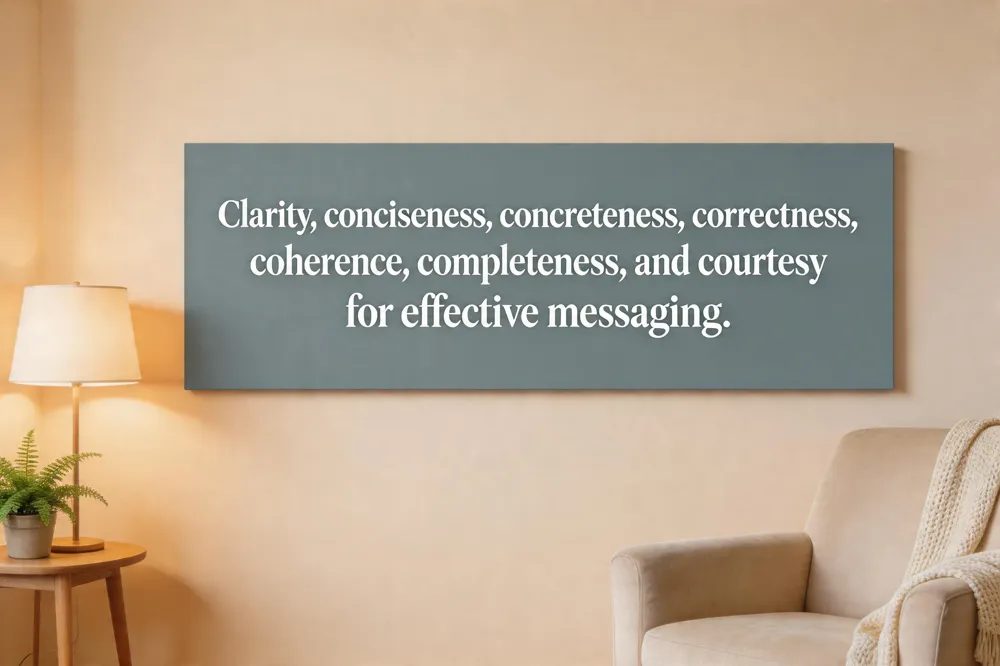 Effective workplace communication blends clarity, compassion, and proven structures. The 7 C’s of communication workplace workplace are clear, concise, concrete, correct, coherent, complete, and courteous. A clear message uses simple language and avoids ambiguity so the recipient instantly understands the intent. Concise communication gets to the point without unnecessary detail, while concrete messaging provides specific facts and examples that make ideas tangible. Correct communication is free of grammatical and factual errors, and coherent communication follows a logical flow that links ideas smoothly. Complete communication supplies all necessary information for action, and courteous communication shows respect and professionalism toward the audience.
Examples of effective communication include a manager sending a clear, concise email outlining a project’s goals, then following up with a brief face‑to‑face meeting to answer questions and confirm understanding. Teams hold regular stand‑up meetings where each member shares progress updates and raises blockers, fostering real‑time collaboration. An open‑door policy lets employees approach leaders anytime with concerns, creating a culture of trust and swift issue resolution. Transparent internal newsletters publish financials, milestones, and even salary ranges, ensuring everyone has access to the same information. Structured 1:1 feedback sessions combine active‑listening with specific, constructive suggestions, helping staff grow while reducing misunderstandings.
Therapeutic techniques for team communication often start with role‑play of difficult conversations, allowing members to practice assertive phrasing and empathy in a safe setting. Feedback circles or “the elephant in the room” exercises let participants give and receive constructive comments anonymously, fostering open dialogue and trust. Interactive activities such as back‑to‑back drawing and the human knot highlight the importance of clear, step‑by‑step instructions and collaborative problem‑solving. Mindfulness‑based listening exercises—where individuals focus on the speaker’s words, tone, and body language—strengthen active‑listening skills and reduce reactive responses. Quick ice‑breakers like two truths and a lie or emoji‑decoding games build rapport and reinforce the practice of interpreting both verbal and non‑verbal cues.
Addressing Barriers and Enhancing Psychological Safety
Cultural and emotional barriers often surface when language, norms, or past trauma limit a person’s willingness to speak openly. Therapeutic communication can be blocked by fear, anxiety, shame, or intimidating settings, while physical distractions (noise, lack of privacy) and systemic pressures (tight schedules, heavy documentation) further erode trust. In the workplace, therapists model active listening by maintaining eye contact, nodding, and summarizing colleagues’ concerns before offering suggestions. They validate feelings during case‑review sessions, ask open‑ended questions in interdisciplinary rounds, and use reflective statements in supervision to create safe spaces for honest dialogue. Positive team dynamics arise from mutual respect, clear shared goals, and constructive feedback delivered with empathy, fostering psychological safety that encourages creativity and risk‑taking. Conversely, negative dynamics—characterized by mistrust, unclear roles, dominant voices, and resistance to feedback—fuel anxiety and disengagement. To counter these patterns, teams should adopt trauma‑informed communication: offer choice, explain meeting purposes, avoid sudden power shifts, and embed brief pauses for processing. Regular one‑on‑ones and transparent updates, and structured debriefs reinforce safety, allowing members to voice concerns without fear of judgment and restoring a resilient, inclusive work environment.
Sustaining Communication Growth: Training, Feedback, and Reflection
 Continuous learning and coaching
Invest in regular skill‑building sessions that blend evidence‑based therapeutic methods—active listening, open‑ended questioning, and reflective statements—with practical workplace tools. Role‑play difficult conversations, use back‑to‑back drawing or the human‑knot exercise to highlight clear, step‑by‑step instructions, and follow each session with brief coaching debriefs that reinforce growth.
Continuous learning and coaching
Invest in regular skill‑building sessions that blend evidence‑based therapeutic methods—active listening, open‑ended questioning, and reflective statements—with practical workplace tools. Role‑play difficult conversations, use back‑to‑back drawing or the human‑knot exercise to highlight clear, step‑by‑step instructions, and follow each session with brief coaching debriefs that reinforce growth.
Feedback loops and debriefs Establish a closed‑loop routine: after meetings or projects, team members share what worked, ask clarifying questions, and summarize key take‑aways. Structured feedback circles—sometimes called “the elephant in the room”—allow anonymous, compassionate critique, fostering psychological safety and continuous improvement.
Celebrating communication successes Publicly recognize specific behaviors (e.g., “I noticed you clarified the timeline early”) and celebrate milestones with short shout‑outs or visual dashboards. Positive reinforcement builds trust and motivates ongoing engagement.
10 tips to achieve effective team communication
- Define clear objectives and roles. 2. Practice active listening across verbal, written, and visual channels. 3. Hold regular check‑ins and one‑on‑one meetings. 4. Use consistent technology norms while celebrating wins. 5. Provide ongoing training on emotional intelligence and conflict resolution.
Team communication therapy techniques examples
- Role‑play with assertive “I‑statements” and empathy.
- Anonymous feedback circles for open dialogue.
- Back‑to‑back drawing and human‑knot activities for precise instructions.
- Mind‑ listening listening exercises focusing on tone and body language.
- Ice‑breakers like “two truths and a lie” to build rapport.
How to improve team communication and collaboration
- Implement regular debriefs and briefings for updates and clarification.
- Leverage collaborative tools (shared docs, project boards, real‑time chat).
- Clearly define roles to avoid overlap.
- Foster psychological safety with active listening and respectful feedback, supported by brief training.
- Celebrate and recognize successful collaboration to reinforce positive behavior.
Putting It All Together
Throughout this guide we have highlighted therapeutic communication tools—active listening, open‑ended questioning, reflective statements, summarizing, strategic silence, and "I‑message" assertiveness—that build trust, reduce conflict, and foster psychological safety. When teams weave these techniques into daily practice, clarity rises, stress falls, and collaboration flourishes.
Actionable next steps:
- Schedule brief, regular one‑on‑one check‑ins where managers model active listening and validation.
- Introduce a weekly "communication huddle" that uses open‑ended questions and reflective feedback to surface ideas and concerns.
- Adopt a structured feedback loop (e.g., SBAR or closed‑loop communication) and practice it through role‑plays.
- Embed mindfulness pauses before high‑stakes conversations to curb impulsive reactions.
- Celebrate specific behaviors with timely recognition to reinforce positive patterns.
If you notice persistent barriers—e.g., chronic misunderstandings, high turnover, or emotional distress—consider partnering with a mental‑health professional trained in therapeutic communication. A therapist can tailor CBT, DBT, or Motivational Interviewing strategies to your team’s unique dynamics, ensuring lasting improvement and a healthier workplace culture.