Why Mindful Walking Matters for Mental Clarity
Mindful walking is a form of moving meditation: you walk slowly while deliberately attending to the sensation of each footstep, your breath, and the sights, sounds, and smells around you. By anchoring attention in the body, the practice fuses gentle physical activity with the mental focus of mindfulness, activating the prefrontal cortex and calming the amygdala. A growing body of research shows that even brief (5‑15‑minute) sessions lower cortisol, improve attentional control, and boost working‑memory performance. For example, a 2022 Frontiers in Psychology study reported a 30 % reduction in perceived stress after 15‑minute walks,, a 2020 randomized trial found increased mental clarity and reduced fatigue after ten minutes daily. Together, these findings suggest that mindful walking is a low‑cost, accessible tool for sharpening focus and reducing mental clutter.
Building a Daily Clarity Routine
 How can I maintain mental clarity daily?
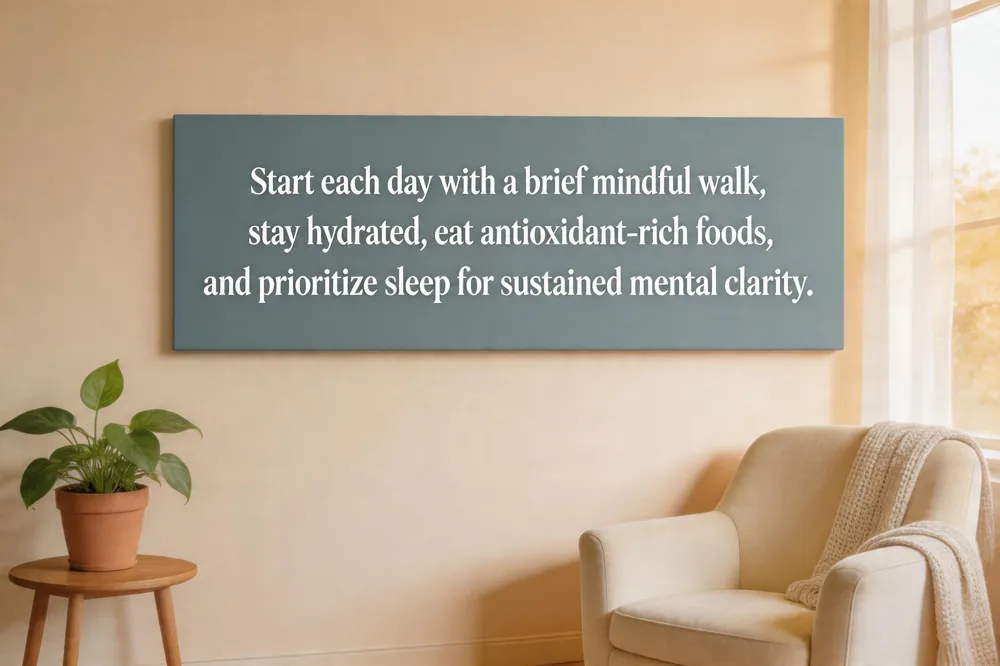
Start each day with a brief mindful walking session (5‑10 minutes). Research from MBSR programs and multiple trials shows that slow, intentional walking lower cortisol and boosts prefrontal activation, sharpening focus. Follow with regular movement—aim for 30 minutes of brisk walking or any activity you enjoy—to increase blood flow to the brain and release endorphins. Pair this with balanced meals rich in antioxidants, omega‑3s, and whole‑grain carbs, and stay hydrated (≈0.5 oz × body‑weight). Prioritize 7‑9 hours of sleep, keep a consistent bedtime, and limit screen exposure before sleep. Throughout the day, pause for short mindfulness breaths or a 5‑minute grounding walk to reset attention.
How can I maintain mental clarity daily?
Start each day with a brief mindful walking session (5‑10 minutes). Research from MBSR programs and multiple trials shows that slow, intentional walking lower cortisol and boosts prefrontal activation, sharpening focus. Follow with regular movement—aim for 30 minutes of brisk walking or any activity you enjoy—to increase blood flow to the brain and release endorphins. Pair this with balanced meals rich in antioxidants, omega‑3s, and whole‑grain carbs, and stay hydrated (≈0.5 oz × body‑weight). Prioritize 7‑9 hours of sleep, keep a consistent bedtime, and limit screen exposure before sleep. Throughout the day, pause for short mindfulness breaths or a 5‑minute grounding walk to reset attention.
Mental clarity symptoms Foggy thinking, frequent forgetfulness, slow processing, and difficulty finding words are common signs. You may feel mental fatigue after brief tasks and experience a vague sense of overwhelm.
What are the 5 R’s of meditation? Recognize, Release, Relax, Return, Repeat – a simple framework to guide practice and manage distractions.
Mindful Walking Foundations
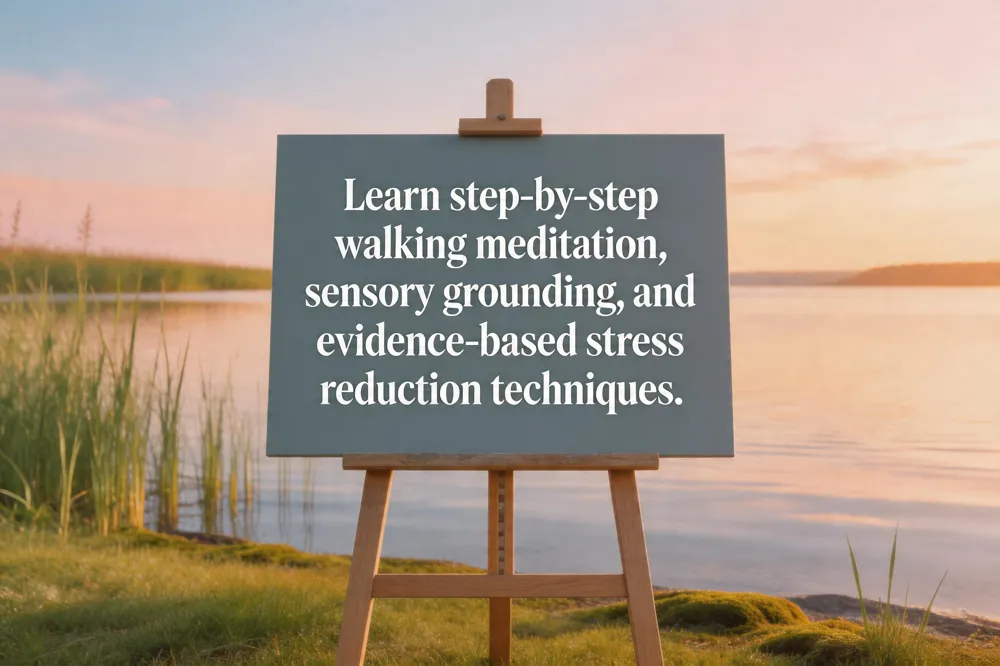 Step‑by‑step walking meditation: Begin by standing with feet hip‑width apart, set an intention, and take a few deep breaths. Walk slowly, noticing the lifting, moving, and placing of each foot while syncing breath to 3–4 steps. Pause occasionally to feel the ground and gently redirect wandering thoughts.
Sensory grounding: Engage the five senses—notice colors, sounds, textures, scents, and tastes—as you move. This “5‑4‑3‑2‑1” grounding anchors attention, reduces rumination, and enhances present‑moment awareness.
Evidence for stress reduction: Research from MBSR programs (Kabat‑Zinn) and studies such as Teut et al., 2013 show four weeks of mindful walking lower cortisol, reduce perceived stress, and improve quality of life. Meta‑analyses report moderate reductions in anxiety and depression, and a 2022 JAMA Psychiatry review found a 30 % decrease in stress after 15‑minute sessions.
Best walking meditation resources: Guided tracks on Insight Timer (e.g., “Walking Into Wholeness”), Greater Good in Action’s 5‑minute walks, and the Walking Meditation Daily podcast offer structured support for beginners and seasoned walkers alike.
Daily mental clarity techniques examples: short mindfulness breaks, breath focus, journaling, brisk mindful walks, body‑scan meditations, and single‑tasking with sensory cues.
Stress reduction walking benefits: lowers cortisol, releases endorphins, improves circulation, enhances sleep, and stimulates creativity.
Walking as meditation: transforms ordinary steps into purposeful presence, fostering emotional regulation and grounding.
Techniques for Clearing the Mind
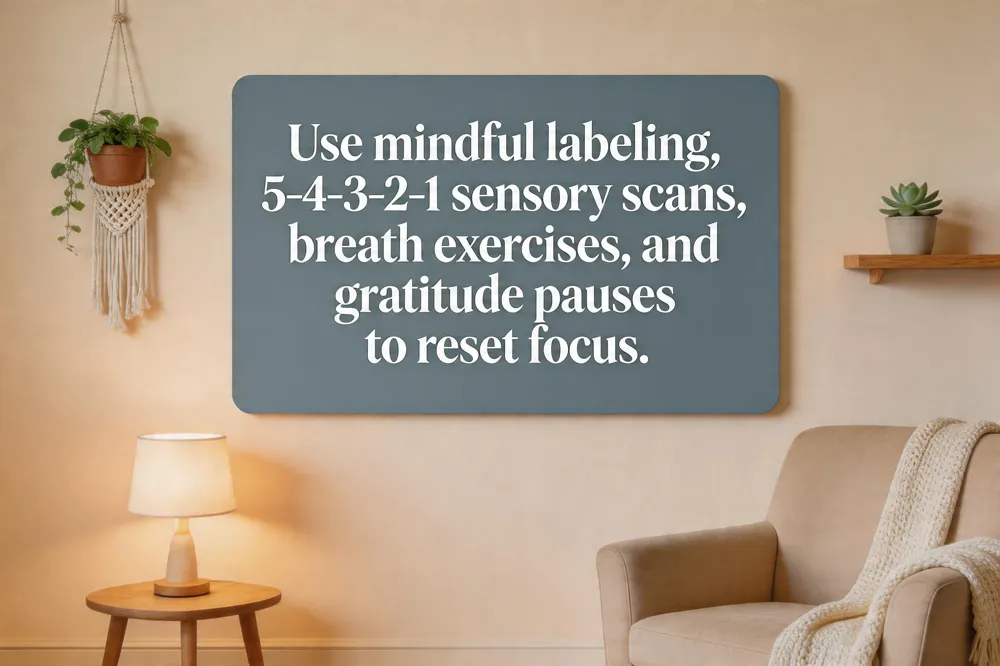 When unwanted thoughts crowd the mind, start with mindful labeling: notice the thought, give it a simple name (e.g., “worry”), and let it pass without judgment. This mirrors the “observe‑and‑release” approach used in MBSR programs, which research shows reduces psychological stress after just four weeks of daily practice (Teut et al., 2013).
Next, ground yourself with the 5‑4‑3‑2‑1 sensory scan—identify five things you see, four you can touch, three you hear, two you smell, and one you taste. Studies of mindful walking demonstrate that engaging all five senses lowers cortisol and sharpens attention (Frontiers in Psychology, 2022).
For a quick reset, try a 3‑minute breath exercise: inhale for four counts, hold for two, exhale for six, then repeat. Pair this with a rapid body scan from head to feet, releasing tension as you go. A brief gratitude pause—silently naming three things you appreciate—further lifts mood and reduces mental fog (Healthline, 2024).
Finally, a 5‑minute breath‑focused meditation can be done anywhere. Sit comfortably, close your eyes, and simply follow the natural rhythm of your breath, gently returning focus whenever thoughts drift. This short practice has been shown to improve mental clarity and lower perceived stress within days (Hofmann et al., 2010).
Stress and Anxiety Relief Through Walking
 Walking is a simple, low‑cost tool that directly eases anxiety and stress. Physical activity triggers endorphins and other feel‑good neurotransmitters, lowers cortisol, and improves cardiovascular and immune health, while the rhythmic steps act as a moving meditation that steadies the mind.
Is walking good for stress and anxiety? Yes. Regular brisk or mindful walking lowers the body’s fight‑or‑flight response, improves sleep, boosts self‑confidence, and reduces mild depression symptoms.
Exercises to relieve stress and anxiety Combine brisk walking with paced‑breathing, grounding walks (5‑4‑3‑2‑1 sensory focus), or interval walking (short bursts of speed followed by slower strides). Adding nature exposure or a brief gratitude reflection enhances the calming effect.
Stress walking meaning Stress walking is intentional walking used to calm the nervous system—often paired with mindful breathing or sensory awareness—to lower cortisol and reset emotional tone.
Stress reduction walking exercises Try paced‑breathing walks (inhale for 3‑4 steps, exhale for 3‑4 steps), nature walks, grounding walks, or a short transition meditation after a stressful event.
Research evidence Studies from MBSR programs, Teut et al. (2013), and recent meta‑analyses show four weeks of mindful walking significantly cuts perceived stress, improves mood, and enhances quality of life. Consistent daily sessions of 5‑15 minutes are enough to see measurable mental‑clarity benefits.
Mindfulness and Physical Health Benefits
 Mindfulness can be a powerful adjunct for physical health concerns. Research shows that regular mindfulness practice, including brief daily sessions of as walking meditation, can lower blood pressure by improving attention control, emotional regulation, and health‑habit awareness. While not a substitute for medical treatment, it supports adherence to lifestyle recommendations and can reduce systolic readings by several mm Hg. For individuals with tinnitus, mindfulness does not eliminate the ringing but eases the distress it causes. By shifting attention away from the intrusive sound and cultivating a non‑judgmental stance, the brain’s habit of amplifying tinnitus diminishes, leading to lower anxiety and improved mood.
A Mindful Walking Worksheet guides clients through a 5‑10‑minute walking meditation, combining breath, foot‑placement awareness, and a five‑sense check‑in, followed by reflection on emotions and distractions. The Raisin Mindfulness Script offers a concrete, sensory‑rich exercise that sharpens present‑moment focus and cultivates curiosity, compassion, and calm—the three C’s of mindfulness. Together, these tools provide accessible, evidence‑based ways to enhance mental clarity, reduce stress, and support overall physical well‑being.
Group and Guided Practices
 Interactive group mindfulness activities
Try a guided group body‑scan where everyone follows the same breath‑linked narration, then move into a “mindful listening” pair exercise—one person speaks for a minute while the other listens fully, then switch roles. A gratitude circle lets each participant name one thing they appreciate in the moment, fostering collective positivity. Lead a collective walking meditation, having the group sync their steps and breath while noticing sensations in the feet and surroundings. Incorporate a simple mindfulness game like “Trace Your Breath” using hand‑tracing or the “Thought Sunglasses” activity to make awareness playful and engaging. End with a brief debrief, inviting participants to share any sensations, thoughts, or emotions that arose during the practice.
Mindful walking group
Create a weekly 20‑minute mindful walking session where participants walk at a natural pace, paying attention to the sensation of each footfall and their breath. Begin with a brief grounding check‑in, then guide the group to notice sounds, smells, and visual details without judgment, returning to the body whenever the mind wanders. Conclude the walk with a short circle for participants to share insights, emotions, or sensations, fostering connection and reflection. Offer optional journal prompts or a simple step‑count exercise for continued practice between meetings. This structured yet flexible format cultivates presence, reduces stress, and strengthens community.
What are the signs of a lack of clarity?
Difficulty concentrating, frequent forgetfulness, losing your train of thought, or struggling to find the right words. Mental fatigue, confusion, slow processing speed, and a vague feeling of overwhelm or “brain fog.” Distractions become more pronounced, signaling that the mind isn’t operating with its usual sharpness.
What are the 5 R’s of meditation?
Recognize, Release, Relax, Return, Repeat – a simple framework to guide meditation practice and manage distractions.
Practical Tips for Everyday Integration
 Sensory grounding enhances the benefits: as you walk, notice the heel‑to‑ground contact, the rise of your breath, and the five senses (what you see, hear, smell, taste, and feel). A brief 5‑minute grounding check‑in can lower cortisol and sharpen focus, making the practice a quick mental reset.
Scheduling and habit formation work best when you pair the walk with an existing routine—e.g., a post‑lunch walk to aid digestion or a morning walk before checking email. Even a 10‑minute daily session, as recommended by MBSR programs, improves mood, memory, and stress resilience.
How to improve mental clarity and memory: Aim for 7–9 hours of sleep, 150 minutes of moderate aerobic activity per week, and regular mindfulness breaks that lower stress and boost prefrontal activity.
Daily mental clarity techniques examples: One‑minute breath focus, 5‑minute journaling, brisk mindful walks, quick body‑scan meditations, and single‑tasking with sensory anchors.
Mindful walking worksheet: Use a printable guide that begins with a body‑scan, sets an intention, tracks footfall and breath, includes a five‑senses check‑in, and ends with reflection on mood and distractions.
Stress‑reduction walking examples: Slow 5‑10‑minute paced walks, grounding walks that pause for sensory details, gratitude walks listing three appreciations, transition walks after work, and nature‑immersion walks in parks.
Simple 5‑minute mindfulness exercise: Sit comfortably, close or soften eyes, follow natural breath for five minutes, gently return focus when thoughts arise, then open eyes and note the shift in feeling.
Putting It All Together
Consistency is the cornerstone of any mindfulness practice. Even a brief, daily walking‑meditation session—five to ten minutes—creates neuroplastic changes that lower cortisol, sharpen attention, and stabilize mood. Yet each person’s body, schedule, and therapeutic goals differ, so the practice should be tailored. For a busy professional, a mindful stroll between meetings may be ideal; for someone with limited mobility, seated foot‑awareness exercises or wheelchair‑friendly hand movements can provide the same benefits. Julia Flynn Counseling offers personalized guidance, helping clients integrate mindful walking into existing treatment plans, set realistic goals, and monitor progress. Our therapists can modify the pace, duration, or sensory focus to match individual needs, ensuring the practice remains supportive, accessible, and effective for lasting mental clarity.