Introduction to Life Transition Therapy
Life transition counseling is a specialized form of therapy that helps individuals navigate planned or unexpected changes—such as moving, divorce, career shifts, parenthood, or loss—by providing a safe, non‑judgmental space to explore emotions and set realistic goals. People commonly seek help when they experience persistent anxiety, sadness, sleep disturbances, or a sense of being stuck during these periods. Evidence‑based research shows that engaging in counseling reduces symptoms of anxiety and depression by 30‑60%, lowers cortisol levels through mindfulness practices, and improves adjustment by fostering resilience and adaptive coping. Approaches like Cognitive‑Behavioral Therapy, solution‑focused planning, narrative restructuring, and mindfulness‑based interventions are tailored to each client’s unique needs, delivering measurable improvements in emotional regulation and overall well‑being.
Understanding the Impact of Major Life Changes
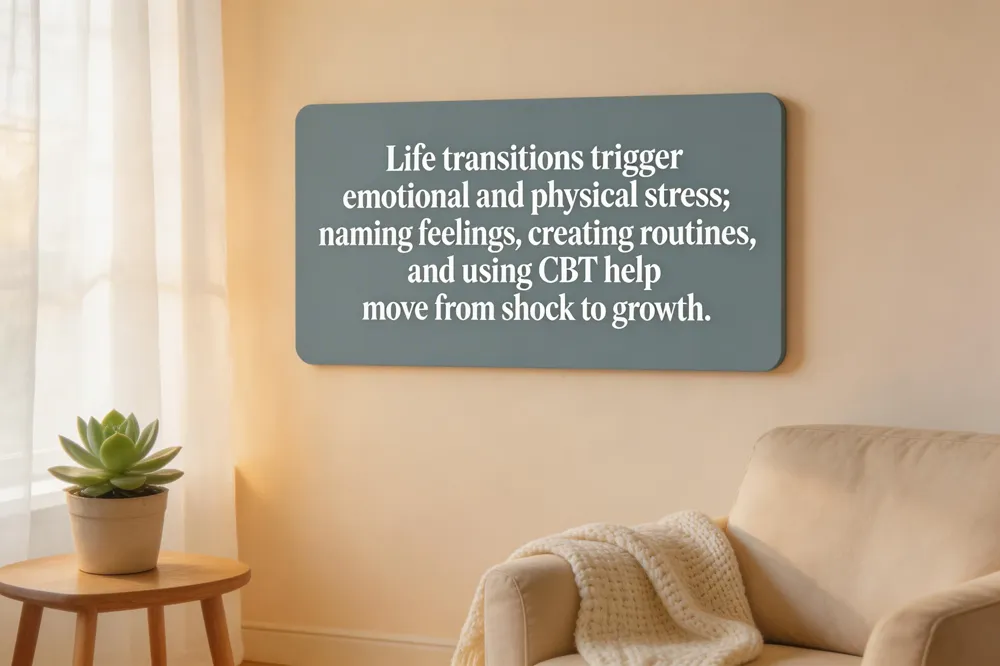 Life transitions trigger a cascade of emotional phases—initial shock or denial, followed by anxiety, sadness, and sometimes panic attacks—before many people reach a period of adjustment and growth. These feelings are often accompanied by physical stress symptoms such as changes in appetite, disrupted sleep, headaches, and elevated cortisol levels. Therapists note that anticipated (planned) transitions like graduation or retirement differ from unanticipated (unexpected) events such as sudden job loss or the death of a loved one; the latter tend to produce more intense emotional upheaval and a higher risk of adjustment disorders.
How to cope with massive life changes? Begin by naming and validating your emotions, then break the larger change into short‑term, manageable steps. Establish a routine that includes self‑care—exercise, mindfulness breathing, or brief meditation—to stay present. Identify constants in your life and celebrate small victories. Use CBT techniques to challenge unhelpful thoughts, replace them with balanced perspectives, and keep a journal of what strategies work. Reach out to a trusted therapist for personalized support.
Major life changes examples include moving to a new city, changing jobs or schools, ending or beginning a relationship (marriage, divorce, separation), becoming a parent, serious illness or injury, loss of a spouse or close family member, financial upheavings, retirement, pregnancy, and major legal or social role shifts. Recognizing these events helps clinicians tailor evidence‑based coping strategies for adults and teens.
Therapeutic Approaches for Transition Support
 Life transition therapy provides a supportive, confidential space to help you navigate major changes such as moving, career shifts, divorce, retirement, or the arrival of a newborn. A therapist uses evidence‑based approaches—like Cognitive Behavioral Therapy (CBT), Solution‑focused therapy, Narrative therapy, Mindfulness‑based interventions, and Family therapy or Emotionally focused therapy—to process the stress, anxiety, and grief that often accompany these shifts.
CBT helps you identify and reframe unhelpful thoughts, reducing anxiety and depressive symptoms. Solution‑focused therapy emphasizes present‑moment problem solving and concrete, actionable goals. Narrative therapy encourages you to reauthor your personal story, creating distance from challenges and fostering agency. Mindfulness‑based interventions, such as meditation and breath work, lower cortisol and improve emotional regulation. Family therapy and Emotionally focused therapy address shifting relational dynamics, improving communication and attachment during transitions like divorce or becoming a parent.
By integrating these techniques, therapists help you build coping strategies, set realistic short‑term goals, and expand your support network, ultimately strengthening resilience and promoting a balanced, hopeful outlook during life’s inevitable changes.
Practical Tools: Worksheets and Planning
 Life‑transitions therapy worksheets are structured tools that help clients navigate major changes such as a new job, relocation, or a life‑stage shift. They typically combine reflective journaling with exercises for goal‑setting, values clarification, and stress‑management to build resilience and focus. Many worksheets guide users through acknowledging emotions, identifying strengths and resources, and breaking the transition into small, achievable steps. Some also incorporate the Stages of Change model, prompting clients to recognize their current stage (e.g., contemplation or preparation) and select appropriate coping strategies. By providing a clear, printable format, these worksheets enable clients to track progress, stay motivated, and integrate self‑care practices throughout the transition. Goals are set by first clarifying core values, then translating those values into specific, measurable objectives that align with the client’s vision for the new chapter. Progress is tracked through regular check‑ins, symptom logs, and self‑care reminders, ensuring that clients see tangible growth and maintain momentum as they move from the “letting‑go” phase to a new beginning.
Specialized Support for Sensitive Transitions
 Life‑transition counseling is tailored to the unique challenges of grief, end‑of‑life, gender‑identity, and career changes. Grief and loss counseling offers a safe space to process sorrow, use narrative therapy to reauthor personal stories, and apply CBT techniques to lessen intrusive thoughts. End‑of‑life therapy blends mindfulness, legacy work, and family‑focused support to address physical decline, emotional fears, and spiritual questions, while preparing families for bereavement. Gender‑identity and non‑event transitions (when an expected change does not occur) benefit from affirming, culturally responsive care that validates identity, uses ACT to align actions with values, and builds supportive networks. Career change and unemployment counseling employs solution‑focused planning, goal‑setting, and strengths‑based coping to manage anxiety, restore confidence, and create actionable job‑search strategies.
Transition of life to death: Counseling for the transition from life to death helps individuals and families navigate physical, emotional, and spiritual changes in the final weeks or days, providing comfort, dignity, and grief support.
What are the 4 types of life transitions: Anticipated (planned milestones), unanticipated (sudden events), non‑event (absence of an expected change), and sleeper (gradual, often unnoticed shifts).
Finding the Right Counselor Near You
 Finding a counselor who specializes in life‑transition therapy begins with reliable directories. Sites such as Psychology Today, TherapyDen, and Zencare let you filter by “life transitions” and city or zip code, showing clinicians who use evidence‑based methods like CBT, ACT, or EMDR. For local options, check nearby towns—e.g., Opp, AL—and verify insurance participation or sliding‑scale fees. Telehealth expands access; many therapists now offer video or phone sessions that fit evening or weekend schedules, allowing continuity during moves or job changes. When you contact a provider, ask about their experience with your specific transition (relocation, divorce, parenthood, etc.) and request a brief introductory call to gauge rapport. Confirm credentialing, insurance coverage, and whether a free 30‑minute consultation is available before committing to regular appointments. Ask about continuity check‑ins after the initial phase to maintain progress the year.
Further Reading and Community Resources
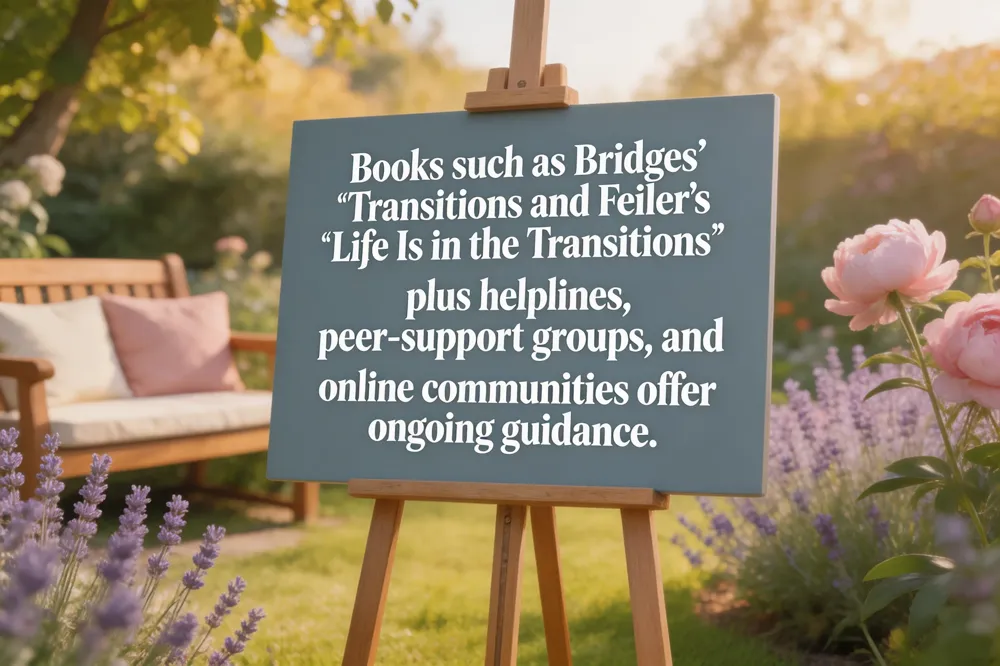 When navigating major life changes, reading can reinforce therapeutic work. Transitions: Making Sense of Life’s Changes by William Bridges outlines the three phases of transition and offers practical tools. Bruce Feiler’s bestseller Life Is in the Transitions blends real‑life stories with a step‑by‑step toolkit for “lifequakes.” For those in later life, From Strength to Strength provides evidence‑based strategies for thriving after major shifts.
National helplines are essential for immediate support: the 988 Suicide & Crisis Lifeline (call or text) and the Crisis Text Line (text START to 741741) operate 24/7. SAMHSA’s 988 Suicide & Crisis Lifeline, Disaster Distress Helpline, and National Helpline (1‑800‑662‑HELP) offer confidential referrals and crisis counseling. NAMI supplies peer‑support groups, educational webinars, and a searchable treatment locator.
Online peer‑support platforms such as the Trevor Project (LGBTQ+ youth), The Jed Foundation, and Community Steve Fund provide safe spaces for sharing experiences and accessing resources during transitions.
Conclusion: Embracing Change with Professional Guidance
Therapy for life transitions offers a toolbox of evidence‑based approaches—CBT, mindfulness, narrative, solution‑focused, and ACT—that help clients reframe thoughts, regulate emotions, and build resilience. Early intervention is crucial; research shows that beginning counseling within weeks of a major change reduces anxiety, prevents adjustment disorders, and accelerates adjustment. Counselors also provide a safe space for grief, identity work, and goal‑setting, ensuring clients feel heard and empowered. After the initial intensive phase, continued follow‑up—through periodic sessions, telehealth check‑ins, or support groups—maintains momentum, reinforces coping skills, and prepares individuals for future transitions. Ongoing professional guidance thus transforms upheaval into growth and lasting well‑being. Continued counseling reinforces confidence, clarifies values, and sustains purpose throughout future changes for each individual.