Why Telehealth Matters for Rural Communities
Rural America faces a growing mental‑health burden, with over 7 million adults experiencing illness and many counties lacking psychiatrists. Telehealth eliminates long travel, allowing patients to receive care from home, which also preserves anonymity and reduces community‑based stigma. Research shows virtual therapy matches in‑person outcomes for anxiety, depression, PTSD, and improves medication adherence, appointment attendance, and continuity of care. These evidence‑based advantages make telehealth essential for expanding access and improving well‑being in underserved rural communities and supporting long‑term mental health resilience.
Rural Mental‑Health Landscape and Telehealth Reach
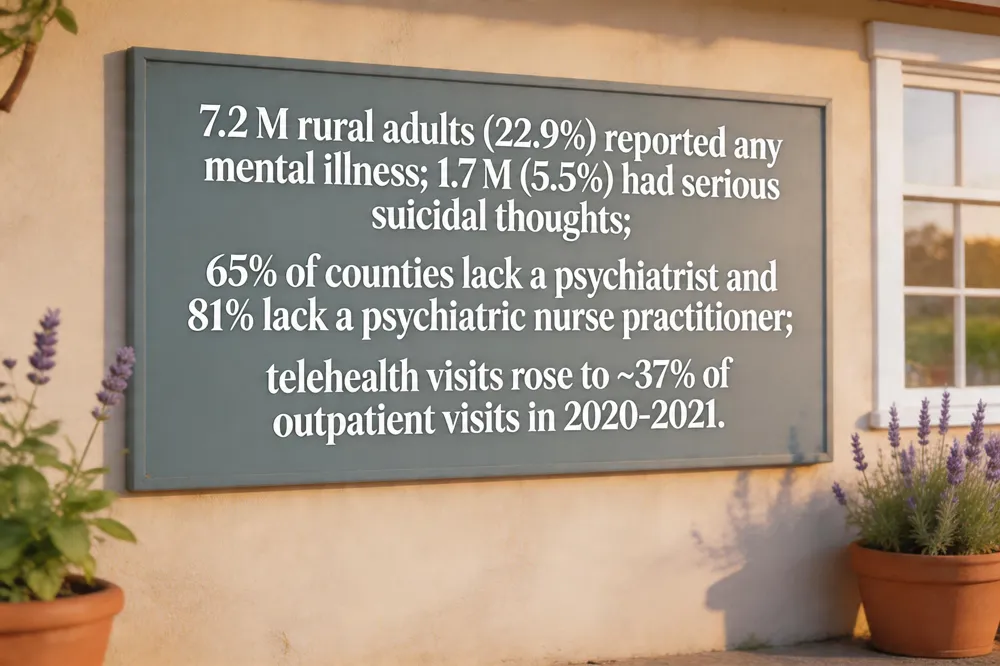 Rural mental‑health statistics show that in 2024 about 7.2 million rural adults reported any mental illness in 2024 (22.9% of rural adult population), while 1.7 million rural adults reported serious thoughts of suicide in 2024 (5.5% of rural adult population) experienced serious thoughts of suicide. Suicide rates in rural regions are roughly double those of large urban areas (approximately 18.3–20.5 per 100,000 residents). Workforce shortages are stark: 65 % of rural counties lack a psychiatrist, 81 % lack a psychiatric nurse practitioner, and 47 % have no psychologist, forcing many to travel long distances for care.
Telehealth usage in rural areas surged during the COVID‑19 pandemic, reaching an estimated 37 % of all outpatient visits in 2020‑2021. A 2022 survey of 200 rural residents revealed strong interest in virtual care, especially among younger adults, and recent data (2025) show that telehealth users tend to be older, female, and have higher chronic‑disease burdens. Telehealth reduces travel barriers and expands preventive and specialty services, narrowing the access gap.
Rural mental‑health disparities stem from provider shortages, limited insurance coverage, and pervasive stigma. Although prevalence of mental illness mirrors urban rates, fewer treatment options lead to higher depression and suicide rates. Addressing these gaps requires expanding tele‑health services, integrating mental‑health providers into primary‑care, and community‑focused stigma reduction.
Compared with urban areas, rural residents often travel more than 30 minutes to the nearest provider and face digital‑divide challenges that limit video‑based telehealth. Urban settings have more specialists but encounter other stressors. Overall, rural communities experience higher rates of serious mental illness and greater barriers to care, underscoring the need for tailored, technology‑enabled interventions.
Key Benefits and Persistent Barriers
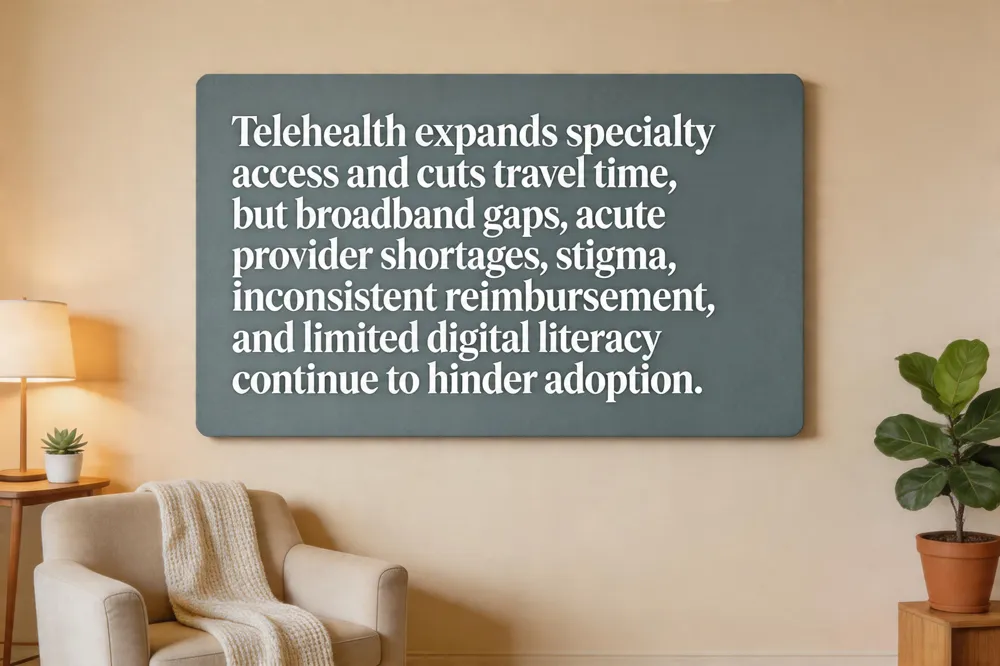 Telehealth expands access to specialty and mental‑health services for rural residents who would otherwise travel hours to see a provider, cutting transportation costs and time burdens. By linking patients to distant clinicians, it enables timely specialist consultations—such as emergency psychiatry, trauma‑focused CBT, or medication management—that can be delivered within critical windows and improve outcomes. This model mitigates chronic provider shortages, allowing local clinics to offer a broader range of services without hiring additional staff, while patients report higher satisfaction and greater convenience when they can receive care from home or a community center.
Despite these gains, rural communities face persistent barriers. Broadband gaps remain a major obstacle; roughly one‑third of rural households lack reliable high‑speed internet limiting video‑based visits and mobile‑app monitoring. Provider shortages are acute—over 60 % of rural counties have no psychiatrist—leading to long waitlists and reliance on primary‑care clinicians who may lack specialized training. Stigma and concerns about privacy in close‑knit communities further deter help‑seeking. Finally, inconsistent reimbursement policies, complex licensing compacts, and limited digital literacy can impede widespread adoption, underscoring the need for sustained investment in infrastructure, workforce training, and culturally sensitive outreach.
Evidence Base: Scholarly Research and Clinical Outcomes
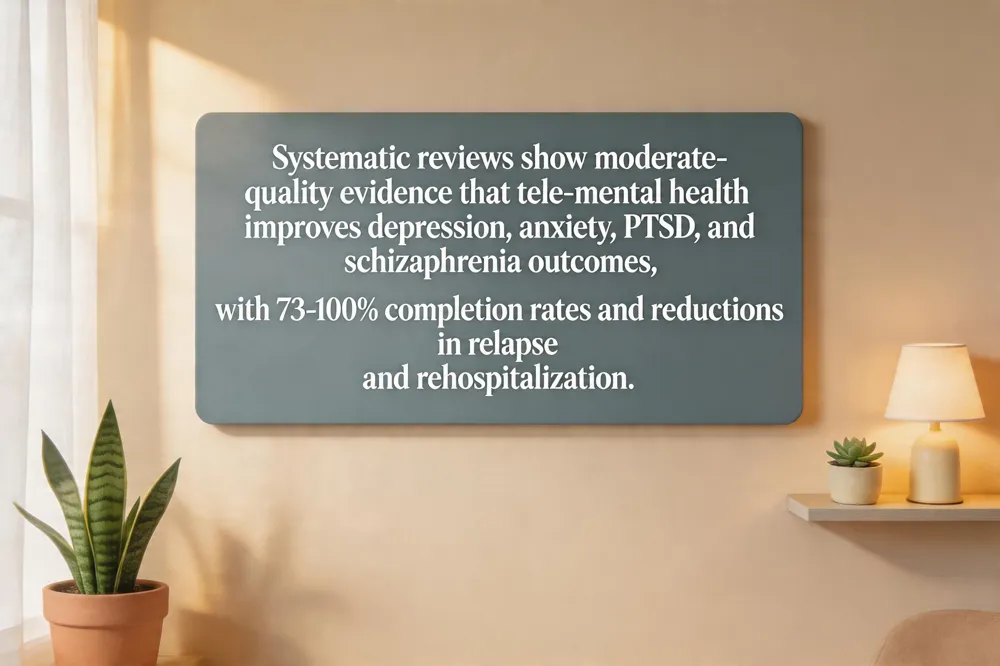 Research consistently demonstrates that telemental health can bridge the mental‑health gap for rural residents. Systematic reviews of randomized controlled trials (up to June 2022) report moderate‑quality evidence that telehealth improves outcomes for depression, anxiety, insomnia, and even schizophrenia, with completion rates ranging from 73 % to 100 %. Telehealth delivered through hospital‑based specialty consults, integrated primary‑care telebehavior, mobile apps, and direct‑to‑consumer services has been shown to reduce relapse and rehospitalization, enhance medication adherence, and expand access to evidence‑based therapies such as CBT for PTSD. In rural hospitals, telepsychiatry and telebehavioral health consultations streamline emergency‑department decision‑making, lower transfer rates, and cut costs while preserving patient safety. Telehealth for mental health in rural communities therefore offers a reliable, cost‑effective pathway to the same high‑quality care available in urban settings, with flexible video, audio‑only, or text options to accommodate broadband limitations. Medication management is streamlined through secure video visits: clinicians can assess, prescribe, and monitor psychiatric medications—SSRIs, SNRIs, and others—while prescriptions are sent directly to pharmacies, reducing travel burdens and supporting continuous, confidential care.
Choosing and Accessing Telehealth Services
 When selecting a telehealth mental‑health service, prioritize platforms that are HIPAA‑compliant, use secure video or audio‑only connections, and offer licensed clinicians with evidence‑based expertise (e.g., CBT, DBT, trauma‑focused therapy). National options such as Teladoc Health, Talkspace, and Brave Health provide 24/7 scheduling, medication management, and language‑appropriate providers, while local programs—e.g., Summit Healthcare Regional Medical Center’s tablet‑based consults in Nevada or the University of Kansas Medical Center’s Telehealth ROCKS for children—offer community‑anchored care.
Insurance coverage varies: most major private plans, Medicaid, and Medicare now reimburse video, phone, or even text‑based mental‑health visits, including audio‑only sessions authorized during the COVID‑19 public health emergency. Check each platform’s payer list and confirm that it participates in your state’s Medicaid fee‑for‑service program.
If you lack insurance, many services offer transparent self‑pay rates (e.g., $119 per session) or sliding‑scale fees; community initiatives such as the SAMHSA Telehealth for Serious Mental Illness toolkit provide low‑cost options.
To find providers near you, start with national directories (Teladoc, BetterHelp) and then search state‑specific telehealth resource centers or local Rural Health Information Hub listings. Verify licensure in your state and confirm that the provider can deliver care via the modality (video, phone, or secure messaging) that matches your broadband access.
Policy, Funding, and Government Role
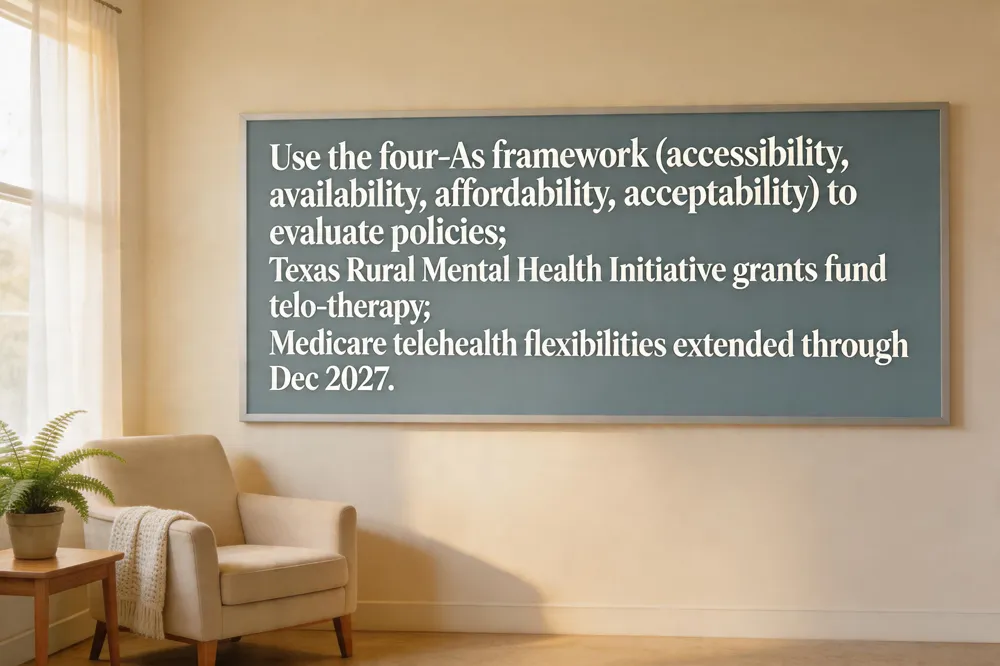 Evaluating policies to improve access to mental health services in rural areas—Policies that broaden delivery modalities and payment mechanisms consistently boost rural mental‑health access. Effective evaluation should use the “four As” framework (accessibility, availability, affordability, acceptability) and track provider density, wait‑times, Medicaid reimbursement, treatment initiation, adherence, and symptom improvement. Monitoring of subgroups such as older adults and those lacking transportation ensures policies close gaps.
Rural mental health initiative grant program—The Rural Mental Health Initiative Grant Program, run by Texas Health and Human Services, funds expanded behavioral‑health centers and jail‑diversion services for adults with mental illness and children with serious emotional disturbances in counties under 250,000 residents. Applicants must match 25‑50 % of the award, submit quarterly performance data, and demonstrate how tele‑therapy will reach underserved adults and teens. This grant offers a pathway for practices like Julia Flynn Counseling to secure funding for virtual outreach and care.
Did the government shut down telehealth?—No. Consolidated Appropriations Act of 2026 extended key Medicare telehealth flexibilities through December 31 2027, preserving options, expanded originating sites, and eliminating in‑person visit requirements for mental‑health care. Telehealth remains fully operational and supported.
Implementing Telehealth and Practical Guidance
 How to implement telehealth in rural areas
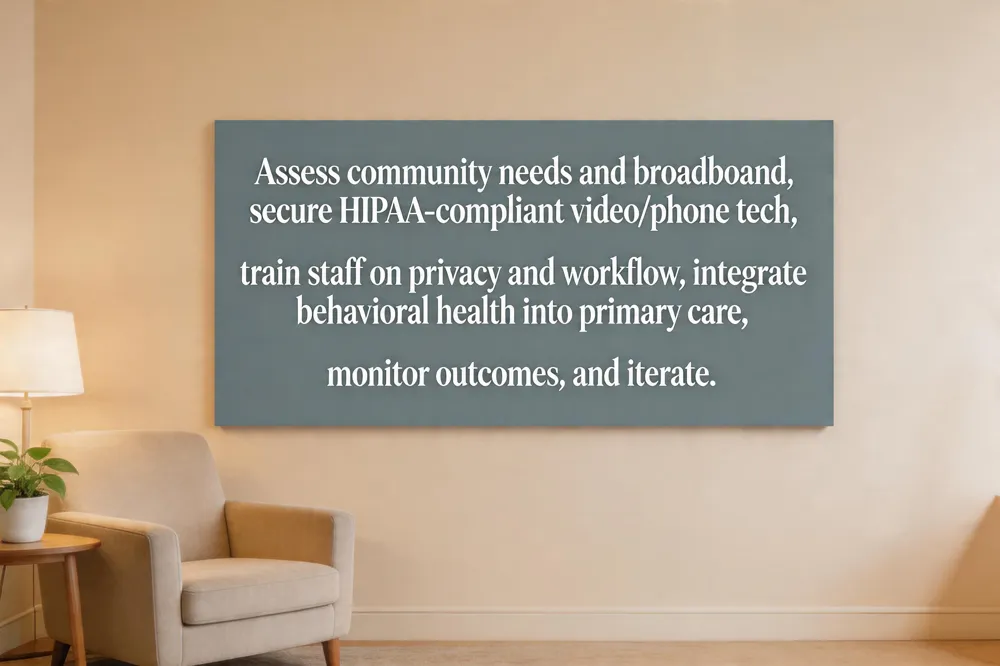
Start by researching community needs—review local health data, broadband access rates, and conduct informal surveys to identify gaps. Develop a business plan outlining services (counseling, phone‑only appointments for low‑bandwidth patients), staffing, billing, and sustainability. Secure HIPAA‑compliant video platforms, backup phone options, and technical support for staff and patients. Train all team members on privacy, troubleshooting, and workflow integration. Promote the service locally, monitor outcomes, and adjust based on feedback.
How to implement telehealth in rural areas
Start by researching community needs—review local health data, broadband access rates, and conduct informal surveys to identify gaps. Develop a business plan outlining services (counseling, phone‑only appointments for low‑bandwidth patients), staffing, billing, and sustainability. Secure HIPAA‑compliant video platforms, backup phone options, and technical support for staff and patients. Train all team members on privacy, troubleshooting, and workflow integration. Promote the service locally, monitor outcomes, and adjust based on feedback.
How to improve mental health in rural areas Expand access via telemental‑health and integrate behavioral health into primary‑care and school‑based clinics. Invest in workforce development with loan‑repayment incentives, training local providers in evidence‑based therapies, and supporting community health workers. Advocate for Medicaid and private‑insurance coverage of virtual visits and sliding‑scale fees. Reduce stigma through community education, confidential outreach, and partnerships with trusted local leaders. Improve transportation and broadband infrastructure to make both in‑person and remote services reachable.
Online therapy for rural areas near Texas Online therapy eliminates long drives for Texas residents, offering secure, HIPAA‑compliant video sessions with licensed therapists who provide CBT, medication management, trauma‑focused work, and other evidence‑based treatments. Flexible scheduling fits work or farm duties, and privacy reduces stigma.
Online therapy for rural areas near Dallas, TX Julia Flynn Counseling delivers secure video or phone therapy to clients in Dallas‑surrounding rural communities. Services include CBT, DBT, EMDR for both adults and teens, covered by most major insurance plans. To begin, call (972) 349‑0030 or schedule online.
Telehealth mental health counseling Clients meet licensed clinicians via video, phone, or secure messaging, accessing evidence‑based therapies such as CBT, DBT, and mindfulness without travel. Sessions are private, HIPAA‑compliant, and covered by most insurers, making high‑quality care affordable and convenient.
Stigma, Interest, and Future Directions
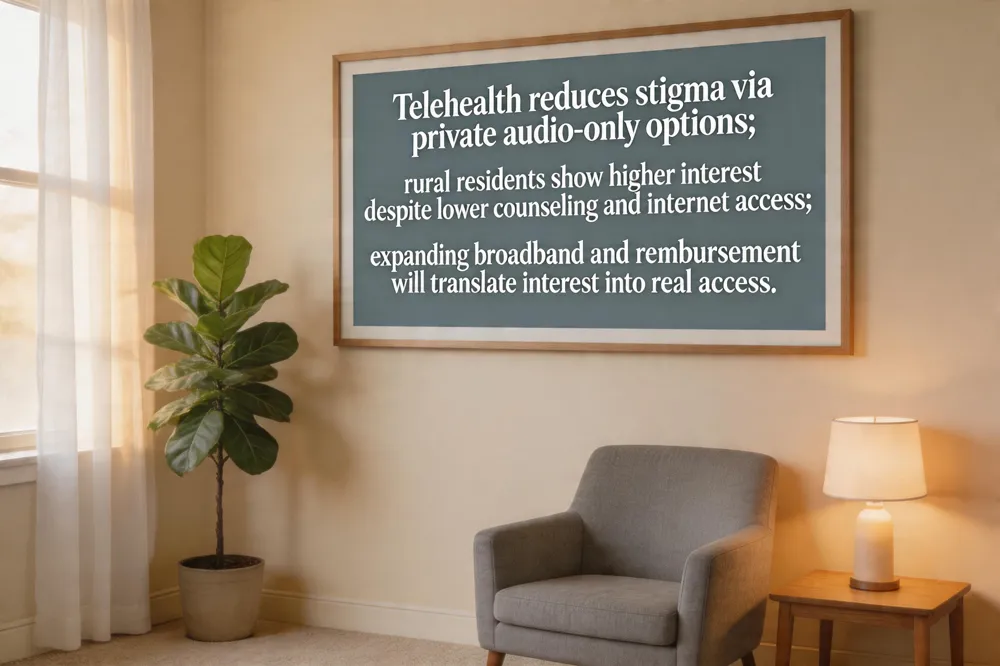 Telehealth can cut through the deep‑rooted stigma that often blocks mental‑health care in tight‑knit rural towns. Because sessions are private, home‑based, and can be audio‑only, patients feel safer seeking help without fearing gossip. Community education, Mental Health First Aid, and confidential platforms further erode shame.
Research shows Rural residents have lower counseling and broadband access (85.1 % vs. 90 % counseling; 81 % vs. 92 % internet) yet report higher interest in telehealth (β = .45, p < .01). Limited local services predict even stronger curiosity (β = ‑.53), especially among younger adults. Expanding broadband and reimbursement will translate that interest into real access.
Overall, telehealth is a powerful ally for rural health: it eliminates long travel, links patients to scarce specialists, and delivers telemental services to adults and teens. While broadband gaps and funding hurdles persist, the net effect is improved access, satisfaction, and outcomes.
Telehealth can triage conditions like pneumonia, offering initial assessment and advice, but it cannot replace chest X‑ray or in‑person lung exams needed for a definitive diagnosis. Red‑flag symptoms should prompt immediate emergency care.
Looking Ahead: Expanding Reach and Reducing Gaps
Telehealth has dramatically widened mental‑health access in rural America, cutting travel time and delivering evidence‑based therapy, medication management, and crisis support directly to homes. Community leaders, schools, and local clinics should champion broadband expansion, promote digital literacy, and coordinate outreach to ensure every resident can connect safely. Stakeholders—including policymakers, insurers, and providers—must sustain funding, streamline licensure, and protect privacy so telebehavioral services continue to bridge gaps and foster resilient, healthy communities. Investing now ensures future generations receive compassionate mental‑health care.