Introduction
Telehealth counseling delivers mental‑health services via secure video, phone, or messaging, allowing clients to receive care from the privacy of their own homes. By removing the need for travel, it expands access for people in rural areas, those with mobility challenges, and anyone facing scheduling constraints. While the convenience and geographic flexibility are clear benefits, many patients still encounter obstacles such as limited broadband, lack of devices, digital‑literacy gaps, and concerns about privacy or therapeutic connection. Addressing these barriers is essential: when technical, financial, or stigma‑related hurdles remain unresolved, the potential of telehealth to improve well‑being and reduce disparities cannot be fully realized for individuals and communities alike nationwide today.
Advantages and Disadvantages of Telemedicine
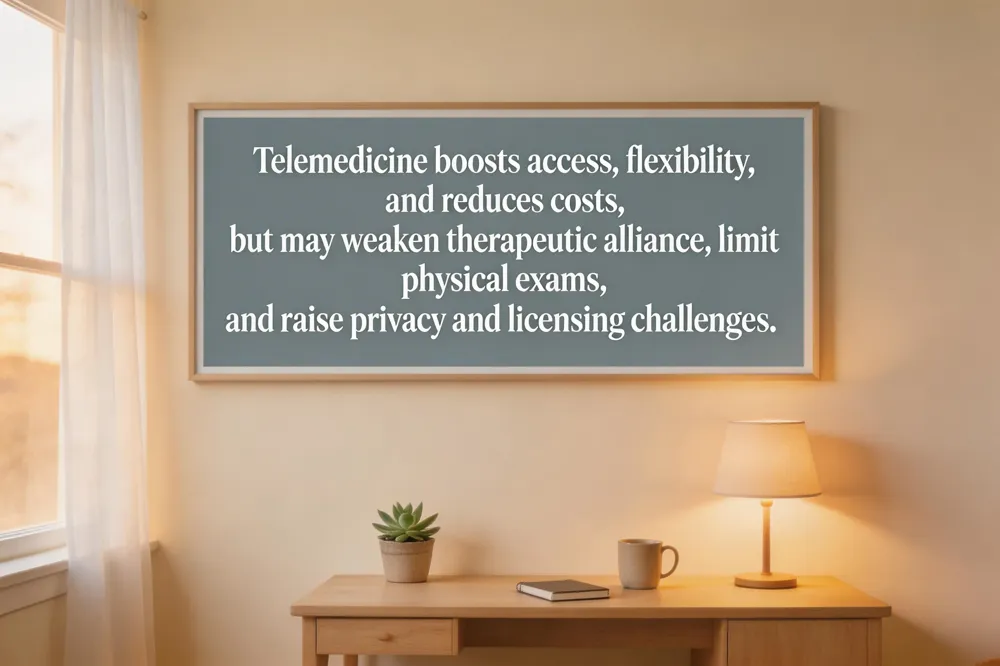 Telemedicine has reshaped mental‑health care by removing geographic and transportation barriers. Patients who live in rural communities, have mobility limitations, or face demanding work and caregiving schedules can now connect with licensed clinicians from a private space at home, cutting travel time, costs, and exposure to contagious illnesses. The virtual format also supports rapid follow‑up, reduces appointment cancellations, and enables clinicians to lower office overhead while offering flexible scheduling (including evenings and weekends) to meet diverse needs. However, Therapeutic alliance weakened by loss of non‑verbal cues and conduct certain physical assessments, potentially affecting diagnostic precision. Technological challenges, such as unreliable broadband, limited device access, and low digital literacy, create barriers for low‑income or older adults. Privacy concerns arise when others can see or overhear the session, and Licensing requirements for telehealth vary by state; many states have adopted interstate licensure compacts to increase therapist availability. Together, these pros and cons illustrate why ongoing training, robust technical support, and clear privacy policies are essential for sustainable tele‑mental‑health services.
Benefits of Telehealth in Scholarly Research
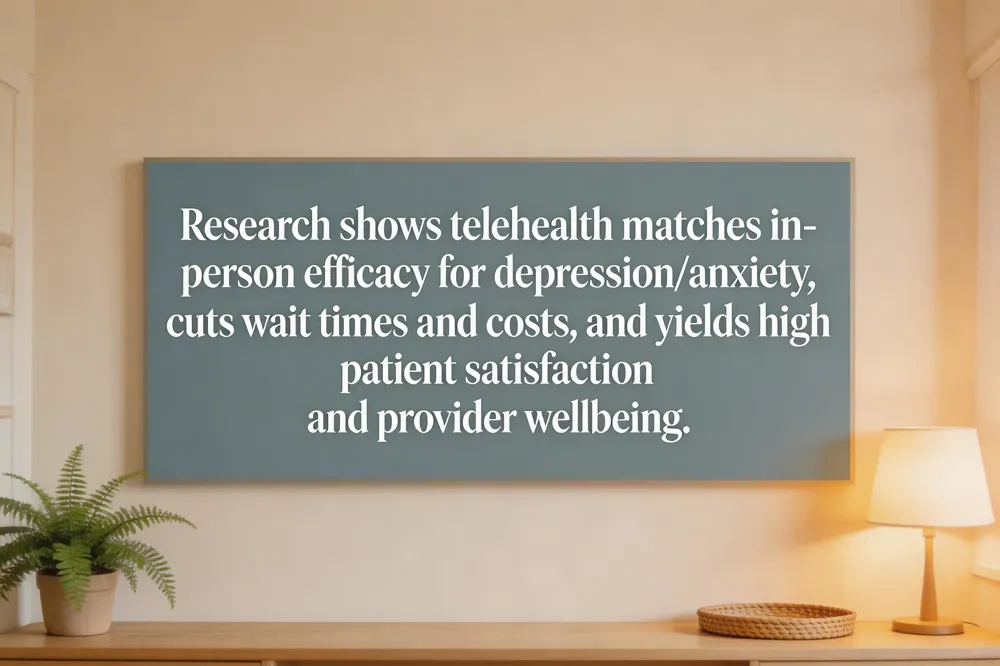 Research consistently shows that telehealth expands access to mental‑health services, especially for people in rural or underserved areas. Randomized trials and systematic reviews (e.g., the 2020 Journal of Telemedicine meta‑analysis and the 2024 Ezeamii systematic review) demonstrate that video‑based therapy yields symptom‑reduction outcomes for depression and anxiety that are statistically equivalent to face‑to‑face care, while also lowering wait times and overall system costs. Patients frequently cite convenience, reduced travel, and the privacy of receiving treatment at home as key reasons for high satisfaction; surveys report 70‑80 % of users rate telehealth as equally or more effective than in‑person sessions. Providers benefit from flexible scheduling, broader geographic reach, and lower burnout rates when they can balance virtual and in‑person work. In summary, scholarly literature confirms that telehealth delivers comparable clinical efficacy, improves patient and provider experiences, and mitigates traditional barriers, making it a robust, evidence‑based option for modern mental‑health care.
Mental Health Stigma and Its Impact
 Mental‑health stigma remains a pervasive barrier that delays treatment, lowers quality of life, and can increase suicide risk. Research distinguishes three main types of stigma: public, self‑stigma, and structural. Public stigma involves negative stereotypes and discrimination from others—e.g., comments such as “You’re crazy” or media portrayals that depict people with mental illness as dangerous. Self‑stigma is the internalization of these negative beliefs, leading individuals to feel ashamed, unworthy, and to avoid care. Structural stigma refers to policies and practices that limit opportunities, such as insurance designs that exclude mental‑health services, inadequate funding for mental‑health programs, or licensing rules that restrict access to providers across state lines.
Studies show that stigma is amplified by inaccurate media messages, cultural misconceptions, and a lack of mental‑health literacy, especially in underserved and minority communities. The COVID‑19 pandemic highlighted how telehealth can reduce stigma by allowing clients to seek help from the privacy of their homes, bypassing the social exposure of visiting a clinic. Strategies to reduce stigma include culturally‑sensitive education, open dialogue, anti‑stigma campaigns, and policy changes that promote parity in insurance coverage and expand telehealth access. Clinicians can foster a supportive environment by using respectful language, validating experiences, and offering flexible, confidential virtual options. By confronting stigma head‑on, mental‑health professionals help individuals seek timely help, improve therapeutic alliance, and ultimately enhance overall mental‑health outcomes.
Overcoming Barriers in Mental Health Care
 The shift to telemental health during the COVID‑19 pandemic highlighted both persistent obstacles and new opportunities for expanding access. Practical steps to reduce barriers begin with recognizing the most common hurdles—technology gaps, privacy concerns, scheduling conflicts, and cost. Providing low‑cost or insurance‑covered tele‑therapy options, offering loaner devices, and creating quiet, private spaces in workplaces or community centers can mitigate technical and privacy challenges. Flexible scheduling, including evenings and weekends, and short, 30‑ to‑minute appointments accommodate busy lives, while dedicated IT support and virtual orientation sessions minimize disruptions.
Breaking stigma and improving access require a cultural shift. When patients can receive care from the privacy of their homes, the perceived judgment of visiting a clinic diminishes, encouraging help‑seeking. Public education campaigns, peer‑support groups, and faculty sharing personal mental‑health stories normalize the conversation. Organizations can adopt opt‑out appointment systems and integrate mental‑health resources into employee‑assistance programs, making care feel routine rather than exceptional.
How to overcome barriers in mental health – Acknowledge that stigma and fear are often the biggest obstacles, then deliberately challenge them. Seek professional help early, build a supportive network, educate yourself and others using person‑first language, and advocate for accommodations at school or work.
How can you overcome mental barriers? – Identify limiting beliefs, challenge them with evidence‑based techniques like CBT or guided journaling, practice self‑compassion, and incorporate mindfulness, exercise, and structured routines. If the barriers feel overwhelming, a licensed therapist can provide personalized support and accountability.
How can people overcome barriers to mental health treatment? – Recognize specific obstacles, enlist trusted support, use low‑cost or insurance‑covered tele‑therapy, educate oneself to normalize help‑seeking, build a collaborative therapeutic relationship, and set small, manageable goals such as scheduling an initial appointment. These strategies together create a more accessible, stigma‑free pathway to mental wellness.
Ethical and Legal Considerations in Telehealth Counseling
 Telehealth counseling raises several ethical concerns that clinicians must address to protect clients and uphold professional standards. First, maintaining confidentiality and data security is paramount, as video‑ and phone‑based sessions can be vulnerable to hacking, unauthorized access, or accidental disclosure in a client’s home environment. Secure, HIPAA‑compliant platforms, end‑to‑end encryption, and clear privacy policies mitigate these risks. Second, informed consent must explicitly cover the limits of technology, potential privacy risks, and the client’s right to discontinue virtual services, while outlining emergency protocols. Third, therapists must be licensed in the jurisdiction where the client resides, complying with state compacts and avoiding cross‑state practice violations. Clear communication about session logistics, professional boundaries, and equitable access further supports client autonomy and safety.
Telehealth Platforms, Insurance Coverage, and Options
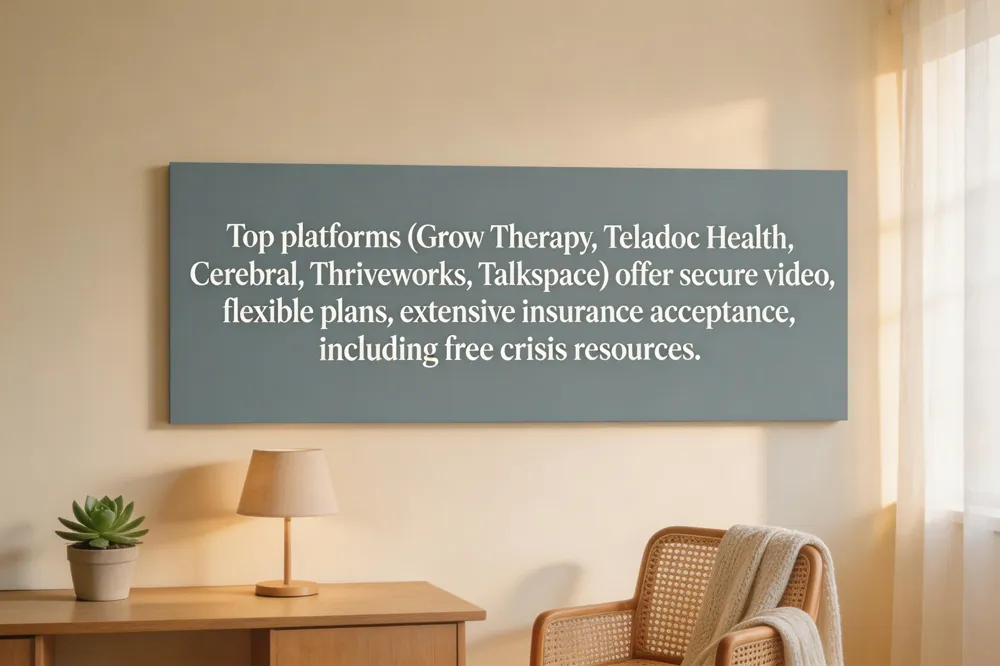 Telehealth has rapidly expanded mental‑health access, and several platforms now stand out. In 2026 the leading services include Grow Therapy, Teladoc Health, Cerebral, Thriveworks, and Talkspace, each offering licensed clinicians, secure video sessions, and flexible scheduling. Grow Therapy accepts over 125 insurance plans and uses a transparent pay‑per‑session model; Teladoc Health and Cerebral add medication‑management and digital tracking tools; Talkspace provides subscription‑based messaging and video options. Many insurers cover virtual therapy—Talkspace, Headway and other platforms partner with Aetna, Anthem, Blue Cross Blue Shield, Tricare, Optum, and more, often with $0 copays. Julia Flynn Counseling, for example, is accepted by UnitedHealthcare; members can verify benefits through their portal and schedule secure video appointments billed like in‑person visits. For those needing free support, 7 Cups offers 24/7 volunteer chat, Crisis Text Line and the 988 Suicide & Crisis Lifeline provide confidential, no‑cost help. Talkspace’s three tiers (messaging‑only, video‑plus‑messaging, video‑plus‑messaging‑plus‑workshops) cost $69‑$109 per week, many plans accept insurance, and the platform delivers unlimited text, audio, picture, or video messages with daily therapist responses. These options let you choose a service that fits your insurance, payment preferences, and therapeutic needs, ensuring convenient, evidence‑based care from the comfort of home.
Future Directions and Recommendations for Julia Flynn Counseling
 To stay ahead, Julia Flynn Counseling should embed telehealth as a core service, offering video, phone, and secure messaging options that meet HIPAA standards. Begin by piloting a mixed‑modal schedule—virtual sessions for frequent check‑ins, visual aids and in‑person visits when intensive interventions are needed—while using EHR‑integrated platforms to streamline intake, reminders, and billing. Clinicians need ongoing training on digital literacy, virtual therapeutic alliance techniques (e.g., frequent check‑ins, visual aids), and crisis protocols for remote care. Policy updates must ensure parity in reimbursement, clarify interstate licensure through compacts like PSYPACT, and guarantee privacy protections for home‑based sessions. Finally, provide clients with technical support, orientation tutorials, and loaner devices to bridge the digital divide, thereby expanding access, reducing stigma, and maintaining high‑quality, client‑centered care.
Conclusion
Telehealth expands access, cuts travel time, and lowers costs while preserving clinical effectiveness for anxiety, depression, and PTSD. Yet technology gaps, privacy worries, and occasional loss of non‑verbal cues can hinder some users. By choosing HIPAA‑secure platforms, reliable devices, and supportive clinicians, you can overcome these hurdles. Reach out today—virtual care is a convenient, private path to the help you deserve and start your journey toward lasting wellbeing.