Why Telehealth Matters in Modern Therapy
Virtual mental‑health care has become a cornerstone of contemporary therapy because it delivers a level of convenience and flexibility that traditional office visits cannot match. Clients can schedule sessions from work, school or home from even from a quiet corner of a coffee shop, eliminating travel time, parking hassles, and the anxiety that sometimes accompanies a clinic setting. This accessibility is especially valuable for people living in rural areas, those with mobility challenges, or anyone whose busy schedule makes regular in‑person appointments difficult.
Research consistently shows that online therapy is as effective as face‑to‑face treatment for a wide range of conditions, including anxiety, depression, PTSD, and stress‑related disorders. Meta‑analyses of cognitive‑behavioral therapy delivered via video or secure messaging report symptom reductions comparable to traditional care, and large‑scale studies published in journals such as the Journal of Telemedicine and e‑Health and Lancet Psychiatry confirm these findings across diverse populations.
Equally important are the security and licensing standards that protect client confidentiality and ensure professional competence. Reputable platforms must be HIPAA‑compliant, employing end‑to‑end encryption and regular third‑party audits. Therapists are required to hold valid state licenses—LPC, LCSW, psychologist, psychiatrist, etc.—and be authorized to practice in the client’s jurisdiction, guaranteeing that care is both legally sound and clinically qualified. Together, these elements make telehealth a reliable, effective, and client‑centered option for modern therapy.
Licensing, HIPAA, and Security Foundations
 When choosing a telehealth mental‑health platform, three foundational pillars protect both client and clinician: state licensing verification, HIPAA‑compliant encryption, and therapist credential standards.
State licensing verification – Reputable services confirm that every clinician holds a valid license in the client’s state of residence, complying with state‑specific regulations. This ensures that therapists are legally authorized to practice and that the client receives care that meets local professional standards.
HIPAA‑compliant encryption – All video, audio, and messaging streams must use end‑to‑end encryption and secure data storage. Platforms regularly undergo third‑party audits, employ two‑factor authentication, and maintain Business Associate Agreements to safeguard protected health information.
Therapist credential standards – Licensed professionals include LPCs, LCSWs, LMFTs, psychologists (Ph.D./Psy.D.), and psychiatrists (MD). Platforms typically display therapist credentials, specialties, and licensure status, allowing users to match with clinicians who possess the appropriate training for modalities such as CBT, DBT, ACT, or trauma‑focused therapy.
Answering common questions
Telehealth mental health providers near me – Finding telehealth mental‑health providers close to you is easy with a quick online search or by checking your insurance directory. Julia Flynn Counseling offers confidential video‑based therapy for adults and teens across the United States, allowing you to connect with a licensed clinician from the comfort of your home. Our evidence‑based services include CBT, ACT, DBT, and medication management, all delivered through a secure, HIPAA‑compliant platform. Appointments can be scheduled within a few days, and many insurers cover virtual sessions, reducing cost and travel time. If you need immediate support, we also partner with regional telepsychiatry teams that can provide urgent psychiatric consultations.
Telehealth mental health medication – Telehealth enables patients to receive mental‑health medication management from a licensed psychiatrist or advanced practice provider through secure video visits, eliminating the need for in‑person appointments. After a brief online intake, the clinician conducts a comprehensive evaluation, determines whether medication is appropriate, and can prescribe, refill, or adjust dosages, with prescriptions sent directly to a pharmacy of the patient’s choice. This model offers quick access—often within a week—greater convenience for those with mobility, scheduling, or transportation challenges, and typically lower out‑of‑pocket costs, especially when insurance coverage is accepted. All telehealth sessions are HIPAA‑compliant, and providers follow the same evidence‑based standards and monitoring protocols as traditional face‑to‑face care.
Cost Models, Insurance, and Self‑Pay Options
 Online therapy platforms use a mix of pricing models that let clients choose the option that best fits their budget and insurance status.
Subscription vs. per‑session pricing – Many services (e.g., BetterHelp, Talkspace) offer flat‑rate weekly or monthly subscriptions that unlock unlimited messaging and a set number of live video sessions, making costs predictable for users who need frequent contact. Other platforms—such as Teladoc Health, Doctor On Demand, and Cerebral—charge a per‑session fee (e.g., $119 for a Teladoc video visit, $134 for an uninsured Doctor On Demand session) which can be economical for those who only need occasional appointments.
Insurance acceptance and reimbursement – A growing number of telehealth providers work directly with private insurers, Medicaid, and Medicare. Talkspace, Teladoc Health, Brightside Health, and Amwell all list major carriers (Aetna, Blue Cross Blue Shield, Cigna, Optum, etc.) and often require only a $0‑$15 copay. When a client’s plan is in‑network, the platform can submit claims using the same CPT codes and parity reimbursement rates as in‑person care, reducing out‑of‑pocket costs.
Sliding‑scale and free‑trial availability – To increase accessibility, many platforms provide sliding‑scale pricing based on income or offer a free initial consultation/trial session. For example, Talkspace and BetterHelp may let users test therapist fit before committing, while community‑based telehealth programs and platforms such as 7 Cups provide volunteer‑run peer support at no charge (though not a substitute for licensed therapy).
Self‑pay options for the uninsured – Even without insurance, clients can access care by selecting a “self‑pay” tier. Teladoc Health’s $119 per‑session rate and Doctor On Demand’s $134‑for‑a‑session fee illustrate transparent pricing. Some services also bundle medication management with therapy (e.g., Brightside Health’s $299/month plan), offering a comprehensive, cost‑effective solution for those who prefer a single subscription.
Overall, understanding the differences between subscription, per‑session, insurance‑based, and sliding‑scale models helps clients select a platform that balances affordability with the desired level of therapeutic support.
Top Platforms for General Therapy
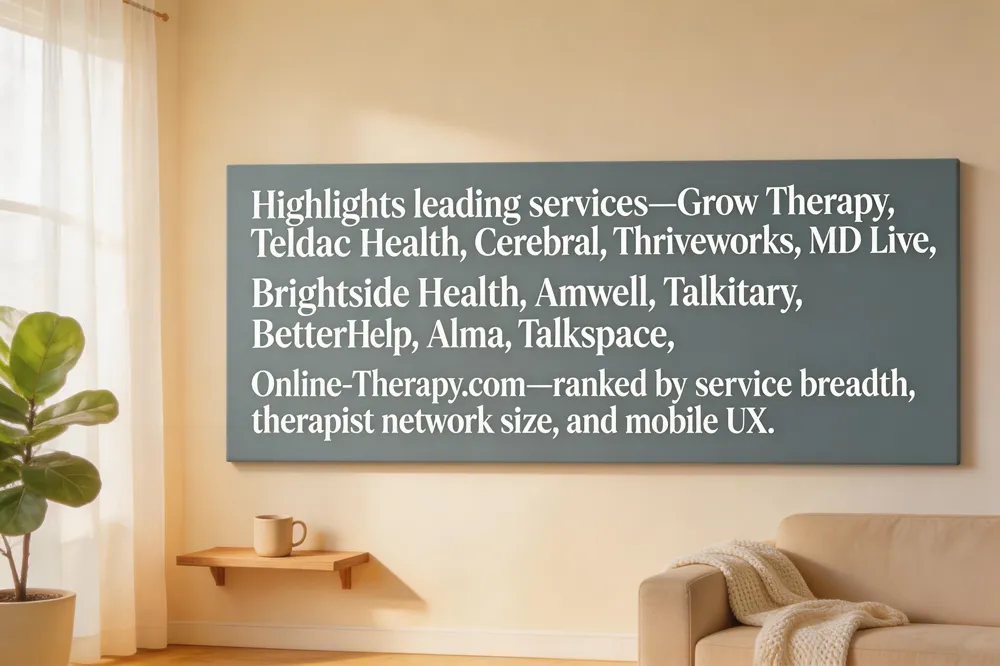 When selecting an online therapy platform, three core factors shape a client’s experience: the breadth of services offered, the size and specialty of the therapist network, and the usability of the digital interface, especially on mobile devices.
Comprehensive service offerings – The most robust platforms combine individual, couples, family, and teen counseling with evidence‑based modalities such as CBT, DBT, ACT, and trauma‑focused therapy. Many also embed medication management and psychiatric evaluations, allowing seamless coordination of therapy and prescriptions. Subscription services (e.g., BetterHelp, Talkspace, Online‑Therapy.com) provide unlimited messaging and scheduled video sessions, while pay‑per‑session models (e.g., Grow Therapy, Teladoc Health, Cerebral, Thriveworks) often include insurance billing, sliding‑scale pricing, and digital tools for mood‑tracking or AI‑driven journaling.
Network size and therapist specialties – Platforms vary widely in provider volume. Grow Therapy boasts over 25,000 licensed clinicians, covering more than 600 specialties, while Teladoc Health and Cerebral each feature a network of 600+ therapists and prescribers. Larger directories like BetterHelp and Talkspace provide access to 35,000+ therapists, ensuring clients can filter by language, gender, cultural competence, or specific treatment approaches. Choosing a platform with a deep specialty pool helps match nuanced client needs, from LGBTQ+ support to addiction counseling.
User experience and mobile apps – Seamless sign‑up, intuitive scheduling, and reliable video quality are essential for engagement. Most leading services offer dedicated mobile apps that deliver push notifications, secure messaging, and easy appointment rescheduling. Platforms with integrated practice‑management tools (e.g., TheraPlatform, Zoom for Healthcare) enhance therapist workflow, while consumer‑focused apps prioritize client convenience and privacy.
Top online therapy platforms – The leading online therapy platforms in 2026 include Grow Therapy, Teladoc Health, Cerebral, Thriveworks, MD Live, Brightside Health, Amwell, Talkiatry, BetterHelp, Alma, Talkspace, and Online‑Therapy.com. Grow Therapy stands out for accepting over 125 insurance plans and offering transparent, pay‑per‑session pricing with digital tracking tools. Teladoc Health, Cerebral, and Thriveworks also provide insurance coverage, medication management, and progress‑monitoring apps. Subscription‑based services such as BetterHelp, Talkspace, and Online‑Therapy.com are popular for their affordability, though they often lack insurance acceptance and medication management features. Choosing the right platform depends on your need for insurance, medication support, and digital tools for tracking mental‑health progress.
What is the best virtual mental health service? – The top virtual mental‑health service for most people today is Grow Therapy, because it accepts more than 125 insurance plans (including Medicare and Medicaid in many states), offers a transparent pay‑per‑session model, and integrates therapy, psychiatry, and medication management in one platform. Its digital dashboard provides progress‑monitoring tools, AI‑driven journaling, and mood‑tracking features that help clients stay engaged between sessions. Compared with subscription‑only services, Grow Therapy's flexible scheduling and sliding‑scale options make it both affordable and personalized. If you need a provider that also offers medication oversight, Teladoc Health and Cerebral are strong alternatives, but they cover fewer insurance plans. Overall, for a licensed, evidence‑based, and insurance‑friendly virtual experience, Grow Therapy consistently ranks as the best choice.
Specialized Platforms for Couples, Teens, and LGBTQ+ Care
 When you’re looking for a tele‑health service that matches a specific life stage or identity, the marketplace offers several niche options.
Couples and family therapy – Platforms such as ReGain and BetterHelp's Regain line focus on relationship counseling, offering live video, audio, and secure messaging for partners and families. Many of these services let you schedule joint sessions or split‑screen video calls, which helps maintain a therapeutic alliance while reducing travel barriers.
Teen‑focused services – Platforms like Talkspace, ReachLink, and Teen Counseling provide age‑appropriate intake forms, parental consent workflows, and therapists trained in adolescent development. These services often blend video sessions with asynchronous chat, allowing teens to practice coping skills between appointments.
Culturally competent and LGBTQ+ inclusive care – Look for platforms that explicitly list LGBTQ+ support and cultural‑competence as part of their therapist matching criteria. Talkspace, Brightside Health, and Cerebral each offer filters for gender identity, sexual orientation, and language preferences, ensuring you can connect with a provider who respects and understands your lived experience.
Best online therapy for anxiety – Talkspace stands out for anxiety treatment because it pairs licensed clinicians with CBT‑focused programs, offers flexible video and messaging, and accepts many insurance plans. BetterHelp also provides a large therapist pool, but Talkspace’s rapid matching and dedicated anxiety tracks make it especially effective. Brightside Health delivers structured CBT for anxiety with short wait times, while MDLive offers board‑certified clinicians for insurance‑compatible video sessions.
Online therapy free – Free options are primarily peer‑support or volunteer‑based, such as 7 Cups, BuddyHelp, and Crisis Text Line, which connect you with trained volunteers or crisis counselors at no cost. These services are valuable for immediate relief or mild distress, but for ongoing evidence‑based treatment you’ll likely need a paid platform with licensed professionals.
Platforms That Combine Therapy and Psychiatry
 Combining psychotherapy with psychiatric care in a single online platform creates a seamless treatment experience for clients who need both talk therapy and medication management. Integrated platforms allow therapists and psychiatrists to share notes, coordinate treatment plans, and track progress through digital tools such as mood journals and symptom questionnaires. This coordination is especially valuable for conditions like depression, anxiety, PTSD, and bipolar disorder, where medication adjustments and therapeutic skill‑building must evolve together.
Medication Management Integration
Secure, end‑to‑end encrypted video sessions let psychiatrists conduct comprehensive assessments, prescribe, and monitor medications without the client leaving home. Many platforms—Grow Therapy, Teladoc Health, Cerebral—offer built‑in e‑prescribing, automatic refill reminders, and side‑effect tracking, reducing the logistical burden on patients and improving adherence.
Psychiatrist‑Led Services
When a psychiatrist leads the care team, clients receive a single point of clinical authority. This model ensures that medication decisions are informed by the therapist’s observations and that therapeutic interventions are aligned with pharmacologic goals. Platforms such as Talkiatry and Teladoc Health provide psychiatrist‑only services, while others embed psychiatrists alongside licensed therapists for a collaborative approach.
Insurance and Cost Considerations
Insurance acceptance varies widely. Grow Therapy stands out, supporting 125+ private and public plans, offering transparent per‑session fees, and bundling therapy with psychiatry. Teladoc Health and Cerebral also accept many insurers and provide subscription options that include medication management. In contrast, services like BetterHelp focus on counseling without psychiatry and have limited insurance coverage, making them less suitable for clients needing prescriptions.
Best online therapy and psychiatry
When looking for the best online therapy and psychiatry, consider platforms that accept insurance, offer medication management, and provide digital tracking tools. Grow Therapy stands out with 125+ insurance plans, transparent pricing, and integrated psychiatry services. Teladoc Health and Cerebral also combine therapy with medication management and mood‑tracking features. For a subscription‑based model, BetterHelp offers flexible counseling but limited psychiatry, while Talkspace provides a broad therapist network without medication support. Choose the service that matches your insurance, budget, and need for psychiatric care.
Teladoc mental health
Teladoc Health offers a fully virtual mental‑health program that connects users with licensed therapists, psychologists, and psychiatrists 7 days a week, all from the comfort of their own home. The platform provides evidence‑based tools for anxiety, depression, stress, sleep issues, trauma, and medication management, and many users report feeling better after just a few sessions. Services are typically covered at no out‑of‑pocket cost when you’re eligible through an employer or health plan, and you can schedule visits through the web portal or mobile app. While Teladoc Health delivers convenient, cost‑effective care, a local therapist like those at Julia Flynn Counseling can offer personalized, in‑person or hybrid treatment that may better address complex or culturally specific concerns. Considering both options can help you choose the approach that best fits your mental‑health needs and lifestyle.
Therapist‑Focused Platforms and Practice Management
 When clinicians move therapy online, security, workflow efficiency, and fair compensation are paramount.
HIPAA‑compliant video solutions – Platforms such as TheraPlatform, Zoom for Healthcare, Doxy.me, GoToMeeting, and VSee all meet HIPAA standards with end‑to‑end encryption and Business Associate Agreements, protecting client health information during video, audio, or chat sessions.
Integrated scheduling, billing, and documentation – TheraPlatform stands out as an all‑in‑one practice‑management hub, offering secure video, automated appointment reminders, built‑in billing, insurance claim processing, electronic notes, and a client portal. Zoom for Healthcare provides AES‑encrypted video and EMR integration, while Doxy.me supplies a free, browser‑based video room with virtual waiting rooms. GoToMeeting and VSee add low‑bandwidth options and device‑agnostic access, helping therapists serve clients in rural or underserved areas.
Therapist compensation and workload – High‑volume platforms such as BetterHelp, Talkspace, and Teladoc Health typically offer competitive per‑session fees, bonuses for client retention, and higher rates for psychiatric or medication‑management visits. Grow Therapy, Cerebral, and Thriveworks combine subscription models with therapist‑friendly dashboards and mood‑tracking tools, allowing clinicians to see more clients while maintaining quality care. MD Live and Talkspace also provide simple onboarding and secure video, though Talkspace does not include medication prescribing.
Answers to key questions
- What are the best telehealth platforms for therapists? TheraPlatform, Zoom for Healthcare, Doxy.me, GoToMeeting, and VSee deliver HIPAA‑compliant video plus practice‑management features, streamlining virtual care.
- Best online therapy platforms for therapists – Grow Therapy, Teladoc Health, Cerebral, Thriveworks, MD Live, and Talkspace each offer insurance integration, scheduling tools, and client‑engagement utilities that support efficient practice.
- Best paying online therapy platforms – BetterHelp, Talkspace (especially for psychiatry), Online‑Therapy.com, and Brightside Health provide strong compensation through high client volume, outcome‑based bonuses, and premium rates for specialized services.
Evidence, Success Rates, and Scholarly Findings
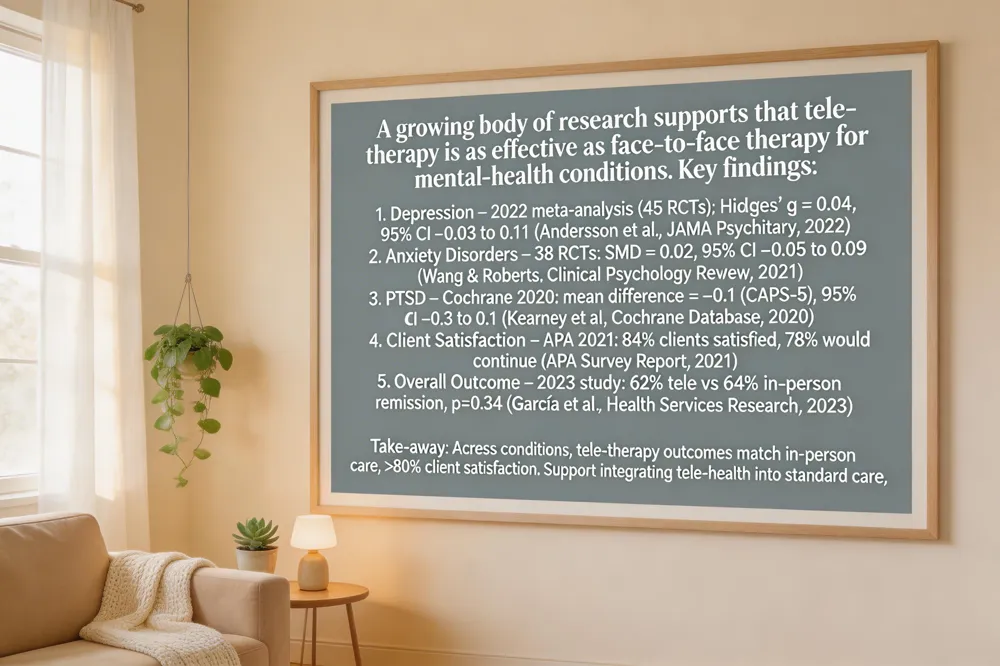 Extensive research confirms that teletherapy matches in‑person care for many mental‑health conditions. Meta‑analyses and randomized trials published in journals such as Journal of Telemedicine and e‑Health and Lancet Psychiatry show no statistically significant differences in symptom reduction for depression, anxiety, and PTSD when therapy is delivered via secure video or asynchronous messaging. For example, a 2021 Lancet Psychiatry study reported that video‑based CBT produced comparable outcomes to face‑to‑face CBT for anxiety and depression, while a 2022 APA survey found 70 % of psychologists now regularly use telehealth with similar effectiveness.
Client‑focused data reinforce these findings. Across platforms, satisfaction rates exceed 80 %, with users citing convenience, flexibility, and reduced travel time as primary benefits. Engagement is high when platforms offer easy scheduling, mobile apps, and multiple communication modes (video, audio, chat). However, some clients note challenges in building rapport remotely, highlighting the importance of therapist matching tools and clear crisis protocols.
Telehealth and mental health scholarly articles: Recent studies demonstrate that virtual delivery of evidence‑based modalities such as CBT, DBT, and ACT yields symptom‑improvement rates comparable to traditional care, supporting telehealth’s integration into personalized treatment plans.
Telehealth mental health no insurance: Self‑pay options are widely available; platforms like Teladoc Health ($119 per session) and Doctor On Demand ($134 for uninsured) provide clear pricing. Subscription models (e.g., BetterHelp’s weekly fee for unlimited messaging) and sliding‑scale plans further increase affordability, allowing individuals without insurance to access licensed clinicians securely and confidentially.
Community Support, Peer Resources, and Crisis Lines
 When you need immediate help outside of regular therapy hours, a range of free, 24‑hour services is available. Crisis Text Line lets you text HOME to 741741 to connect with a live volunteer counselor any time of day. The 988 Suicide & Crisis Lifeline also offers confidential phone, text, and chat support around the clock throughout the United States. For anonymous online chat, 7 Cups provides continuous access to trained volunteer listeners who can offer emotional support and coping strategies at no cost.
Several volunteer‑based counseling platforms extend this safety net. 7 Cups and iCounseling rely on trained volunteers and licensed professionals willing to give short‑term guidance without charge. These services are designed to bridge the gap until you can schedule a professional appointment, offering a listening ear and practical coping tools when you feel overwhelmed.
If you are in a crisis or experiencing suicidal thoughts, it is essential to follow clear emergency referral protocols. Dial 911 or visit your nearest emergency department for immediate danger. In non‑life‑threatening urgent situations, the 988 Suicide & Crisis Lifeline can direct you to local resources and crisis hotlines. Many online therapy platforms, including Julia Flynn Counseling, display emergency contact information prominently and have policies to refer clients to 24/7 hotlines or on‑call crisis counselors when needed.
Reddit users frequently rank BetterHelp and Talkspace for convenience and therapist choice, while Amwell and Teladoc are praised for video visits with licensed clinicians who can prescribe medication. For low‑cost peer support, 7 Cups and iCounseling are often recommended. Matching the service to your specific needs—whether you need regular therapy, medication management, or supplemental support—ensures you receive the right help at the right time.
Matching the Platform State Your Personal Situation
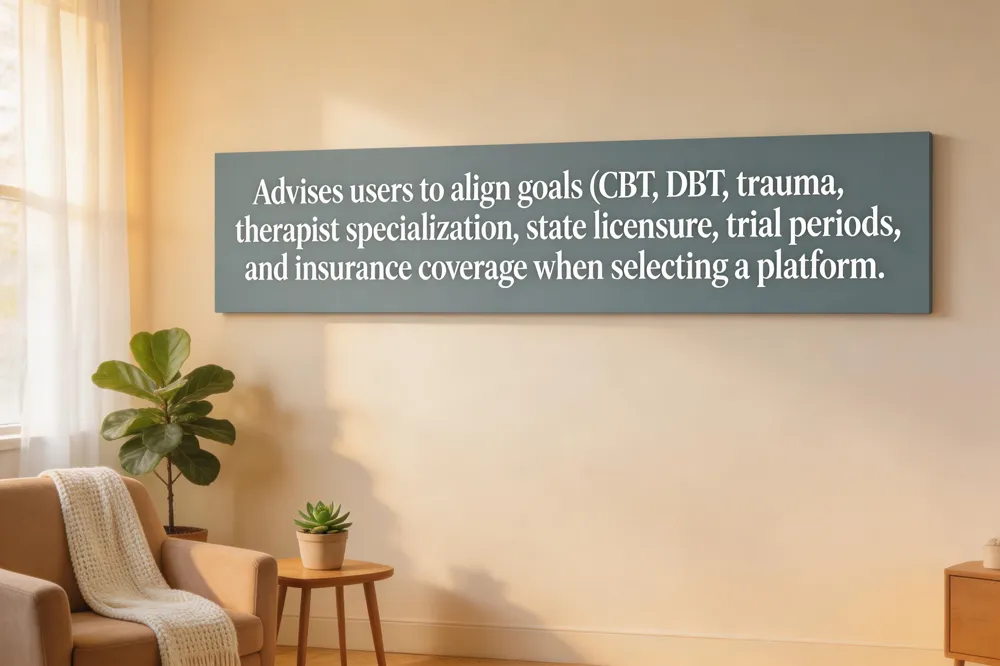 When you begin looking for an online therapy service, start by clarifying your therapeutic goals. If you need evidence‑based modalities such as CBT, DBT, or trauma‑focused care, platforms like Talkspace, Teladoc Health, and Brightside Health explicitly list these options and often match you via intake questionnaires that consider specialty, treatment approach, and cultural competence. For couples, family, or teen counseling, services such as ReGain, Talkspace’s teen program, and ReachLink provide dedicated tracks.
Geography also matters. State licensure rules require that your therapist be licensed where you reside. Most reputable platforms—Talkspace, BetterHelp, Teladoc Health, and Grow Therapy—verify licensure before matching, and many, nationwide, while niche services may be limited to a handful of states. Check the platform’s provider‑location policy to avoid surprises.
Trial periods and therapist compatibility are crucial for long‑term success. Many platforms offer a free initial consultation or a low‑cost trial session so you can assess fit before committing. Look for platforms that let you switch therapists without penalty if the first match isn’t right.
Telehealth therapist near me – Julia Flynn Counseling provides licensed clinicians for secure, HIPAA‑compliant video or phone sessions throughout Texas, including the Dallas‑Fort Worth area. Services are covered by most insurance plans and cater to adults, teens, and children. Call (972) 349‑0030 or book online to start virtual care from a private space.
Talkspace – This widely used platform connects users with licensed clinicians via text, audio, and video. Subscription plans start at $69 per week for messaging‑only and go up to $109 per week for combined video and messaging. It accepts many major U.S. insurers and uses banking‑grade encryption for privacy, though it does not offer sliding‑scale fees or therapist‑selection control.
Online therapy free – Free options like 7 Cups, BuddyHelp, and Crisis Text Line provide peer‑support or volunteer listeners. They are valuable for mild distress or crisis relief but do not replace ongoing, evidence‑based treatment from licensed professionals such as those at Julia Flynn Counseling.
Technology, User Experience, and Accessibility
 Modern telehealth platforms put convenience, engagement, and inclusivity at the forefront of mental‑health care. Almost every reputable service offers a dedicated mobile app—such as Talkspace, Teladoc Health, and BetterHelp—so you can book appointments, receive reminders, and join video sessions with a few taps. Scheduling tools are built into these apps, allowing same‑day or next‑day slots, flexible evening and weekend hours, and easy rescheduling without lengthy phone calls.
Digital tracking features have become a staple: mood journals, AI‑driven journaling, and progress dashboards let you record symptoms between sessions, while the platform’s analytics help therapists tailor interventions. Cerebral and Grow Therapy integrate AI‑suggested coping exercises, and Brightside Health’s app includes sleep and activity trackers that feed directly into your therapist’s notes.
Accessibility is addressed through multiple channels. Video sessions can be switched to audio‑only calls for low‑bandwidth connections, and platforms like VSee and Enghouse Video optimize video quality for rural users. Captioning, screen‑reader compatibility, and high‑contrast UI options support clients with hearing or visual impairments, and many services provide asynchronous messaging for those who prefer text over live video.
Telehealth mental health providers near me Finding telehealth mental‑health providers close to you is easy with a quick online search or by checking your insurance directory. Julia Flynn Counseling offers confidential video‑based therapy for adults and teens across the United States, allowing you to connect with a licensed clinician from the comfort of your home. Our evidence‑based services include CBT, ACT, DBT, and medication management, all delivered through a secure, HIPAA‑compliant platform. Appointments can be scheduled within a few days, and many insurers cover virtual sessions, reducing cost and travel time. If you need immediate support, we also partner with regional telepsychiatry teams that can provide urgent psychiatric consultations.
Telehealth mental health no insurance Telehealth makes mental‑health care accessible even if you don’t have insurance by offering clear, self‑pay pricing on most platforms. For example, Teladoc Health charges $119 per virtual therapy session, while Doctor On Demand’s visits start at $134 when you’re uninsured. Many services also provide subscription options—such as BetterHelp’s monthly fee that unlocks unlimited therapy sessions—so you can choose a cost‑effective plan that fits your budget. You can usually sign up in a few minutes, select a “self‑pay” or “no‑insurance” option, and then schedule a video or phone appointment with a licensed therapist in your state. If cost is still a concern, ask providers about sliding‑scale rates or community‑based telehealth programs that may offer reduced fees or free services.
Crisis Management and Emergency Protocols
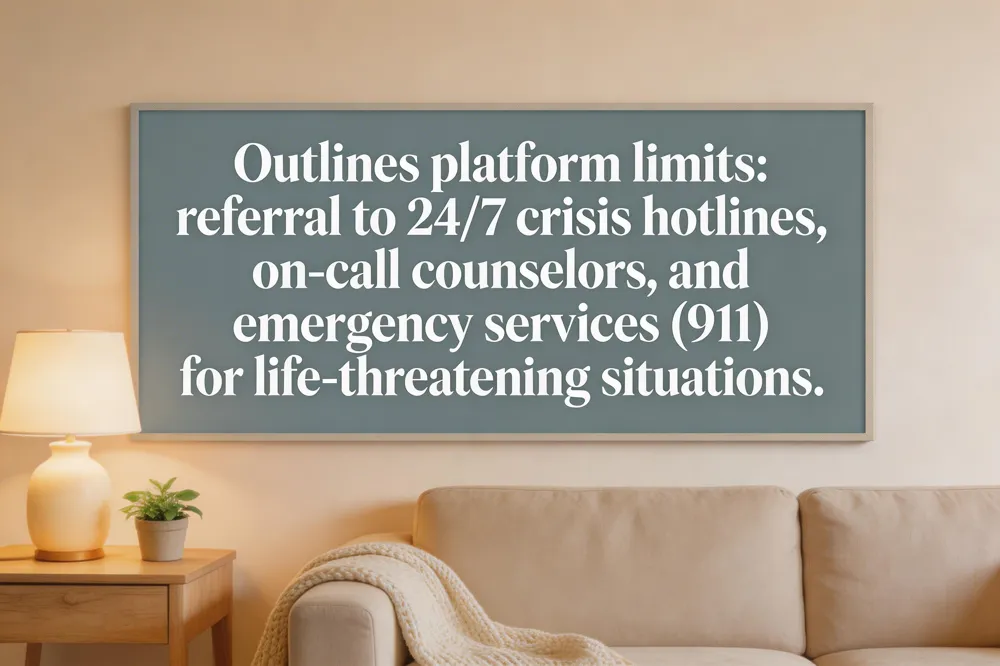 When a situation escalates beyond the therapist’s scope, the platform will refer the client to a 24/7 crisis hotline or an on‑call crisis counselor. This hand‑off is essential because telehealth cannot replace in‑person emergency care; it is not equipped to provide life‑saving interventions, administer medication in real time, or guarantee physical safety. Therefore, users should always keep a phone handy, know their exact address, and understand that the platform’s role is to facilitate rapid referral, not to act as an emergency service. By recognizing these limits and following the outlined protocols, clients can stay safe while still benefiting from the convenience and accessibility of online therapy.
Future Directions and Emerging Trends
 As the field of tele‑mental‑health matures, three powerful trends are reshaping how care is delivered and experienced.
AI‑driven journaling and mood‑tracking tools – Modern platforms now embed intelligent diaries that prompt users to record feelings, sleep patterns, and stressors. These tools use natural‑language processing to surface mood trends, suggest coping strategies, and share concise summaries with the therapist before each session. Research shows that such digital adjuncts improve skill acquisition, increase homework compliance, and can accelerate symptom reduction when combined with evidence‑based therapies like CBT and ACT.
Hybrid in‑person/virtual care models – Many services are blending live video, phone, and secure messaging with occasional face‑to‑face appointments. This flexibility allows clients to maintain therapeutic momentum during travel, childcare demands, or health setbacks, while still benefiting from the deeper rapport that in‑person meetings can foster. Platforms such as Grow Therapy and Teladoc Health already offer seamless scheduling across modalities, enabling clinicians to transition clients smoothly between virtual and office visits as clinical needs evolve.
Regulatory updates and expanded insurance parity – Recent policy shifts have reinforced HIPAA‑compliant security standards and mandated broader insurance coverage for tele‑therapy. Medicare, Medicaid, and most private insurers now reimburse virtual sessions at parity with in‑person rates, reducing financial barriers for many patients. State licensing reforms, including expanded PSYPACT participation, further ease cross‑state practice, allowing therapists to reach underserved regions without compromising legal compliance.
Telehealth and mental health scholarly articles
Recent scholarly research indicates that telehealth can deliver mental‑health care that is comparable in effectiveness to traditional in‑person treatment, especially for intensive interventions targeting depression and anxiety. Studies of adults seeking intensive therapy found no significant differences in depressive symptom reduction or quality‑of‑life improvements between telehealth and face‑to‑face modalities. Client‑focused surveys report high overall satisfaction—over 80 %—with telehealth, citing convenience and increased access as primary benefits, though many patients note challenges in building rapport and expressing emotions remotely. Emerging evidence also highlights that virtual care can sustain behavioral‑health services at the system, provider, and patient levels, even beyond the COVID‑19 pandemic. Together, these findings support the continued integration of telehealth into personalized mental‑health treatment plans.
Best online therapy platform for therapists
Therapists looking for robust telehealth platforms should consider Grow Therapy, which accepts over 125 insurance plans, offers clear pricing, and provides integrated scheduling and progress‑tracking tools. Teladoc Health is another strong option, delivering a nationwide network, medication‑management capabilities, and built‑in digital health tracking. Cerebral and Thriveworks both combine subscription‑based payment models with therapist‑friendly dashboards and mood‑monitoring features. For clinicians who want a flexible pay‑per‑session model, MD Live and Talkspace provide easy onboarding and secure video sessions, though Talkspace lacks medication management. These platforms give therapists the technology, insurance integration, and client‑engagement tools needed to run an effective online practice.
Putting It All Together: Your Next Steps
-
Assess Your Insurance and Budget Begin by reviewing your health‑insurance coverage. Most reputable platforms—Talkspace, Teladoc Health, Brightside Health, and Grow Therapy—list in‑network insurers on their websites, and many accept Medicaid, Medicare, or private plans. If your plan does not cover teletherapy, compare subscription fees (often $65‑$100 per week) with per‑session rates ($99‑$129) and look for sliding‑scale options or employer Employee Assistance Programs. Knowing your out‑of‑pocket ceiling helps you choose a model that fits your financial reality.
-
Prioritize Security and Therapist Credentials Verify that the platform is HIPAA‑compliant and uses end‑to‑end encryption; this is a baseline for protecting your personal health information. Next, confirm that therapists hold valid state licenses (LPCS, LCSW, Ph.D./Psy.D., MD) and are licensed in your state of residence—most services match licensure before you are paired with a clinician. Platforms that provide clear therapist bios, specialty filters (CBT, trauma‑focused, LGBTQ+ support), and standardized intake questionnaires improve the likelihood of a good therapeutic fit.
-
Trial a Platform with a Free Consultation or Short‑Term Plan Many services, including BetterHelp, Talkspace, and Cerebral, offer a complimentary 15‑minute intake or a low‑cost introductory package. Use this trial to assess video quality, app navigation, communication style (video, chat, audio), and how responsive the support team is. A short‑term plan lets you experience the therapist‑client relationship before committing to a longer subscription, ensuring you feel comfortable and confident in your choice.