Setting the Stage: Authenticity in Modern Counseling
Authenticity in counseling means the therapist’s inner experience—thoughts, feelings, values—matches the outward presentation, creating a genuine, transparent presence. Historically, the therapeutic alliance emerged from early psychoanalytic work, but Carl Rogers’ person‑centered model crystalized authenticity as one of three core conditions—alongside empathy and unconditional positive regard—that predict client growth. Over decades, research has shown that authentic therapist‑client bonds are the strongest predictor of outcomes, surpassing specific techniques. Julia Flynn Counseling embraces this legacy: therapists practice humility, active listening, and selective self‑disclosure while maintaining clear boundaries, fostering a safe space where clients feel heard and can explore true emotions. This authentic climate supports lasting change and client empowerment and ongoing personal growth.
Foundations of Authenticity in Therapy
 Carl Rogers’ humanistic vision placed genuine self‑presentation at the heart of healing. He is best remembered for the line, “We cannot change, we cannot move away from what we are, until we thoroughly accept what we are. Then change seems to come about almost unnoticed.” This quote, first articulated in On Becoming a Person (1961), captures the core of his person‑centered approach: unconditional self‑acceptance is the prerequisite for growth. Historically, the concept of genuineness—later termed authenticity—was rooted in Rogers’ emphasis on congruence between a therapist’s inner experience and outward behavior. Contemporary research supports this legacy: studies by Baldwin & Imel (2013) and Johns et al. (2019) show therapists account for about 5 % of outcome variance, far exceeding the 1 % contributed by theoretical orientation. Meta‑analyses across modalities consistently link therapist authenticity to stronger therapeutic alliances, lower dropout rates, and better symptom improvement. In practice, authentic therapists model humility, transparent affect, and consistent alignment of words and actions, creating a safe space where clients feel heard, respected, and empowered to explore their true feelings.
The Five C’s of a Strong Therapeutic Relationship
 Therapeutic work thrives when a clear framework guides the therapist‑client bond. One useful model is the Five C’s of a strong therapeutic alliance, which interweave the core ingredients of connection, compassion, coping, community, and care. Connection is the trustworthy, collaborative bond where clients feel heard and understood; it mirrors the genuine presence highlighted by Rogers’ congruence and the empathy noted across numerous alliance studies. Compassion reflects the therapist’s authentic empathy and non‑judgmental stance, creating a safe space for vulnerable disclosure, as described by John Amodeo and Dr. Sue Johnson. Coping involves jointly developing effective strategies for managing stress and emotional pain, a goal of many evidence‑based modalities. Community underscores the importance of social support and belonging, reinforcing the relational context that amplifies therapeutic gains. Care signifies ongoing, individualized attention to the client’s wellbeing, echoing the therapist‑client authenticity linked to lower dropout rates.
In counseling, the Five C’s shift slightly to Competence, Confidence, Connection, Character, and Caring. Competence denotes the therapist’s skill set and evidence‑based knowledge; confidence embraces both client belief in change and therapist assurance in the process. Connection, again, is the relational anchor. Character emphasizes ethical professionalism and integrity, while Caring mirrors authentic empathy and concern.
Building trust further narrows the focus to Care, Communication, Character, Consistency, and Competence. Care shows genuine valuation of the client’s wellbeing; communication involves honest dialogue and active listening; character reflects integrity and authenticity; consistency ensures promises are kept and behavior remains stable over time; and competence demonstrates the requisite skills to deliver reliable results. Together, these Five C’s form a robust scaffold for therapeutic success.
Core Components of the Therapeutic Relationship
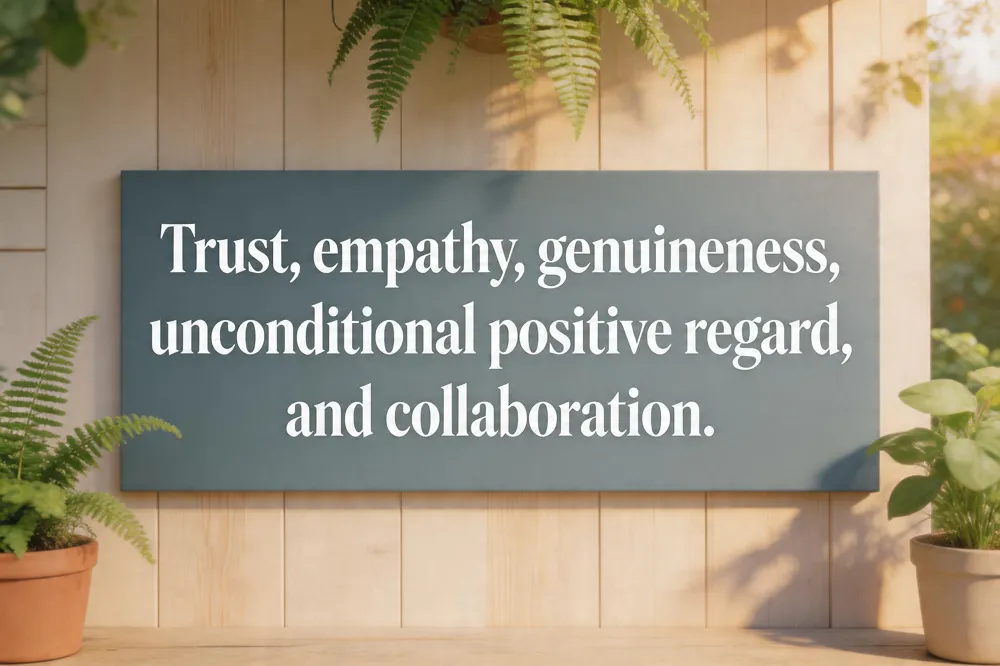 The therapeutic relationship rests on five essential components that together create a strong therapeutic alliance. Trust provides a safe, confidential environment where clients feel secure sharing vulnerable thoughts. Empathy lets the therapist deeply understand and reflect the client’s experience, fostering validation and connection. Genuineness (congruence) means the therapist is authentic and transparent, modeling honest self‑expression. Unconditional positive regard offers non‑judgmental acceptance, encouraging exploration of all aspects of the self. Finally, collaboration ensures therapist and client work together as partners, jointly setting goals and shaping the therapeutic process. Research consistently shows that when these components are present, the therapeutic alliance strengthens, predicting higher client satisfaction, lower dropout rates, and better clinical outcomes across diverse modalities and populations.
Authenticity’s Impact on Therapy Outcomes
 Research consistently shows that the therapeutic alliance is one of the strongest predictors of successful outcomes, accounting for up to 7‑15 % of variance across modalities. Meta‑analyses and studies by Baldwin & Imel (2013), Horvath, and others demonstrate that therapist authenticity explains more outcome variance than specific treatment techniques. Authentic therapists strengthen the alliance by modeling congruence, active listening, and validation, which in turn boosts client engagement, reduces dropout rates, and improves symptom reduction.
Linking authenticity to client self‑awareness, a therapist who stays present with their own feelings can help clients recognize and name their own emotions, transforming conflict into connection. This climate of authenticity thus serves as a catalyst for deeper healing and lasting change.
Practical Strategies for Building Trust
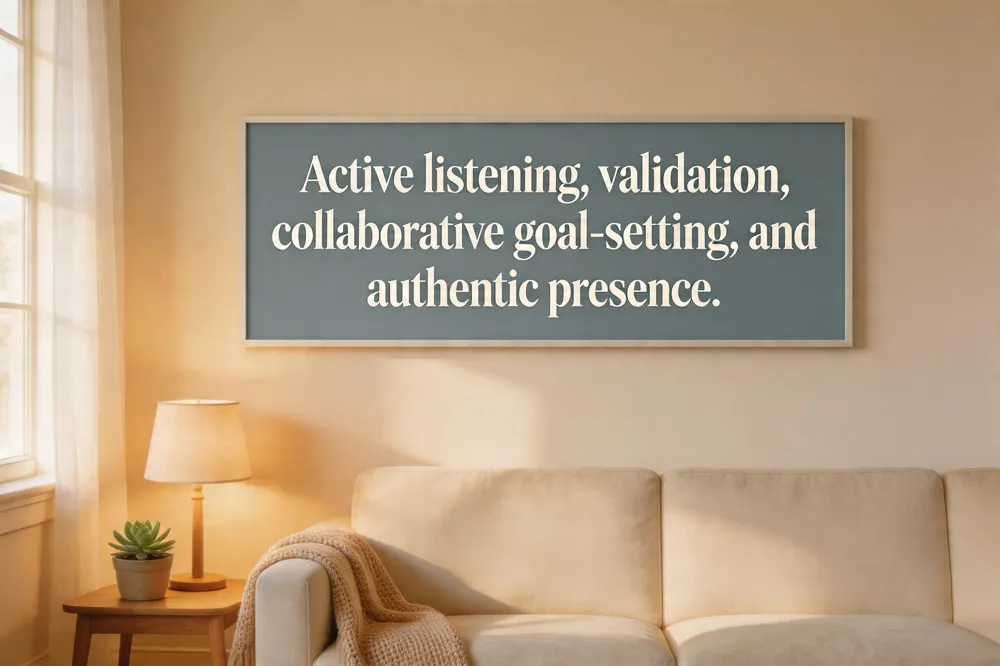 Therapists build trust by creating a safe, non‑judgmental space where confidentiality and clear boundaries are consistently upheld. They demonstrate genuine empathy through active listening, reflective listening and validate the client’s feelings and experiences, showing that they understand and accept the client as they are. By meeting clients where they are and tailoring language, pace, and interventions to each individual’s needs, therapists reinforce respect for the client’s unique perspective. Collaborative goal‑setting and shared decision‑making further strengthen the therapeutic bond, fostering a sense of partnership and shared responsibility. Consistent, warm, and authentic presence throughout sessions solidifies the client’s confidence that the therapist prioritizes their well‑being.
Selective self‑disclosure, when used judiciously, adds immediacy by modeling vulnerability without shifting focus away from the client. A therapist might briefly share a relatable feeling or personal coping tip that directly supports the client’s current issue, thereby normalizing the client’s experience and encouraging deeper self‑disclosure.
Validation and active listening techniques—such as paraphrasing, reflective statements, and confirming the client’s emotional reality—signal that the therapist is fully present. These skills reduce anxiety, counter resistance, and lay the groundwork for a trustworthy, authentic therapeutic relationship.
Specific Techniques for Couples and Groups
 In couples work, the 5‑5‑5 rule offers a simple structure for balanced listening. The first five minutes allow Partner A to share feelings without interruption; the next five minutes give Partner B the same space; the final five minutes invite both to reflect together, turning raw emotion into collaborative insight. Emotionally Focused Therapy (EFT) builds on this by encouraging partners to contact and name their true needs and fears, transforming conflict into deeper connection. Dr. Eugene Gendlin’s Focusing technique helps individuals stay attached to their felt experience, increasing self‑awareness that can be brought into the couple’s dialogue. When both partners practice these authentic, moment‑to‑minute skills, trust deepens, empathy expands, and the therapeutic alliance strengthens. These practices also translate well to group settings, where shared vulnerability fosters collective growth and lasting change.
Ethical Boundaries and Professional Authenticity
 The APA Ethics Code (Standard 10.08(a)) establishes the two‑year rule: therapists must not engage in sexual intimacy with former clients for at least two years after the therapeutic relationship ends. This safeguard protects vulnerable clients and preserves the integrity of the therapeutic alliance. Balancing authenticity with professional boundaries means showing genuine empathy, humility, and transparent self‑disclosure while maintaining clear limits on session length, confidentiality, and dual relationships. Authentic presence—being emotionally attuned and honest—builds trust, yet therapists must avoid over‑identifying with clients, which can blur boundaries. Burnout threatens this balance; when therapists suppress their true feelings to appear “always strong,” they risk irritability and compassion fatigue. Regular self‑care, supervision, and mindfulness help clinicians stay grounded, preserving both authenticity and ethical practice.
Putting Authenticity Into Practice at Julia Flynn Counseling
Key takeaways from the article: Authenticity in relationships means staying connected to felt experience and sharing it vulnerably. Research by Gendlin and Johnson shows that clients who express true emotions make the most progress. Lack of self‑awareness creates barriers; honest communication transforms conflict into connection. How authenticity shapes client outcomes: When therapists model genuine presence, clients feel safe, disclose deeper feelings, and engage more fully, leading to stronger therapeutic alliance and better symptom reduction. Authentic therapists also reduce dropout rates and foster lasting change. Invitation: If you are ready to experience a truly authentic therapeutic partnership, schedule a personalized session at Julia Flynn Counseling today.